UNITED NATIONS DEVELOPMENT PROGRAMME
PROJECT DOCUMENT
Project Number:
PIMS 2838 GLO/03/G41/A/1G/31
UNDP-GEF Financing
Project Title:
Strengthening Global Capacity to Sustain
Transboundary Waters: The International
UNDP/GEF:
Waters Learning Exchange and
Full: $6,000,000
Resource Network
PDF: $350,000
Project Short Title:
IW:LEARN
Parallel Financing1
Executing Agency:
UN Office of Project Services (UNOPS)
UNDP: $ 1,200,000
Implementing Agency:
UN Development Programme (UNDP)
UNEP: $ 1,269,000
GEF Associated Agencies: UN Environment Programme (UNEP)
World Bank: $ 510,000
and World Bank (IBRD)
Others: $ 3,156,000
Project Site:
Distributed
Beneficiary Countries: Global
Total: $ 12,485,000
ACC/UNDP Sector:
0320 Land and Water
Associated
GEF Theme:
International Waters,
Activities : $ 1,470,000
with relevance to water-related projects
of other focal areas
Estimated Starting Date: July 1, 2004
Duration: 4
Years
Brief Description: IW:LEARN aims to strengthen Transboundary Waters Management (TWM) by
facilitating structured learning and information sharing among stakeholders. In pursuit of this global
objective, IW:LEARN will improve GEF IW projects' information base, replication efficiency,
transparency, stakeholder ownership and sustainability of benefits through:
A. Facilitating access to information about transboundary water resources among GEF IW projects
B. Structured learning among GEF IW projects and cooperating partners
C. Organizing biennial International Waters Conferences
D. Testing innovative approaches to strengthen implementation of the IW portfolio
E. Fostering partnerships to sustain benefits of IW:LEARN and associated technical support.
The project builds upon the achievements of the experimental pilot phase IW LEARN project,
incorporating the findings of its final independent evaluation. In view of the great interest raised by and
successes of the UNDP-implemented pilot, all three Implementing Agencies have committed to jointly
propose and realize this operational phase IW:LEARN project.
On
behalf
of:
Signature
Date
Name/Title
UNDP
_____________________
__________ ________________________
UNOPS
_____________________
__________ ________________________
Table of Contents
I.
CONTEXT ............................................................................................................................... 7
General Status of International Waters Capacity .............................................................................. 7
The IW:LEARN Pilot Phase........................................................................................................... 7
The GEF IW Learning Portfolio ..................................................................................................... 9
II. PROJECT JUSTIFICATION ................................................................................................... 11
Baseline and Alternative Scenarios ............................................................................................... 11
Country Drivenness ..................................................................................................................... 13
Why should GEF promote TWM learning through IW:LEARN? .................................................... 13
III.
DEVELOPMENT OBJECTIVE ........................................................................................... 15
Global Objective ......................................................................................................................... 15
IV.
COMPONENTS, OBJECTIVES, OUTCOMES, OUTPUTS, AND ACTIVITIES ................... 16
COMPONENT A. Facilitating Access to Information on Transboundary Water Resources Among
GEF IW Projects ......................................................................................................................... 17
COMPONENT B. Structured Learning Among IW Projects and Cooperating Partners.................... 23
COMPONENT C. Biennial International Waters Conferences........................................................ 26
COMPONENT D. Testing Innovative Approaches to Strengthen Implementation of the IW Portfolio
................................................................................................................................................... 28
COMPONENT E. Fostering Partnerships to Sustain Benefits of IW:LEARN and Associated Technical
Support....................................................................................................................................... 30
V. INPUTS................................................................................................................................. 33
VI.
RISKS, ASSUMPTIONS, SUSTAINABILITY..................................................................... 38
Risks and Assumptions ................................................................................................................ 38
VII.
PRIOR OBLIGATIONS AND PREREQUISITES................................................................. 40
VIII. IMPLEMENTATION AND EXECUTION ........................................................................... 41
Project Implementation ................................................................................................................ 41
Stakeholder Involvement.............................................................................................................. 42
Information on Project Proposer ................................................................................................... 46
IA Coordination and Linkages To GEF and IA Programs and Activities.......................................... 46
IX.
MONITORING, EVALUATION, REPORTING, AND DISSEMINATION ........................... 47
X. LEGAL CONTEXT ................................................................................................................ 48
XI.
BUDGET............................................................................................................................ 48
ANNEX A: INCREMENTAL COST ANALYSIS........................................................................................ 52
ANNEX B: PROJECT LOGICAL FRAMEWORK....................................................................................... 56
ANNEX C.
STAP ROSTER TECHNICAL REVIEW.................................................................. 68
ANNEX D.
LESSONS LEARNED............................................................................................. 74
A. FRAMEWORK FOR CODIFICATION OF IW:LEARN LESSONS LEARNED........................ 74
B. SOURCES REFERENCED ..................................................................................................... 74
C. COMPREHENSIVE CODIFICATION OF PILOT PHASE LESSONS LEARNED .................... 74
ANNEX E.
SUSTAINABILITY PLAN...................................................................................... 90
ANNEX F.
ORGANIZATIONAL CHART ................................................................................ 92
ANNEX G.
INSTITUTIONAL ARRANGEMENTS.................................................................... 94
ANNEX H.
TERMS OF REFERENCE....................................................................................... 94
ANNEX I. STAKEHOLDER INVOLVEMENT PLAN.................................................................. 94
ANNEX J LETTERS OF COMMITMENT - COFINANCING..................................................... 100
ANNEX K
ACTIVITY SUMMARIES/WORK PLAN (YEAR 1 IN DETAIL)........................... 100
2
List of Acronyms
ACC
(UNDP) Administrative Committee for Coordination
ACWA
African Coastal Waters Association
ANBO
African Network of Basin Organizations
APC
Agricultural Pollution Control
APR
Annual Project Review
BCLME
Benguela Current Large Marine Ecosystem (GEF project)
BL
(UNDP) Budget Line
BSEP
Black Sea Environment Project (GEF project)
CATHALAC
Water Centre for Humid Tropics of Latin America and the Caribbean
CDU
(Train-Sea-Coast) Course Development Unit
CEP
Caribbean Environment Programme
CMBL
(UNDP) Component and Budget Line
COP Community
of
Practice
CPRG
Cambridge Programming Research Group
CTA
Chief Technical Advisor
CTC
Centre for Transboundary Cooperation (Lake Peipsi)
DESA
(UN) Division of Economic and Social Affairs
DEWA
(UNEP) Division of Early Warning Assessment
DL Distance
Learning
DLIST
Distance Learning Information Sharing Tool (IW:LEARN pilot project)
DNIPRO
Dniepr River Project (GEF project)
DSS
Decision Support System
EA
(GEF) Executing Agency (for one or more projects)
EEG
(UNDP) Energy and Environment Group
ELI
Environmental Law Insititute
EMECS
Environmental Management of Enclosed Coastal Seas
EU European
Union
FAO
Food and Agriculture Organization
FSP Full-Sized
Project
GCLME
Guinea Current Large Marine Ecosystem (GEF Project)
GEF
Global Environment Facility
GEFSEC
Global Environment Facility Secretariat
GETF Global
Environment
and Technology Foundation
GIS
Geographic Information Systems
GIWA
Global International Waters Assessment (GEF project)
GPA
Global Programme of Action (GPA) for the Protection of the Marine
Environment from Land-based Sources of Pollution
GTZ
Gesellschaft fur Technisches Zusammenarbeit
GWP
Global Water Partnership
HCLME
Humboldt Current Large Marine Ecosytem Project
3
IA
(GEF) Implementing Agency (oversees multiple EAs and projects)
IAP2 International
Association for Public Participation
IATF
(GEF International Waters) Inter-Agency Task Force
IBRD World
Bank
ICLARM
International Centre for Living Aquatic Resources Management
ICM
Integrated Coastal Management
ICPDR
International Commission for the Protection of the Danube River
ICRI
International Coral Reef Initiative
ICT
Information and Communication Technology
IETC
(UNEP) International Environmental Technology Centre
IFOK
Institute for Organisational Communication (Germany)
IGRAC
International Groundwater Resources Assessment Centre
IHE
(UNESCO) Institute for Hydrological Engineering
IHP
(UNESCO) International Hydrological Programme
ILEC
International Lake Environment Committee
IMO International
Maritime
Organization
INBO
International Network of Basin Organizations
INBO-
International Network of Basin Organizations Twinning Basin Project
TWINBASIN
INWEH
(UN) International Network on Water Education and Health
IOC
(UNESCO) International Ocean Commission
IOI
International Ocean Institute
ISARM International
Shared
(Transboundary) Aquifer Resources Management
IUCN
The World Conservation Union
IW
International Waters (GEF focal area)
IWC
(GEF) International Waters Conference
IW:LEARN International
Waters
Learning Exchange and Resource Network
IW- IMS
(IW:LEARN) International Waters Information Management System
IWPS
(GEF) International Waters Program Study
IWRA
International Water Resources Association
IWRC
(IW:LEARN) International Waters Resource Centre
IWRM
Integrated Water Resource Management
IWRN
Inter-American Water Resources Network
LAC
Latin America Caribbean (region)
LME
Large Marine Ecosystem
Logframe Logical
Framework
M&E
Monitoring and Evaluation
MDG Millennium
Development
Goals
MoE
Ministry of Environment
MoFA
Ministry of Foreign Affairs
MSP Medium-Sized
Project
NBI
Nile Basin Initiative (GEF project)
NEPAD
New Partnership for Africa's Development
NGO Non-Governmental
Organization
NOAA
(US) National Oceanographic and Atmospheric Administration
4
OAS
Organization of American States
OP
(GEF) Operational Program
OP10
(GEF) Operational Program 10 (Contaminant Based Operational Program)
OPS2
(GEF) Operational Program Study 2
P2 Public
Participation
PCT
Project Coordination Team
PCU
Project Coordination Unit
PDF
Project Preparation and Development Facility
PDF-B
Project Preparation and Development Facility Block B Grant
PEMSEA
Partnership for Environmental Management of the Seas of East Asia (GEF
project)
PERSGA
Regional Organisation for the Conservation of the Environment of the Red
Sea and Gulf of Aden (GEF project)
PIR
Project Implementation Review
POPs
Persistent Organic Pollutants
PPR
Principal Project Representative
PTS
Persistent Toxic Substances
QOR
Quarterly Operational Report
RBI
River Basin Initiative
REC
Regional Environmental Centre (for Central and Eastern Europe)
ReefBase
Global information system on coral reefs
SAP
Strategic Action Programme
SC
(IW:LEARN) Steering Committee
SCS
South China Sea (GEF project)
SEA
South East Asia (region)
SEA-START RC
South East Asia System for Analysis Research and Training Regional
Centre
SHARK
UNDP online coral reef project network
SIDS
Small Island Developing States
SIDSNet
Small Island Developing States Network
SIP
Stakeholder Involvement Plan
SIWI
Stockholm International Water Institute
SPREP
South Pacific Regional Environment Programme
STAP
Scientific and Technical Advisory Panel
TAP
Technical Advisory Panel
TBD
To Be Decided
TDA
Transboundary Diagnostic Analysis
TOR
Terms of Reference
TPR Tripartite
Review
TWM
Transboundary Water Management
UNDP
United Nations Development Programme
UNECE
United Nations Economic Commission for Europe
UNEP
United Nations Environment Programme
UNESCO
United Nations Educational, Scientific and Cultural Organization
5
UNIDO
United Nations Industrial Development Organization
UNOPS
United Nations Office for Project Services
UNU
United Nations University
UNU-INWEH
United Nations University Institute for Water Education
URI
University of Rhode Island
VC Video
Conference
WANI
(IUCN) Water and Nature Initiative
WBI
World Bank Institute
WRI
World Resources Institute
WSSD
World Summit on Sustainable Development
WWAP
World Water Assessment Programme
6
I. CONTEXT
General Status of International Waters Capacity
1 In pursuit of their respective environmental and development objectives, International Waters (IW)
projects have similar capacity needs. At the outset, project proponents rarely know where to go to
discover useful lessons, wisdom, and information resources or tested solutions to the shared waters
problems they face.
2 Learning principally by trial and error among isolated IW projects has presented a serious challenge to
effective adaptive management across the GEF IW portfolio. Fortunately, considerable untapped
experience exists among GEF partners worldwide regarding the cooperative management of shared water
resources. Projects supported by the GEF and its three IAs, in particular, have developed a wealth of
practical experience over the past decade. Across the GEF IW portfolio, projects use common strategies
such as Transboundary Diagnostic Analysis (TDA)-driven Strategic Action Programs (SAPs) to
generate adaptive management frameworks for sustaining their transboundary waters systems.
3 However, the valuable knowledge gained by mature projects and their partners1 is not readily available
to emerging IW initiatives. Only a fraction of GEF IW projects have maintained more than a token
presence on the World Wide Web, for instance.2 The GEF's most recent International Waters Program
Study3 further highlighted the difficulty of channeling lessons learned back into ongoing projects or into
the project development process. Participants in GEF IW projects seeking these lessons find it
challenging to discover them without targeted capacity-building or technical assistance from a dedicated
technical support mechanism. Under the GEF's OP10,4 a 3-year IW:LEARN pilot project was established
to provide such a mechanism.
The IW:LEARN Pilot Phase
4 The IW:LEARN Pilot Phase project directly contributed to realizing the GEF's goals for technical
support, assessment, and derivation of lessons learned across IW operational programs.5
5 From 2000 to 2003, the project tested a suite of complementary of structured learning, information
sharing and technical support services, then tested their capacity-building utility within the GEF IW
portfolio.6 IW:LEARN demonstrated ways GEF IW projects can effectively apply new Information and
1 E.g., Intergovernmental basin organizations, IAs and EAs, NGOs and transboundary coordinating bodies operating at local, national and
regional scales, as well as many relevant non-GEF IA projects that have substantial and useful information and lessons that could be learned.
Note particularly UNEP Regional Seas, UNESCO Coasts and Islands and the accumulating experience on Tropical Marine ecosystems, in
ReefBase (WorldFish Center/ICLARM) and International Tropical Marine Ecosystems Management Symposia (ICRI). See section on "IA
linkages" (paragr. 115) and Annex 10, "Comparative Advantages and Specific Linkages IAs Bring to IW:LEARN" for more details.
2 For examples, see the GEF's International Waters Resource Centre (IWRC), a product of the IW:LEARN pilot phase, at www.iwlearn.net.
3 J. M. Bewers and J. I. Uitto. 2001. International Waters Program Study. GEF Monitoring and Evaluation: Washington, DC. On-line at:
http://www.iwlearn.net/ftp/iwps.pdf.
4 The OP10 scope includes a component for "narrowly focused regional or global projects that can help meet particular technical needs or build
capacity for the use of certain measures by various on-going International Waters projects. Targeted technical demonstration and capacity
building projects can help build awareness in countries that are participating in International Waters projects and serve as a means to encourage
best practices, develop tools for finding solutions, and formulate policies for innovative institutional approaches. Also included in this
operational program are global International Waters projects that help contribute to the development of strategic approaches across operational
programs in the focal area and facilitate exchange of experience among different International Waters initiatives. From these exchanges, capacity
can be built and lessons learned derived for wider application. " OP10, paragraph 10.6.
5 OP10 expected outcomes include "a collection of global and regional projects that provide programmatic and strategic benefits for the
global environment through technical support, assessment, and derivation of lessons learned across operational programs in this
[IW] focal area." (paragr. 10.8).
6 IW:LEARN. 2003. IW:LEARN Operational Phase Concept Paper, Annex 5 (Outputs and Lessons from Pilot Phase of IW:LEARN).
http://www.iwlearn.org/ftp/iwl2_concept.pdf
7
Communications Technology (ICT)7 tools to increase access to transboundary waters information across
participating countries. Also tested was the use of inter-project dialogue to clarify the needs of
stakeholders with respect to skills development and institutional capacity building. The Pilot Phase then
developed a methodology to target IW:LEARN services to emerging GEF IW projects' needs via
"blended learning" learning which applies face-to-face interactions and distance learning8 across
projects and partners.
6 GEF IW project personnel and participants in IW:LEARN's Pilot Phase information sharing and
structured learning activities revealed
· Substantial demand for obtaining structured training and learning within and among IW projects9
· Additional need for guidance regarding specific technical aspects of transboundary waters
management (TWM) 10 and use of ICT.
· Blended learning as a viable means to address both access and financial constraints of specialized
IW training, in contrast to prolonged off-site technical training.11
7 Independent evaluation identified several highly successful activities emerging from the IW:LEARN
Pilot Phase.12 For instance:
The first International Waters Conference (IWC) in Budapest (2000) provided participants an
overview of the GEF portfolio and M&E process and acquainted projects with the upcoming
International Waters Program Study. Over the course of 6 months in 2001-02, project and
portfolio managers used an electronic forum to suggest themes for the next IWC and to discuss
findings from the Program Study. The Program Study and forum archives along with GEF IW
project profiles and related documents are now accessible via an electronic clearinghouse, the
International Waters Resource Centre (IWRC). The IWRC is available on-line via the World
Wide Web and was circulated via CD-ROM to all participants of the second IWC in 2002. In an
iterative manner, the second GEF IW Conference (Dalian, 2002) returned the email-based dialog
to face-to-face discourse regarding key issues of project development, implementation and M&E.
The Dalian conference revealed strong demand from project managers for additional guidance on
developing effective indicators.13
8 Evaluation confirmed that IW:LEARN's objectives remain very relevant to GEF IW projects,
emphasizing that the justification for the project is as valid today as it was when IW:LEARN was
7 Information and Communication Technology (ICT) is defined here as any tool for recording, storing and processing data or information or
for communicating between people separated by distance or time. ICT usually includes hardware (computers, fax machines, CD-ROMs,
scanners), software (word processing programs, databases, computer simulations) or network applications (email, instant messaging, Web-based
training platforms), but also includes less sophisticated instruments (radio, telephones, books, cassettes, chalkboards, litmus paper) that may be
more affordable or pervasive ICT in some developing areas.
8 DL is defined here as the ICT-mediated transfer of knowledge or skills between people.
9 E.g., Needs identified at the GEF International Waters Conferences in Budapest, Hungary (2000) and Dalian, China (2002); recommendations
of the IW:LEARN-hosted Inter-American Water Resource Managers Forum in Foz do Iguaçu, Brazil (2001) and a similar forum of East Asian
IW projects in Busan, Korea (2002); testimonials at the Second International Conference on Sustainable Management of Transboundary Waters
in Europe in Miedzyzdroje, Poland (2002); the Petersberg Declaration [http://www.dse.de/ef/petersb.htm]; as well as through various electronic
forums associated with regional and global GEF IW communities.
10 E.g., Public participation throughout the project cycle; monitoring and evaluation, including indicator development; environmental monitoring
and data analysis; remote sensing and Geographic Information Systems (GIS); co-financing and financial sustainability; appropriate ICT to
support project management, knowledge management, coordination and outreach.
11 For instance, one student in IW:LEARN's distance MSc pilot program wrote his thesis on local mangrove areas while working in his project
region, providing a basis for him to advance to the project's National Coordinator for Djibouti. Meanwhile, a Namibian regional planner enrolled
in IW:LEARN's virtual ICM training pilot ("DLIST," at http://www.dlist.org) and continued to work while learning about relations between
coastal management and sustainable tourism.
12 IW:LEARN Operational Phase Concept Paper, Annex 6 (Independent Evaluation).
13 Documented in the IWC proceedings and final report, available via the IWRC at http://www.iwlearn.net/event/proc.php.
8
originally conceived.14 The evaluation recommended that those methods determined as successful
including structured learning, information sharing, ICT technical support, the IWRC and IWCs should
be scaled up in an operational phase project.
9 The International Waters Program Study also underscored that the GEF's IW:LEARN and International
Waters Conference pilot projects were "promising steps taken" to address existing deficiencies in inter-
and intra-project collaboration to incorporate lessons learned, prevent duplication and ensure efficiency. It
concluded that there is a need to formalize the process of feeding back lessons learned in a transparent
and effective manner, such as proposed through the Operational Phase of IW:LEARN. The GEF's 2001
Project Performance Review further stated that IW:LEARN's "efforts towards horizontal linkages and
learning between projects should be continued and strengthened."15
10 The IW:LEARN Pilot Phase tested several techniques to implement OP10 technical support
objectives. It also helped build the technical capacity of GEF IW projects through face-to-face and ICT-
mediated interactions across various levels of ICT usage. Those techniques evaluated as successful are
now ready to be scaled up and instrumentalized in the Operational Phase of IW:LEARN.
11 IW:LEARN is poised to address identified project priorities16, in collaboration with its partners, to
replicate its services across transboundary basins and within various subsets of the GEF IW portfolio.17
Based on the successful 3-year pilot, all three GEF IAs and the GEF Secretariat now jointly propose this
IW:LEARN Operational Phase Full-Sized Project (FSP).
The GEF IW Learning Portfolio
12 The IW:LEARN project will transfer pertinent experiences across projects by fostering a "learning
portfolio" for the GEF IW focal area. As illustrated in Figure 1, a learning portfolio is a network of
projects that use similar strategies to achieve a common end and work together to achieve three goals:18
· Implement more effective projects.
· Systematically learn about the conditions under which these strategies work best and why.
· Improve the capacity of the members of the portfolio to do adaptive management.
13 The learning portfolio aims to reveal conditions under which a variety of specific TWM strategies
work best and why. The approach emphasizes addressing participants' capacity needs and questions
through sharing of information and experiences, facilitated transfer of lessons and innovative practices,
and inter-project collaboration. IW:LEARN will pursue these through structured learning, information
sharing, two IW Conferences, and demonstration activities. The resulting learning portfolio will span the
entire GEF IW focal area as well as focus on specific subsets of related GEF IW projects (e.g., projects in
Africa or large marine ecosystem (LME) projects).
14 The learning portfolio will include both GEF IW projects and their partners, along with a Portfolio
Coordination Team (PCT), as shown in Figure 2. The PCT consists of IW:LEARN personnel at its
Project Coordinating Unit (PCU) and representatives of IW:LEARN's organizational partners, who
14 The evaluation also provided a number of recommendations for the IW:LEARN Operational Phase (see Footnote 13)
15 GEF. 2002. 2001 Project Performance Review. GEF Monitoring and Evaluation: Washington, DC. On-line at:
http://gefweb.org/Documents/Council_Documents/GEF_C19/C.19.Inf.6_Project_Performance_Review.doc.
16 IW:LEARN Operational Phase Concept Paper, Annex 7 (Priority Needs Expressed by GEF IW Projects and Participating Countries at 2002
GEF IW Conference).
17 E.g., subsets of stakeholders with common issues, ecosystems or geographic areas.
18 RedLAC. 2003. Using Long-term Financial Planning to Strengthen Environmental Funds in Latin America: A Learning Portfolio. (May 29
Draft) http://www.redlac.org/documentos/Learning%20Portfolio/4-
Concept%20Paper%20RedLAC%20Financial%20Plg%20Learning%20Portfolio.doc
9
altogether coordinate overall portfolio activities. Since project personnel rarely have the time or resources
for specialized off-site training or inter-project meetings, the PCT will use blended learning leveraging
the advantages of both face-to-face and ICT-mediated interactions to strengthen TWM among portfolio
stakeholders. The PCT will also be responsible for identifying and strengthening linkages to external
TWM resources and organization which could be of benefit to the IW learning portfolio.
Figure 1. Comparison of isolated GEF projects vs. GEF IW Learning Portfolio
Adapted from RedLAC, 2003
10
II. PROJECT
JUSTIFICATION
15 IW:LEARN fosters structured learning, information sharing, collaboration and replication across the
GEF's International Waters (IW) portfolio. At local, regional and global scales, IW:LEARN stakeholders
adapt and apply learning, information, skills and tools obtained through IW:LEARN to advance and
sustain ongoing benefits of their respective IW projects.
Baseline and Alternative Scenarios19
16 In the baseline scenario, learning and information transfer across GEF IW projects remains piecemeal:
Transboundary Waters Management (TWM) capacity builds gradually in isolated projects. This
constrains the pace and quality of project implementation , thus limiting the potential depth and scope of
success. There exists no mechanism to transfer on demand valuable experiences between projects.
Technical support services within each IA are not responsive to stakeholders' expressed needs across the
entire GEF IW portfolio. Numerous opportunities are missed for projects to leverage emerging
Information and Communications Technology (ICT) tools for greater stakeholder learning, transparency
and participation in TWM. IW projects are disconnected from broader global initiatives to share the
natural resources of freshwater and marine ecosystems (e.g., the Plan of Implementation of the World
Summit on Sustainable Development (WSSD)20 and Millennium Development Goals (MDGs)21). Project
personnel operate in an experience vacuum, significantly limiting opportunities to improve the overall
performance and impact of the GEF IW portfolio.
17 The IW:LEARN project develops an alternative scenario: Building upon the successful IW:LEARN
pilot, the GEF actively promotes effective TWM through information sharing and targeted learning in
support of its IW strategic priorities. Thriving face-to-face international exchange and accessible ICT
infrastructure foster inter-project learning from community-level through freshwater basin and large
marine ecosystem (LME) scales. Experiences resulting in good practices and lessons learned are
transferred horizontally across projects, and fed back from GEF M&E Unit to projects in preparation and
those underway. Structured learning and information exchange creates enduring in situ capacity to
sustain TWM benefits well beyond the GEF project cycle. Information products generated by projects
and through these exchanges are readily discovered, accessed and applied to improve TWM across the
portfolio.
18 Under this alternative, IW:LEARN scales up and replicates its effective structured learning and
information transfer activities among countries participating in GEF IW projects. This provides capacity-
building support needed to realize IW-2 targets for waterbodies with country-driven, ecosystem based
management programs. With an investment of $6.0 million and matching co-finance over four years, the
GEF and its three IAs operationalize lessons learned from the IW:LEARN pilot project in order to
advance portfolio-wide performance on a self-perpetuating basis (see Annex A, Incremental Cost
Analysis). Successful pilot activities, such as biennial GEF IW Conferences and the International Waters
Resource Centre, are enhanced and continued through ongoing stakeholder participation and feedback.
Targeted technical assistance regularly characterizes and proactively addresses IW projects' needs early
and rapidly during their GEF project cycles.22 Meanwhile, the GEF and IAs collaborate through
IW:LEARN to test innovative approaches for meeting a select set of needs expressed by IW stakeholders.
19 Detailed in Annex 8 (Global IW Threats and Causes, Baseline and Alternative Scenarios).
20 http://www.johannesburgsummit.org/html/documents/summit_docs/131302_wssd_report_reissued.pdf
21 By 2015, reduce by half the proportion of people without access to safe drinking water. http://www.undp.org/mdg
22 For example, IW:LEARN assesses projects needs at IW Conferences and other venues then developed 2 annual work plans to address those
needs. The project also responds to impromptu requests from IW projects, such as examples of good public participation strategies or M&E plans.
11
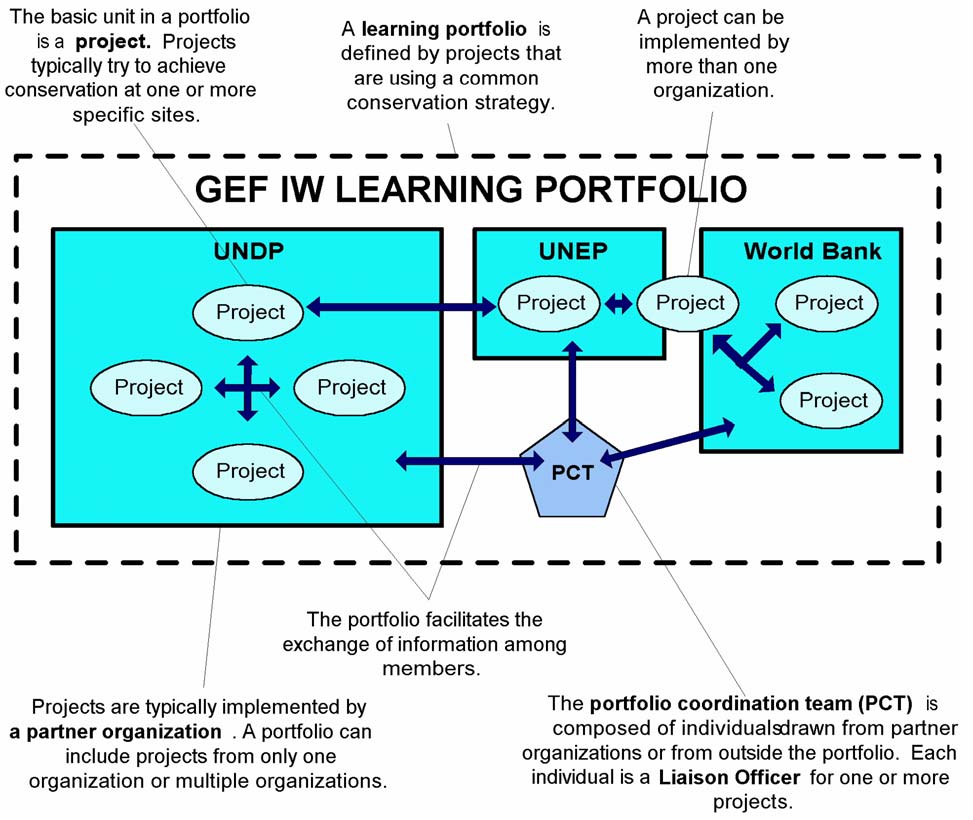
Figure 2. Key Elements of the GEF IW Learning Portfolio
Adapted from RedLAC, 2003
19 In addition to minimizing unproductive GEF duplication, IW:LEARN focuses on the IW learning
process world-wide: Collective lessons learned through the Operational Phase contribute to the global
sum of TWM experience and wisdom, providing guidance to ongoing replication of successful TWM
activities at the regional and global levels. GEF IW projects are further aligned with Commission on
Sustainable Development (CSD) reviews, MDG and WSSD targets (e.g., Integrated Water Resource
Management Plans (IWRM) for all nations and basins). Across this broader GEF and IW community,
there is expected to be a continuing long-term need for projects such as this to provide the research and
development of TWM information materials and training capacities, skills and applications. Through
IW:LEARN, the GEF pursues opportunities for collaboration with CSD during its biennial focus on
Integrated Water Resources Management (IWRM), 2004-2005. IW:LEARN includes several features to
support such collaboration, consistent with GEF Council direction (GEF/C.22/13 of November 2003) and
ongoing deliberations between the CSD and the GEF Secretariat. Thus, a successfully implemented
12
Operational Phase FSP also strengthens the case for continuation of IW:LEARN services to advance the
impact and sustainability of future GEF International Waters and related projects.
20 Comprised of IA and GEF Secretariat leads for IW together known as the IW Inter-Agency Task
Force (IATF) the IW:LEARN Steering Committee (SC) utilizes the FSP as an instrument for assessing
and advising IW projects. Additional executing and funding partners are also invited to participate. The
SC plays a key role in coordinating IAs' contributions to and use of IW:LEARN in their respective
projects. In this fashion, technical services and comparative advantages23 that each IA provides benefit the
entire GEF IW portfolio. Projects receive additional technical support from IW:LEARN's Technical
Advisory Panel (TAP), chaired by the IW specialists from the GEF STAP (coordinated by UNEP-GEF).
Thus, IW:LEARN integrates experiences and activities across GEF IW partners and stakeholders to
improve TWM globally, on-the-ground and at multiple scales.
Country Drivenness
21 IW:LEARN technically supports the national priorities and activities of over 120 nations in more than 55
International Waters (IW) projects that are now under implementation or in the GEF pipeline, Figure 3, as
well as in water-related projects of other GEF focal areas. IW:LEARN thus addresses the needs of country-
driven GEF IW projects and their staff. Country-drivenness is demonstrated through design of these activities
to meet the expressed capacity-building and technical support demands of GEF IW projects receiving
country-driven, focal point endorsements.
22 GEF-beneficiary nations have expressed explicit need for further capacity-building assistance and
technical support in developing their own TWM capacity. Such is reflected in their GEF project briefs,
Transboundary Diagnostic Analyses (TDAs), Strategic Action Programs (SAPs) and ongoing
communications with GEF IAs and IW:LEARN.24 National representatives conveyed similar sentiments
at the 2000 and 2002 GEF IWCs and other recent regional IW meetings.25 Many of these nations also
search for practical TWM models and insights to guide their common pursuit of WSSD and MDG targets
for sustainable freshwater and for marine fisheries resources. Furthermore, various IW-related treaties and
conventions also call for increase TWM capacity-building assistance.26
Why should GEF promote TWM learning through IW:LEARN?
23 The GEF has invested over US$460 million to support countries jointly pursuing International Waters
projects. Judicious utilization of this GEF investment requires that all the necessary institutions are
involved and their experiences included for maximizing projects' benefits. The complexity of IW projects
also raises a variety of technical questions among participating countries. Stakeholders cooperating on IW
projects must establish sufficient capacity to meet their common goal of sustaining the shared benefits of
transboundary waters. IW:LEARN develops key activities designated in the Global Technical Support
Component of OP10 27 to address these issues.
23 See Annexes 9 (Operational Phase Concept for the UNEP-IW:LEARN Best Practices Database) and 10 (Comparative Advantages and Specific
Linkages IAs Bring to IW:LEARN).
24 Most GEF IW project-related documents, including approved project briefs and finalized SAP documents, as well as GEF IWC summary
reports and proceedings, can be found on-line via the GEF's International Waters Resource Centre (IWRC), developed and maintained by
IW:LEARN. http://www.iwlearn.net
25 E.g., the 4th Inter-American Dialog in Brazil in 2001; East Asian Seas meeting in Korea, a UNECE meeting in Poland, and Africa Water
Facility presentations at the WSSD WaterDome in South Africa, all in 2002.
26 See list at http://en.wikipedia.org/wiki/International_Waters#International_Waters_Agreements .
27 OP10 (paragr. 10.17) describes typical activities of the Technical Support Component as follows: "The complexity of International Waters
projects raises technical questions about how and what contaminants to monitor, how to analyze complex sets of data, where to get help, how
countries can institutionally work together, and how to involve the public in decision-making. Targeted regional or global capacity-building
13
Figure 3. Map of countries participating in GEF IW projects.
Nations participating directly in 4 or more GEF International Waters projects (darkly textured), 1-3 GEF IW projects
(lightly textured) or no such projects (off-white). Map includes both active and completed projects. Note: Japan
became a partner in the PEMSEA project in July 2002, but is not a recipient of GEF aid for its participation.
24 IW:LEARN directly contributes to the GEF's OP10 objective28 of developing several global
International Waters projects aimed at:
· "Deriving and disseminating lessons learned from projects undertaken in the pilot phase and the
permanent GEF,
· Sharing the learning experience with groups of countries cooperating on International Waters
projects, and
· Addressing the technical and institutional needs of those countries cooperating on International
Waters projects."
25 The proposed Operational Phase project aims to strengthen global capacity to learn and apply the
lessons of experience from TWM approaches rather than duplicate the mistakes. IW:LEARN is also
instrumental the GEF Business Plan's capacity-building strategic priorities (GEF/C.22.6). Strategic
Business Planning (GEF/C.21/Inf.11 Annex 3, paragr. 14) particularly emphasizes IW:LEARN's key
role in the GEF's Strategic Priority (IW-2) for targeted IW learning:
"The GEF Replenishment included a specific US$20 Million for targeted learning within the
portfolio, based on the success of the IW:LEARN approach in OP 10 and piloted in GEF-2.
projects may be necessary to help increase awareness on how to jointly address these contaminant problems. Global projects in this component
can help individual groups of countries to share experience with other areas around the globe and lessons can be derived from the experience.
New ... information systems have been developed ... that can help countries sort through complex decisions for dealing with root causes of
transboundary environmental degradation. Targeted technical information sharing, capacity building, and training opportunities may also be
appropriate."
28 OP10, paragraph 10.4(d)
14
The learning experiences among GEF projects undertaken within the IW portfolio [have]
been successful as judged by survey, project evaluations and OPS2. The learning is aimed at
exchanging successful approaches among existing projects and those under preparation so
that they may be adopted within the framework of adaptive management that characterizes
the GEF approach to transboundary water systems. They also help avoid problems that have
been encountered by projects. Such South-to-South `structured learning' contributes
significantly to the success of GEF's foundational/capacity building work in IW."
With design guided by the IAs' IW leads, all IW:LEARN components and activities align within the
OP10 technical support component to realize these strategic priorities.
26 IW:LEARN integrates active involvement by all three IAs as well as the GEF Secretariat, M&E
Unit, NGO Network and STAP in exchanging practical experiences and learning across over 55 GEF-
approved IW projects and projects in preparation. With the support of its Steering Committee (SC)
members, their agencies and NGO partners, IW:LEARN facilitates the incorporation of successful
measures into current and new projects, so that the GEF IW portfolio can expeditiously replicate positive
results. IW:LEARN technical assistance to projects for appropriate use of ICT and the Internet also
catalyzes increased transparency and participation. This, in turn, promotes greater stakeholder ownership
and sustainability of transboundary management institutions assisted by the GEF. Thus by partnering
through IW:LEARN, the three IAs advance their IW projects' learning, replication efficiency,
transparency, ownership and sustainability during and beyond the IW:LEARN Operational Phase project.
III.
DEVELOPMENT OBJECTIVE
Global Objective29
27 IW:LEARN's global development objective is
To strengthen Transboundary Waters Management (TWM) by facilitating learning
and information sharing among GEF stakeholders.
28 To help the GEF achieve its Strategic Priorities for International Waters as well as stated objectives of
the Global Technical Support Component of OP10,30 project targets towards this objective include:
29 Terminology for objectives derived from Juha Uitto. 2002. GEF M&E Policies and Procedures, with Emphasis on Indicators for International
Waters Projects (Presentation to GEF IWC 2002, on-line via http://www.iwlearn.org/iwc2002):
·
Goal (Global Objective) Higher objective to which this project, along with others, will contribute
·
Purpose (Project Objective) The impact of a project. The change in beneficiary behaviour, systems or institutional performance
because of the combined output strategy and key assumptions.
·
Outcomes (Immediate Objectives) The main results [components of purpose] stemming from achievement of outputs.
·
Outputs -- distinct from Outcomes -- is used here to describe the products and services delivered by the project; whereas
·
Activities -- refers to the actions carried out by the project to create these outputs.
(http://www.undp.org/seed/unso/capacity/documents/lfa-support.pdf)
30 OP10, paragraph 10.4(d), as quoted here in Section 6.
15
· From 2006 onward, all waterbodies developing country-driven, adaptive TWM programs with
GEF assistance benefit from participating in structured learning and information sharing
facilitated by GEF via IW:LEARN.
· From 2008 onward, successful IW:LEARN structured learning and information sharing services
are insitutionalized and sustained indefinitely through GEF and its partners.
IV.
COMPONENTS, OBJECTIVES, OUTCOMES, OUTPUTS, AND ACTIVITIES
29 In pursuit of these targets, IW:LEARN will improve GEF IW projects' information base, replication
efficiency, transparency, stakeholder ownership and sustainability of benefits through the following five
components:
Figure 4 The Five Components of the IW:LEARN Operational Phase Full-Sized Project, built
upon information sharing and structured learning base
A. Facilitating access to information about transboundary water resources among GEF IW projects
Outcome: TWM improved across GEF IW project areas through projects' and stakeholders'
access to TWM data and information from across the GEF IW portfolio and its partners
B. Structured learning among GEF IW projects and cooperating partners
16
Outcome: Enhanced TWM capacity at project- and basin-levels through sharing of experiences
among subsets of the GEF IW portfolio, including projects, their partners and counterparts
C. Organizing biennial International Waters Conferences
Outcome: GEF IW portfolio-wide increase in awareness and application of effective TWM
approaches, strategies and best practices; numerous new and enhanced linkages and exchanges
between GEF IW and other TWM projects with shared TWM challenges
D. Testing innovative approaches to strengthen implementation of the IW portfolio
Outcome: A widely available suite of tested and replicated ICT and other tools and approaches
for strengthening TWM
E. Fostering partnerships to sustain benefits of IW:LEARN and associated technical support
Outcome: TWM learning and information sharing mechanisms are mainstreamed and
institutionalized into GEF IA and ongoing projects, as well as institutional frameworks of
completed projects (e.g., Regional Seas and freshwater basin secretariats)
30 IW:LEARN components' objectives, outputs and activities are described below: Table 1 presents
outputs by activity and year, as indicators of project performance. This is followed by a more detailed
description of expected outcomes, and activities and outputs to realize those outcomes. The Logical
Framework (Annex B) further characterizes key indicators and associated assumptions and risks.
COMPONENT A. Facilitating Access to Information on
Transboundary Water Resources Among GEF IW Projects
31 Immediate Objective A: To facilitate the integration, exchange and accessibility of data and information
among GEF IW projects, their partners and stakeholders.31
Result A: Partners/stakeholders access information and data across GEF IW portfolio, sharing ICT tools
to improve TWM.
32 Rationale: The GEF's OP10 highlights the IW portfolio's need for increased access to and use of
information to benefit transboundary waters management (TWM). Currently, data and information
generated by IW GEF projects are often difficult to discover. For example, one GEF IW project has
identified a score of environmental indicators to track progress towards improving its transboundary river
ecosystem. Another project developed training modules to apply social marketing to support project-level
IW outreach. A third project created an ICT tool for tracking over 100 partnerships involved in various
31 Addresses priorities expressed in GEF Operational Program Number 10; "Program Objectives" section, paragraph
10.4(d)
( http://gefweb.org/Operational_Policies/Operational_Programs/OP_10_English.pdf ), the GEF Business Plan
FY03-05 (GEF/C.19/10), GEF Council Meeting 19 Summary of the Charge (pagr. 61), GEF/C18/5 (pagr. 11), and
Priority Issues which STAP Should Address in GEF Phase III (section 3).
http://stapgef.unep.org/documents/PRIORITY%20ISSUES%20III.doc . Furthermore, this objective also facilitates
the lead responsibility of GEF IAs and EAs to "disseminate project level information, including lessons learned," as
expressed in the GEF's Clarifying the Roles and Responsibilities of the GEF Entities.
http://www.gefweb.org/Documents/Council_Documents/GEF_C19/C.19.8_Roles_and_Responsibilities.pdf
17
project-related activities and initiatives. While virtually all GEF IW project documents include plans to
create databases and Geographic Information Systems (GIS) to collect and disseminate relevant data and
information, only less than 20% have made these information systems accessible on-line. In all these
cases, there is virtually no means for other projects to discover and apply this valuable information.
18
Table 1. IW:LEARN Project Timeline with Outputs (indicators of project performance) by Activity and Year
Component/Activity
Year 1
Year 2
Year 3
Year 4
A. Information Sharing: >75% projects use IW-IMS and >50% of users obtain needed info by 2008.
A1. IW
IW-IMS protocols established,
IW-IMS populated; Helpdesk
Helpdesk responds to
Helpdesk fielding 48+
Info. Mgmt. System
prototype in place; 1 new
operational,
24 requests/yr; 1 new
requests/yr;
(IW-IMS)
module (Africa)
proactive & responsive;
module (TBD)
1 new module
1 new module
(TBD)
(groundwater/aquifers)
A2. ICT Technical
1 ICT Training Workshop; 25% 50% of projects' Websites
1 ICT Workshop; 75%
95% of projects'
Assistance
of projects' Websites linked to
linked to IW-IMS
of projects' Websites
Websites linked to IW-
IW-IMS
linked to IW-IMS
IMS
B. Structured Learning: 30+ projects apply lessons from IW:LEARN structured learning to improve TWM in the basins by 2008.
B1. Regional Multi-
At least 1 regional exchange
At least 2 regional exchanges
At least 3 regional
Learning products on
Project Exchanges
launched
launched (cumulative)
exchanges launched
IW-IMS
(cumulative); Present
regional exchange
findings at IWC4
B2. Learning for
Freshwater &/or LMEs
Freshwater & LME exchanges
Coral reef exchange
Learning products on
Portfolio Subsets
exchanges launched
both launched (or continuing)
launched; other
IW-IMS
exchanges present
findings at IWC4
B3. Inter-Project
1-4 multi-week
1-4 multi-week
1-4 multi-week
1-4 multi-week
Exchange Missions
inter-project exchanges
inter-project exchanges
inter-project exchanges inter-project exchanges
B4. Public
Training materials developed
1st workshop; training materials
2nd workshop; training
3rd workshop; training
Participation Training
revised
materials augmented
materials on IW-IMS
C. IW Conferences: Representatives from all GEF IW projects participate in 2 portfolio-wide review, replication and partnership events.
C1. IWC3 (Rio de
IWC3 held; IW portfolio
Proceedings disseminated
Janeiro, Brazil)
recommendations to CSD
via IW-IMS
C2. IWC4 (Cape
IWC4 host, location and co-
IWC4 held
Proceedings
Town, South Africa)
finance secured; agenda set
disseminated
Component/Activity
Year 1
Year 2
Year 3
Year 4
via IW-IMS
D. Testing Innovative Approaches: GEF IW projects and partners benefit from a set of demonstration activities integrating TWM information
sharing and structured learning.
D1. S.E. Asia Regional SEA-RLC established to address Regional GEF IW GIS on-line,
Roster of >100 experts
>1000 IW resources
Learning Center
projects TWM needs; Web site
connected to IW-IMS
addresses projects'
added to IW-IMS; SEA
(SEA-RLC)
launched
needs; 3 GIS DSS
IW project applying
and linked to IW-IMS
modules featured
GIS modules
D2. S.E.
3 roundtables for senior officials 3 roundtables for senior officials Network and learning products accessible via IW-
Europe/Central Asia
and experts; regional TWM
and experts; network sustained
IMS
information exchange network
via regional partners
launched via Internet
D3. CSD/GEF
Global roundtable, in follow-up
Learning products accessible via IW-IMS
Roundtable with CSD
to CSD-12 (and leading up to
CSD-13)
E. Partnerships to Sustain Benefits: TWM structured learning and information sharing institutionalized.
E1. Partnerships and
Initial sustainability plan
Partners recruited and aligned to Sustainability plan
Sustainability plan
Strategic Plan
finalized and approved by
sustain IW:LEARN benefits for
revised per mid-term
realized through
IW:LEARN SC; role for
all activities per plan.
review
partners strategic plans.
partners in sustainability plan
finalized, approved
E1. IW Contributions
2-3 projects receive cost share to 2-3 projects receive cost share
2-3 projects receive
2-3 projects receive cost
to Global TWM
participate each of in 2 GEF IW
to participate in each of 2 GEF
cost share to participate share to participate in
side events; 1-2 outreach &/or
IW side events; 1-2 outreach
in 1-2 GEF IW side
each of 2 GEF IW side
learning products disseminated,
&/or learning products
events; 1-2 outreach
events; 1-2 outreach
including LME video (co-
disseminated
&/or learning products
&/or learning products
produced by IW:LEARN)
disseminated
disseminated
20
33 The conventional approach to developing GEF IW information systems tends to focus entirely on
gathering and repackaging information without addressing means of sustaining these efforts beyond the
project cycle. Subsequent to projects' conclusion, GEF's investment in project-generated information is
essentially lost to posterity. For instance, in the case of the recently concluded phase of the Black Sea
Environmental Programme, links to certain applications and tools developed during the project are no
longer referenced and have virtually disappeared since the end of the project cycle. Clearly a there is a
need to track and archive such useful project outputs.
34 Absent IW:LEARN, there is no single coordinated mechanism to capture and retain projects' outputs,
intermediate data and information generated by these projects. Nor are projects generally aware of the
information resources and ICT tools developed by one another to sustain their respective transboundary
water bodies. Yet countries participating in TWM have expressed a strong need to access, adapt and apply
such information. They also yearn to have analogous projects' information (e.g., TDA and SAP
documents, contact information, etc.) at their fingertips, in order to spontaneously emulate models and
seek and obtain answers to the various day-to-day operational questions critical to project success. Where
these questions go unanswered, projects and their partners often meander in search of peer assistance or
else re-invent the wheel, thus wasting limited time and scarce resources. They have limited ongoing
interactions with their peers around the world since there is virtually no place where they can reliably find
one another, on-line or off. They frequently have no idea where to go to find existing valuable TWM
information amidst the vast but superfluous reaches of the Web.
35 Moreover, a large portion of GEF IW projects still have little or no Web presence themselves, outside
of their profiles in the GEF IWRC (www.iwlearn.net), developed and maintained by IW:LEARN. Most
use email, but few employ more advanced, yet increasingly accessible ICTs for project coordination (e.g.,
instant messaging, Internet-based teleconferencing, shared document editing, etc.). All this limits the
ability of their national, sub-national and NGO partners as well as key stakeholders to keep appraised
and fully involved in project activities. It also prevents "incidental" discovery of useful project
information by their peers through Internet searches.
36 Past efforts of the GEF in collaboration with UNEP have put in place a mechanism for coordinated
reporting of project related information that is visualized through the GEF Project Tracking System
(www.gefonline.org). Recently, UNEP developed a prototype that enhanced the GEF Project Mapping
System to demonstrate how data and information generated by projects could be captured. The prototype
linked in real-time with information from another GEF-sponsored initiative, the "Environment-Directory"
(http://www.environment-directory.org). Thus, a two-way stream of project related information can be
archived and customized for specific purposes by building upon the existing business process and Internet
applications already in place.
37 While this demonstration illustrated the utility of an established and coordinated information sharing
process among Implementing Agencies, there still remains a need for an ongoing mechanism to capture
data and information made available through the Internet (via project websites) from the various
stakeholders involved in GEF IW projects. At the same time, stakeholders also seek a well-known access
point and channels for sharing data, information and knowledge sharing that benefits all GEF projects and
their on-the-ground constituencies a two way channel.
38 This component will catalyse the synthesis, collection and integration of information resources
pertinent to TWM both within and from outside the GEF IW portfolio -- thereby enhancing information
sharing among GEF IW project regions and their access to priority water information. Specific objectives
are to:
· build a globally-accessible electronic repository of useful GEF IW project data and information
as well as of technical resources to address priority TWM information needs which, for many
project stakeholders, is currently difficult (sometimes impossible) to acquire;
· implement policies and processes to capture and disseminate transferable TWM experiences
gained through GEF projects' execution;
· facilitate the development, application and inter-project replication of valuable ICT tools to
support improved TWM at the project-level as well as to increase both contribution and use of
pertinent information resources by those who need and can most benefit across all GEF IW
projects and their on-the-ground constituencies
· foster information exchange among the IW learning portfolio, including sharing, synthesis and
dissemination of information resources developed by cross-sections of the GEF IW portfolio and
their non-GEF counterparts
39 Through a systematic approach to information sharing, the GEF can increase IW projects' efficiency,
effectiveness, transparency and stakeholder ownership. This component develops such an alternative.
40 Activity A1 Establish a central metadata directory of all available IW project data and information (GEF
IW Information Management System: IW-IMS)
Output A1.1: IW-IMS prototype established through use of protocols to inter-link IW Resource
Center, projects' and partners' Web sites by 2005.
Output A1.2: At least 4 IW-IMS modules support information sharing among specific subsets of the
GEF IW portfolio (e.g., Africa, groundwater/aquifers, coral reefs) by 2008.
Output A1.3: An inter-agency GEF IW help desk (&/or water-net) uses IW-IMS resources to
research and respond to at least 4IW community-driven TWM requests per month by 2006.
41 The International Waters Information System (IW-IMS) will serve as single entry point for access to
GEF IW information. This activity will develop, test and institutionalize a supporting mechanism to
enhance access to high quality data and information. Extending the International Waters Resource Center
(IWRC) information system created during the IW:LEARN Pilot Phase, and utilizing the UNEP.Net
Frame Work,32[3] the IW-IMS will include a central database with supporting utilities that provide remote
search and transparent access to project profiles, contact information, publications, geo-referenced data,
news, etc., that are available on-line and are relevant to GEF priority areas (e.g. project websites, thematic
portals and clearing houses, other Resource Centers). Its interface will consist of a series of user
prioritized "modules" that readily address IW stakeholders' information needs and questions by
harvesting and customizing information from a broader network of information partners.
42 Activity A2 Provide technical assistance to GEF IW projects to develop or strengthen Web sites and apply
appropriate ICT tools according to defined ICT quality criteria,33 and connect all GEF IW
project Web sites to the GEF IW-IMS.
32[3] UNEP.Net is a framework consisting of two distinct utilities:
· a discovery mechanism for UNEP and its partners to share and publicize high quality data and information
about the environment that they own or manage;
· supporting tools that allow users to use UNEP.Net to create and complement their own services;
22
Output A2.1: At least 2 ICT training workshops over 4 years, through 2008.
Output A2.2: 95% of GEF IW projects have developed Web sites with ICT tools & information
resources inter-linked & accessible through IW-IMS by 2008.
43 The objective of this activity is to create and make GEF IW projects' and partners' Web sites
interoperable, build capacity for their continued upkeep and utility, and to assist projects in developing
and applying ICT solutions to TWM. It also repackages and applies the tools developed in Activity A1,
and serves as a feedback mechanism for practical refinement of the functions and services offered by the
IW-IMS.
COMPONENT B. Structured Learning Among IW Projects
and Cooperating Partners
44 Immediate Objective B: To establish and technically support a series of face-to-face and electronically-
mediated structured learning activities34 or learning exchanges among related projects within the GEF
IW portfolio.
Result B: Enhanced TWM capacity in at least half of all GEF IW projects through sharing of experiences
among subsets of the portfolio.
45 Rationale: As presented in the Context section above, GEF IW projects and their partners have expressed
tremendous interest in learning from one another how to improve TWM.. The IW:LEARN solution
addresses this demand through three types of South to South structured learning activities:
1) Peer-to-peer blended learning for subsets of the IW portfolio (e.g., LME projects or African
projects) through a series of 2-3 facilitated face-to-face meetings, bridged by periodic electronic
dialogue (Activities B1 and B2)
2) Multi-week learning missions, whereby partners from one project area visit another project in
order to experience first-hand the approaches used and challenges faced by their counterparts
working on similar IW issues or under similar circumstances, or to acquire hands-on experience
regarding a specific IW issue or TWM approach (Activity B3)
3) Targeted training to fill critical gaps in many projects' TWM capacity (Activity B4 and some
sub-activities under B1 and B2).
46 Learning Missions: The inter-project stakeholder exchange activity (B3) aims to ramp up the global
transfer of TWM practical experience by increasing institutional capacity to replicate best practices and
learn from lessons among the GEF International Waters projects and their partners.
47 A six-month pilot program in 2003 tested the utility and mechanism for project-proposed stakeholder
exchanges. IW:LEARN requested that exchanges focus on one or more project management and/or
ecological issues identified as priorities by GEF IW projects and partners (e.g., as surveyed at the 2002
GEF International Waters Conference in Dalian, China). Despite strong demand (exhibited by the number
33 ICT quality criteria include elements such as usability, accessibility in low-bandwidth contexts, and metadata
standards for effective information searching and discovery via search engines.
34 E.g., conferences, meetings, workshops, virtual forums and e-learning exchanges.
23
of inquiries and proposals received), pilot funds limited support to a handful of "small" exchanges
(<$10,000 each). Seven exchanges spanning all GEF-supported regions and IAs, including lakes, rivers,
bays, and marine ecosystems were selected. Selection of exchange candidates was based on pragmatic
objectives for knowledge transfer and relevance to assessed GEF IW priorities.
48 Targeted Training: At the last International Waters Conference (September 2002), 50 participants from
GEF IW projects and partners identified "public participation" (P2) as their highest priority area of need
for further capacity building. GEF mandates that IW projects develop and implement stakeholder
involvement plans (SIPs) as part of the TDA/SAP process. Partners are also encouraged to promote more
effective IW decision-making by providing the public access to relevant information, meaningful
opportunities to participate in the decision-making process, and access to justice to redress harms that
might arise. Projects aim to do so through their respective SAP processes, legal frameworks, and
institutions for governing transboundary waters. Unfortunately, there is often a paucity of local, national,
and regional experience to guide and realize public participation efforts.
49 Across GEF IW projects and the wider international environmental community, however, there exist a
number of tested approaches, models, and tools for promoting more sustainable water governance through
improved public participation. These could be readily adapted and applied to achieve Transboundary
Waters Management (TWM) objectives at the local through basin-wide scales, from the early stages of
project formulation through to the implementation of transboundary agreements by permanent
coordinating institutions. There is thus a strong unfulfilled need to be met through capacity-building
training for results-oriented P2 in IW management.
50 Overall: Blended learning meets the needs of subsets of the learning portfolio through ongoing
opportunities to share respective experiences and lessons among similar TWM programs. Missions allow
for more intensive experiential learning to address specific capacity needs of either one or a reciprocating
pair of IW projects. Training, meanwhile, addresses highest priority learning needs expressed across the
portfolio and its partners by delivering specific expertise through series of instructional modules. The
multi-institutional Portfolio Coordination Team (pp. 9 and 41) will ensure that all three types of activities
provide sufficient external structure to meet projects' outstanding learning needs.
51 Activity B1 Organize 2-5 multi-project learning exchanges on a regional scale
Output B1.1: Caribbean Inter-linkages Dialog (in cooperation with UNEP and OAS)
Output B1.2: Exchange across freshwater and marine GEF IW projects and partners in Africa (in
cooperation with ANBO, ACWA, NEPAD and/or African Regional Seas Secretariats).
Output B1.3: Exchange among IW projects across Eastern Europe, Central Europe and Central Asia
(in partnership with the UNECE Transboundary Waters Secretariat and the Peipsi Center for
Transboundary Cooperation)
52 This activity aims to enhance the implementation of regional subsets of the GEF IW portfolio by
increasing the overall capacity of managers, transferring capacity from within these portions and from outside
partners, and strengthening communication and learning exchanges across networks of GEF IW managers
within these regions.
53 As indicated by the DeltAmerica MSP and the GEF-IW-LAC fora of the IW:LEARN pilot phase,
facilitated dialog among different projects in the Caribbean geographic area may lead to improved
efficiency and effectiveness. This activity facilitates discourse among GEF projects in IW and other focal
areas. As such, it addresses STAP's 2004 discussion on such inter-linkages and supports the Barbados
24
Programme of Action (BPoA) for the sustainable development of Small Island Developing States (SIDS).
With guidance from the IWTF, UNEP's Caribbean Environmental Programme (CEP) is well situated to
realize this activity through its mandate under Cartagena Convention for the Protection and Development
of the Marine Environment of the Wider Caribbean Region (1983). CEP will link projects across GEF
focal areas in dialog over a 3-year period. This dialog for inter-project collaboration will be launched in
conjunction with the fifth Inter-American Dialog on Water (IAD5) in fall 2005 and continue through
facilitated electronic fora, a potential WWF4 side event in 2006, and a final face-to-face wrap-up event in
2008.
54 The African exchange will aim to develop a network of mutually supportive GEF IW projects in the
region. The Eurasian exchange, meanwhile, will focus on supporting a subset of nationally-driven "Capacity
for Water Collaboration" training workshops under development in partnership with the UNECE
Transboundary Waters Convention Secretariat and regional NGOs over the 2004-2006 period.
55 Organize and conduct multi-project learning exchanges for 3-5 subsets of similar projects in the GEF
portfolio.
Output B2.1: Exchanges among Freshwater Projects (with IUCN; including Groundwater/Aquifers,
also with UNESCO/ISARM; River Basins, also with WBI and INBO; Lake Basins, also with
LakeNet)
Output B2.2: Exchanges among Large Marine Ecosystem (LME) projects (with IUCN, NOAA, IOC,
URI, GPA and Regional Seas)
Output B2.3: Exchanges among Coral Reef projects (with WorldFish Center)
56 This activity aims to enhance the implementation of freshwater, marine and coral reef subsets of the
GEF IW portfolio by increasing the overall capacity of managers, transferring capacity from within these
portions and with outside partners, and strengthening communication and learning exchanges across
networks of GEF IW managers managing similar ecosystem types. A blended learning approach will be
used to promote ongoing sharing of experiences among each of these communities. Some demand-driven
training elements may also be incorporated. IW:LEARN will work with IUCN and ecosystem specialists
(e.g., UNESCO-ITARM, INBO, LakeNet and the WorldFish Center) to bring value and substance to
these dialogues by drawing on their knowledge, experience and networks. These networks will also help
extend the outreach and benefits of other GEF IW projects, e.g., the World Lakes Management Initiative
MSP and the Coral Reef Targeted Research FSP.
57 Activity B3 Coordinate inter-project exchanges between GEF IW projects and partners
Output B3: 5-7 multi-week staff/stakeholder exchanges between pairs of 10-14 projects, at
least half of which are new (or pipeline) projects, at a rate of 1-4 exchanges per year for 4
years, through 2008.
58 This FSP activity builds upon lessons from the 2003 pilot. Objectives include:
· Exchanging project experience and expertise at the operational level between projects with similar
goals, objectives and activities;
· Mutually increasing capacity for more effective protection of shared resources and sustainable
management of transboundary water systems;
· Documenting and disseminating recommendations and lessons gleaned from the exchanges across
participating GEF IW projects.
25
59 The activity brings together project managers, scientists and technical experts, non-governmental
organization leaders, and policy makers for exchanges of project experiences and lessons learned during
multi-week "learning missions." The exchanges enable participating institutions to share experience and
learn from each other in practical ways through collaborative face-to-face interactions over two to six
week periods. To date, a number of projects and their partners (e.g., BCLME, GCLME, HCLME,
PEMSEA, PERSGA, IUCN (Mekong and Tanganyika), Globallast, DeltAmerica (IWRN)) have already
requested notification and consideration for exchanges in 2004. Even though the pilot phase necessarily
had a short notification period, tight application deadlines, and limited publicity, the interest was
widespread and vigorous. Demand is expected to increase in subsequent years, following outreach and
dissemination of prior missions' results and greater, more strategic marketing of the program. Outreach
will be pursued in conjunction with biennial International Waters Conferences (Component C) and
through the information sharing (Activity A2), structured learning (B1, B2 and B4) and demonstration
(Component D) activities developed by IW:LEARN. Opportunities for co-financed missions, e.g.,
through INBO's TWINBASIN project, have been also been established.
60 Activity B4 Provide face-to-face and virtual training to enhance public participation in Transboundary
Waters Management.
Output B4: Training for at least 15 projects (5 government-NGO partnerships per year for at
least 3 years) to jointly develop, refine and/or implement activities to increase public access
and involvement in TWM decision-making in their respective basins.
61 IW:LEARN's P2 training activity will consist of distilling and delivering a set of P2 training modules
to teams of project, government and NGO partners across at least 15 GEF project areas. This modular
training will be reinforced and enhanced back in participants' home offices through facilitated distance
learning across projects using appropriate ICTs. The overall goal will be to assist each GEF IW project in
building the public support and stakeholder ownership needed to sustain TWM beyond GEF's
intervention. Specific outputs may include new or improved SIPs, P2 protocols for conventions, or
adoption of specific tools or measures (e.g., citizen advisory committees, stakeholder mapping tools,
social marketing campaigns, public-access repositories for data or legal documents, public hearings) for
improving P2 in TWM. Results for improved public access may be measured through benchmarks
adapted from those developed by the Access Initiative, an international environmental NGO network,
with guidance from GEF and UNDP M&E experts. Stakeholder involvement results will also be tracked
according to the number and type of activities planned and realized by teams following the training.
62 This activity will include 3-5 workshops, perhaps one entirely in distance mode and/or one aimed at
training trainers to continue this initiative after the IW:LEARN FSP has concluded. In addition, a Website
and electronic community of practice will be established to support ongoing sharing of information
resources and experiences among participants (supported under Component A's GEF IW-IMS).
COMPONENT C. Biennial International Waters Conferences
63 Immediate Objective C: To hold GEF IW conferences in 2005 and 2007, gathering the IW community to
showcase, share, and assess experience among GEF IW projects, stakeholders, evaluators and other IW
programs and institutions.
Result C: The GEF hosts two two global conferences for the GEF IW portfolio, including exchange of
experience within the portfolio and with related transboundary waters programs.
26
64 Rationale: Two previous International Waters Conferences confirmed a strong portfolio-wide demand for
regular, face-to-face contact among key GEF project, agency and partner personnel. The first and second
Global Environment Facility's (GEF) Biennial International Waters Conferences (2000 in Hungary and 2002
in China) were highly successful and facilitated a coordinated evaluation of the spectrum of projects within
the IW portfolio. Project principals seized these opportunities to showcase their successes, exchange lessons
learned and foster information sharing. The conferences also provided a means to identify avenues for
increased collaboration between participating governments, GEF international waters projects, GEF
implementing and executing agencies, and the private and non-profit sectors. Participants acknowledged the
tremendous value these sessions provided and encouraged additional opportunities to foster collaboration
among the international waters projects.
65 To continue these successful events, two GEF IW Conferences will be organized. Their purposes are to:
· permit GEF, recipient countries, the implementing agencies (UNDP, UNEP, World Bank), co-
financiers, project directors, and other key stakeholders to strategically review and assess the GEF
international waters portfolio with the aim of promoting improvements and needed adjustments
based on lessons learned;
· facilitate the identification and dissemination of best practices and lessons learned in TWM and
project development, both within and outside the GEF portfolio of projects, as well as the practical
application of these practices and lessons to project portfolio priorities; and
· provide a venue for GEF IW projects' contributions to the deliberations of the Commission on
Sustainable Development (CSD) in its year to address water resource management policy-making
(2005)
66 Another goal of the 2005 and 2007 conferences will be to encourage the development of partnerships
with organizations currently outside of the GEF family. Outreach to the wider IW community of
organizations and stakeholders as well as strengthening linkages with the United Nations Commission
on Sustainable Development's (CSD) first biennial cycle devoted to water issues (2004-2005) is
increasingly important as projects chart their course to ensure the sustainability of GEF-catalyzed
interventions. To support this effort IW:LEARN will collaborate with other international agencies35 and
non-governmental organizations36 to bring their constituencies' perspectives and resources to the
conferences. IW:LEARN will also seek opportunities to involve other public and private organizations to
share their successful International Waters experiences.
67 Renewal of the biennial IWC cycle will provide a significant platform for international waters projects
to exchange ideas, as well as to support the larger objectives of facilitating information sharing,
replication, leveraging resources and encouraging the overall sustainability of these important initiatives.
68 Activity C1 Organize third GEF International Waters Conference, including contributions to CSD 13
(Rio de Janeiro, 2005)
Output
C1:
3rd IW Conference, including documented recommendations from GEF IW portfolio to
CSD-13 Policy Session (Spring 2005)
35 E.g. OAS, UNIDO, FAO, AMCOW, UNECE, Regional Development Banks, Secretariats of non-GEF TWM
programmes, GWP, GIWA, World Water Forum Secretariat, UNESCO and it's network of Institutes for Water
Education including IHE, CATHALAC, etc.
36 E.g., IUCN, LakeNet, DION, ALMAE/SOMADE, ENDA, OVI, and other IW-interested members of the GEF
NGO Network; as well as ILEC, Eco-Africa, other global, regional, national and sub-national NGOs affiliated with
IW projects' execution.
27
69 The 3rd IW Conference will take place in Rio de Janeiro, Brazil, in 2005. Continuing the success of the
previous conferences, IWC3 will feature issue and region-based plenaries, seminars, peer-to-peer
discussions, participatory workshops and individual meetings. Sessions will be designed to facilitate
information exchange among project initiatives and to encourage collaboration and replication wherever
feasible. The conferences will also provide an opportunity for GEF to showcase successes and highlight
lessons learned across the IW community, including current and prospective TWM partners.
70 In addition to coordinating the IWC3 agenda, IW:LEARN will involve the OAS, South American IW
projects and relevant CSD stakeholders in co-planning of one or more side events or follow-on event(s).
As with previous conferences, this IWC will dovetail and integrate with activities of other IW:LEARN
components for information sharing and structured learning. Proceedings will be published in print and
on-line, distributed via GEF's IWRC Web site and throughout the IW-IMS.
71 Activity C2 Organize fourth GEF International Waters Conference (Cape Town, 2007)
Output C2: 4th IW Conference
72 The 4th IW Conference will likely be held in Cape Town, South Africa. With the exception of CSD
participation, activities will largely parallel those of IWC3, taking into account any procedural lessons or
guidance provided through the project's independent mid-term review. Given the proximity of Cape Town to
the GEF IW-supported Benguela Current LME, as well as the host country's progressive water management
policies, one or more site visits may be arranged. A key output of a second conference will be to further plan
extension of this biennial GEF IW 'conference of the parties' in a participatory setting, based on the
demonstrated and evaluated results, beyond the term of this IW:LEARN FSP.
COMPONENT D. Testing Innovative Approaches
to Strengthen Implementation of the IW Portfolio
73 Immediate Objective D: To test, evaluate and replicate novel approaches and ICT tools to meet IW
stakeholder needs.37
Result D: GEF agencies develop, test and, where successful, replicate regional, sub-regional and thematic
demonstrations to improve Transboundary Water Management among GEF IW projects.
74 Rationale: A set of highly successful demonstration activities were realized during the IW:LEARN Pilot
Phase, in partnership with GEF IW stakeholders in all regions. Those most pertinent to the GEF IW learning
portfolio are now being scaled-up and operationalized, through Components A-C above. This underscores
the utility of continued support for testing innovative approaches to enhance information sharing and
structured learning across the portfolio. Within this component, four activities test a set of approaches that, if
successful, can be mainstreamed by lead partners to benefit GEF IW stakeholders during and beyond the
Operational Phase IW:LEARN FSP:
75 Activity D1 Develop South East Asia Regional Learning Center (SEA-RLC)
Output D1.1: SEA-RLC established by 2005 to address regional TWM needs and leverage regional
expertise to benefit global TWM
37 GEF OP 10, paragraph 10.4(d).
28
Output D1.2: SEA-RLC Web site provides roster of (>100) experts and (>1000) other information
resources to address IW projects' needs, by 2008
Output D1.3: Regional GIS database on-line by 2006, with at least 3 GIS-based decisions support
system (GIS-DSS) applications developed and applied in the field by Southeast Asian GEF IW
projects by 2008.
76 The SEA-RLC (Regional Learning Centre) tests the decentralization of IW:LEARN structured
learning and information management through partnership with a university partner in Bangkok to
develop sustaining capacity to serve and foster enhanced cross-fertilization among a regional subset of
freshwater and marine projects in South East Asia.
77 The SEA-RLC will establish a regional IW Web site interlinked with the sites and data archives GEF
IW projects in the region and the broader IW-IMS. This site will include a regional roster of IW experts
and a virtual library of resource materials, both to be maintained by the center. The activity will then
develop, deploy and maintain a regional GIS database for IW projects, along with dissemination of
materials relating its application to TWM decision-making. Finally SEA-RLC will address GEF IW
projects need for guidance regarding financial sustainability though links to potential co-financing and aid
and development agencies, information regarding the generation of revenue streams for sustaining
management-related activities concerned with the aquatic environment
78 Activity D2 Provide face-to-face and virtual training, knowledge sharing and capacity-building and
cooperation between IW stakeholders in Southeastern Europe and Central Asia.
Output D2.1: Five 3-day roundtables for senior officials engaged in Southeastern European TWM by
2006.
Output D2.2: Internet-based targeted information exchange network on Transboundary Waters (for
Southeastern Europe Transboundary River Basin and Lakes Management Program) launched
by 2005, sustained through regional partners by 2006.
79 A series of roundtables for senior officials and experts will serve as the coagulant for a regional TWM
information exchange network launched via Internet to foster a regional IWRM community of practice in the
Southern Mediterranean in support of the Petersberg Declaration and Athens Process. Based on the long
term World Bank involvement in transboundary freshwater, coastal and marine resources management
activities in Southeastern Europe and the Mediterranean, this activity supports and combines the efforts of the
Petersberg Process (jointly coordinated by the Government of Germany and the World Bank) and the Athens
Declaration Process (jointly coordinated by the Government of Greece and the World Bank).
80 The agreement with the Government of Germany was reached in that Phase II of the Petersberg
Process would focus first on Southeastern Europe and later on Sub-Saharan Africa. The theme of the
Phase II will be "sharing benefits." In this context, the Athens Declaration provided a framework for
activities in Southeastern Europe that will focus on a series of five three-day Round Tables on specialized
topics for senior officials and experts, to be supported through this IW:LEARN activity.
81 The follow-on sub-activity to implement the Athens Declaration in Southeastern Europe focus on the
series of transboundary river basins lying south of the Danube River Basin, which flow into the Adriatic,
Aegean, Black, and Ionian Seas, and on the set of transboundary lake basins in this area. The program
which this activity supports aims to assist countries of the region, in cooperation with relevant
stakeholders, to draft IWRM and water use efficiency plans for major river basins and would include a
range of complementary interventions in individual river and lake basins, with a coordination mechanism
29
to allow for exchange of information and experience between activities. This program is now an element
of the Mediterranean Component of the European Union Water Initiative and is receiving support by
other international and national sources.
82 Activity D3: CSD/GEF Roundtable on IWRM or other priority issue to emerge from CSD-12
(April
2004).
Output D3: One roundtable meeting to clarify the role of IWRM or related IW issue of common
priority to the CSD and the GEF.Activity, by 2005.
83 A global roundtable, in follow-up to CSD-12 (and contributing to CSD-13) will establish linkages and
alignment of the GEF IW community as synergistic with and contributing to CSD processes, which in turn
contributes to sustaining the benefits of GEF interventions over the long term.
COMPONENT E. Fostering Partnerships to Sustain
Benefits of IW:LEARN and Associated Technical Support
84 Immediate Objective E: To sustain and institutionalize information sharing and structured learning
across GEF IW projects, partners and stakeholders.
Result E: GEF agencies design and implement a strategic plan to sustain IW:LEARN project services and
benefits to the GEF IW community.
85 Rationale: IW:LEARN's core approaches to raising TWM capacity include structured learning
(Component B), GEF IW conferences (Component C) and demonstration projects (Component D), all of
which contribute to and benefit from an underlying information sharing framework (Component A). This
component aims to establish and institutionalize these activities with key partners who are able to sustain,
enlarge and replicate IW:LEARN's services to promote ongoing replication and recycling of practical
experience gained within the GEF IW portfolio and beyond.
86 The success and financial vitality of the IW: LEARN project relies on its ability to leverage incremental
and catalytic GEF funding into long-term sustainability through internal and external partnerships. This
component fosters partnerships to sustain the benefits of IW:LEARN and its technical support. Activities are
designed to establish commitment, capacity and institutional infrastructure for information sharing and
structured learning mechanisms developed by IW:LEARN to support the IW community on an on-going
basis beyond the end of the Operational Phase project.
87 Activity E1
: Develop partnerships to sustain IW:LEARN's benefits through dialog with GEF
Implementing Agencies (IAs), Executing Agencies (EAs), and external organizations.
Output E1: By 2008 sustainability plans implemented, including transfer of various services to
appropriate organizations.
88 This activity facilitates internal dialogue among the GEF Secretariat and IW:LEARN's Implementing
and Executing agencies, and outreach to IW project stakeholders to explore, plan and implement
partnerships with the GEF Secretariat, UNDP, UNEP, World Bank, Executing Agencies and external
service providers.
89 Outreach among stakeholders, and dialogue with internal partners will help develop an overall
Strategic Plan for sustainability of IW:LEARN benefits. Partnerships outlined in this Strategic Plan will
30
complement the activities of Operational Phase components A through D. Lead and supporting partners
will be identified to build and transfer sustaining capacity to carry forward the specific services and
activities of each component. The implementation of strategic partnerships will build and progressively
transfer full sustaining capacity to continue successful IW:LEARN services and benefits. IW:LEARN
will work with stakeholders and partners to formulate, implement and evaluate a Sustainability Plan for
each successful (and sustainable) activity within every component. At the end of 4 years, all successful
Operational Phase activities will have been operationalized or transferred to sustaining institutions.
90 Activity E2 Promote GEF IW contributions to sustainable development and participation of GEF IW
projects in broader TWM community.
Output E2.1: At least 2 side events at TWM-related meetings each year for 4 years, with 2-3 GEF
projects/year receiving IW:LEARN cost-share to participate.
Output E2.2: 1-2 GEF IW outreach publications, syntheses, videos and/or CD-ROMs disseminated
to TWM community including a co-produced LME video documentary each year
for 4 years.
91 This activity aims to increase the outreach and interactions between the GEF IW portfolio and the
broader water resources, coastal and marine management community. An IATF selection of various sets
of 3-4 projects will represent the GEF IW portfolio for at least 8 international freshwater and/or marine
events such as CSD-13, World Water Forum 4, the IWRA Congress, the World Bank's Water Week or
the 7th Environmental Management of Enclosed Coastal Seas (EMECS) Conference. At the SC
discretion, IW:LEARN PCU may also help organize sessions or side-events where these projects present
their experiences. The activity also supports stakeholder involvement in the GEF IW learning portfolio
through generation of a small series of outreach materials to address common TWM issues and priority.
92 In addition to GEF IW projects' participation in international events, IW:LEARN will assist the GEF
in conveying its projects' TWM experiences and lessons through a suite of outreach materials for the
greater community. Through an audience-appropriate choice of communication media (paper, video, CD-
ROM or DVD), these materials will synthesize and build upon information outputs from Components A-
D, and contribute to the world's understanding about International Waters issues and solutions.
93 The highlight among outreach materials will be a creating and pitching a video documentary exploring
the mystique and function of LMEs, as well as the GEF's role in their transboundary management. The
documentary's overall purpose will be to find simple but effective way to introduce the LME concept to a
larger audience.
All IW:LEARN project activities described above may be clustered according to those which serve
specific GEF beneficiary region(s) or projects addressing similar types of ecosystems, as shown in Figure
5 below. Further detail regarding each project activity can be found in the enclosed Logical Framework
(Annex B).
31
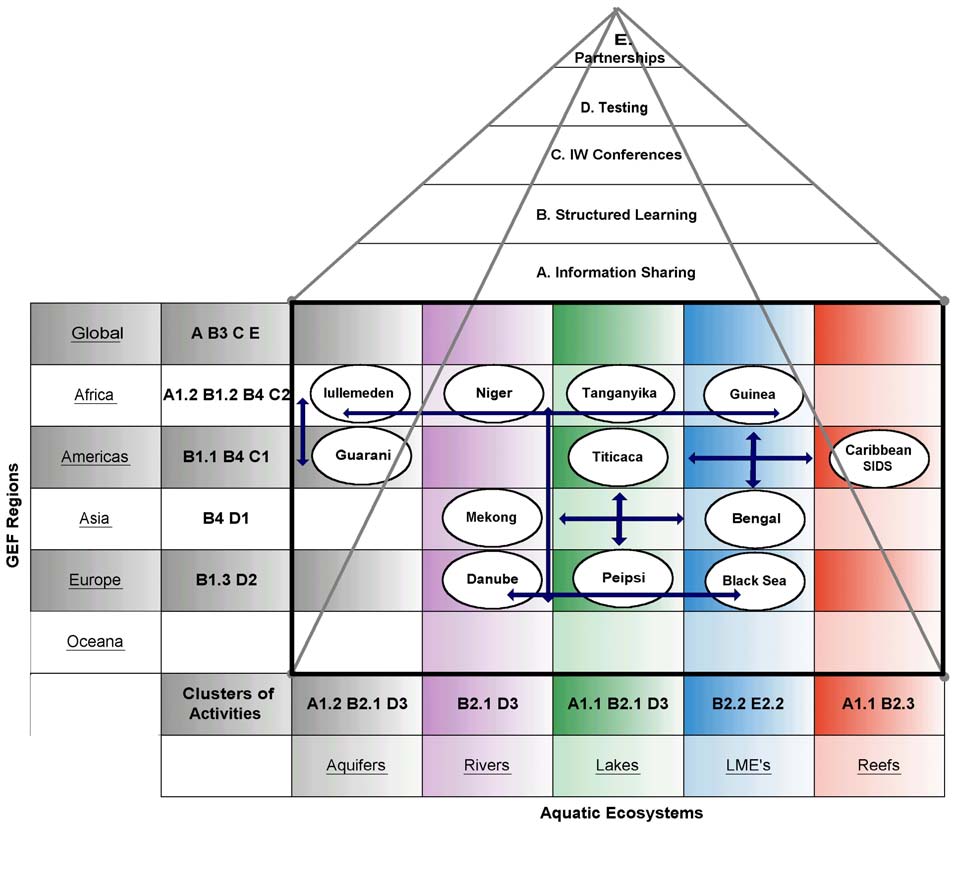
Figure 5. Various interrelated subsets of the GEF IW portfolio form the base of the pyramid of
IW:LEARN services. Clusters of IW:LEARN activities address regional and/or ecosystem-related
TWM needs.
32
V. INPUTS
94 GEF's financial inputs to realize these activities and outputs are presented below and then summarized
by year in Table 4 of Section XI (Budget). Co-financing sources are also described here and summarized
in Table 5 of Section XI.
The delineation of the roles and responsibilities, as well as matching financial resources, between the
three GEF Implementing Agencies will be finalized and agreed upon prior to CEO approval.
33
Table 2. Inputs by Activity: (a) Project-wide Quantity, Components A-B; (b) Components C-E and Project-Wide Total
(a) Inputs by Activity for Project-wide Total Quantity, Components A and B
Description
Cost per
TOTAL A1 A2 B1 B2 B3 B4
by Subline: CMBL Unit Unit
s
Qty. US$ US$ US$ US$ US$ US$
PROJECT PERSONNEL
10
International Specialists
11
Director/Chief Technical Advisor 11.01
$ 15,928 months
48.00 $ 81,233 $ 54,155 $ 55,748 $ 127,424 $ 63,712 $ 95,568
Deputy Director/Coordinator
11.02
$ 11,160 months
48.00 $ - $ - $ 33,480 $ 78,120 $ 89,280 $ 44,640
Technology Component Coord.
11.03
$ 10,417 months
18.00 $ 98,958 $ 36,458 $ 7,813 $ 13,021 $ 2,604 $ 2,604
Technology Task Manager
11.04
$ - $ - $ - $ - $ - $ -
Sub-total
11.99
$ 180,191 $ 90,614 $ 97,041 $ 218,565 $ 155,596 $ 142,812
Program Assistant
13.01
$ 2,016 months
0.0 $ - $ - $ - $ - $ - $ -
Technical/Admin Assist
13.02
$ 7,000 months
0.0 $ - $ - $ - $ - $ - $ -
Sub-total
13.99
0.0 $ - $ - $ - $ - $ - $ -
Staff travel
15.01
$ 5,000 trip-weeks
38.00 $ 30,000 $ 50,000 $ - $ - $ - $ 15,000
Evaluative Missions
16.01
$ 25,000 missions
2.0 $ 6,000 $ 4,000 $ 6,000 $ 10,000 $ 2,000 $ 2,000
Personnel component total
19
$ 216,191 $ 144,614 $ 103,041
$ 228,565 $ 157,596 $ 159,812
SUB-CONTRACTS
20
A1.1: IW-IMS Sub-Contracts
21.11
$ 8,333
months
21.0 $ 175,000 $ - $ - $ - $ - $ -
A1.2: Modules Sub-Contracts
21.12
$ 8,333
months
12.0 $ 100,000 $ - $ - $ - $ - $ -
A1.3: Helpdesk Sub-Contracts
21.13
$ 10,000
months
3.0 $ 30,000 $ - $ - $ - $ - $ -
B1.1: UNEP
22.11
$ 11,000
months
18.2 $ - $ - $ 200,000 $ - $ - $ -
B1.2: ANBO
22.12
$ 11,000
months
9.1 $ - $ - $ 100,000 $ - $ - $ -
B1.3: UNECE/Peipsi CTC
22.13
$ 11,000
months
5.0 $ - $ - $ 55,000 $ - $ - $ -
B2.1.2/B2.2.1: IUCN
22.22
$ 11,000
months
46.4 $ - $ - $ - $ 510,000 $ - $ -
B2.1.1: UNESCO-ISARM
22.23
$ 11,000
months
9.1 $ - $ - $ - $ 100,000 $ - $ -
B2.1.2: LakeNet
22.24
$ 11,000
months
4.5 $ - $ - $ - $ 50,000 $ - $ -
B2.2.2: Univ. Rhode Island
22.25
$ 11,000
months
18.2 $ - $ - $ - $ 200,000 $ - $ -
B2.3: WorldFish Center
22.26
$ 11,000
months
13.6 $ - $ - $ - $ 150,000 $ - $ -
B3: Exchange Coordinator
22.30
$ 5,000 months
8.0 $ - $ - $ - $ - $ 40,000 $ -
C1/C2: GETF, UNOPS Travel
23.1-23.2
1
events
$ 763,364 $ - $ - $ - $ - $ - $ -
Description
Cost
per
TOTAL A1 A2 B1 B2 B3 B4
by Subline: CMBL Unit Units
Qty. US$ US$ US$ US$ US$ US$
D1: SEA START RC
24.10
$ 10,000
months
28.0 $ - $ - $ - $ - $ - $ -
D2: GWP-Mediterranean
24.20
$ 11,000
months
11.8 $ - $ - $ - $ - $ - $ -
D3: IWRM Sub-Contracts
24.30
$ 10,000 months
20.0 $ - $ - $ - $ - $ - $ -
E2.1: Side Events Assistance
25.21
$ 5,000
missions
16.0 $ - $ - $ - $ - $ - $ -
E2.2: EcoAfrica (LME video)
25.22
$ 30,000 productions
1.0 $ - $ - $ - $ - $ - $ -
Occupancy (rent)
26.00
$ 833 months
12 $ - $ - $ 1,111 $ 2,778 $ 556 $ 556
Sub-contract component total
29
$ 305,000
$ - $ 356,111 $ 1,012,778 $ 40,556 $ 556
TRAINING
30
A2.1: Workshops, ICT
31.1
$ 45,000
events
2.0 $ - $ 90,000 $ - $ - $ - $ -
A2.2: ICT Tech Assistance
31.2
$ 1,200
Website
50.0 $ - $ 60,000 $ - $ - $ - $ -
B4: P2 Workshops
32.2
$ 75,000
events
4.0 $ - $ - $ - $ - $ - $ 300,000
B3: Inter-Project Exchanges
32.1
$ 10,000 missions
16.0 $ - $ - $ - $ - $ 160,000 $ -
Training Total
39
$ - $ 150,000 $ - $ - $ 160,000 $ 300,000
MISCELLANEOUS
50
Sundries, repairs, misc.
53.01
$ 997
years
4 $ - $ - $ 443 $ 1,108 $ 222 $ 222
Telecommunications
53.02
$ 300 months
48 $ 1,800 $ 1,200 $ 1,800 $ 3,000 $ 600 $ 600
Software
53.03
$ 5,000 programs
4 $ 15,000 $ 5,000 $ - $ - $ - $ -
Outreach materials
53.04
$ 1
copy
$ 28,000 $ - $ - $ - $ - $ - $ -
Misc component total
59
$ 66,389 $ 16,800 $ 6,200 $ 2,243 $ 4,108 $ 822 $ 822
TOTAL
90
$41,524
$537,991
$300,814
$461,395
$1,245,451
$358,973
$461,189
Executing agency support
94
percent
7% $ 37,659 $ 21,057 $ 32,298 $ 87,182 $ 25,128 $ 32,283
(m) Total Expenditures
$575,651
$321,870
$493,692
$1,332,632
$384,101
$493,473
35
(b) Inputs by Activity for Components C, D and Project-wide Total
Description
C1 C2 D1 D2 D3 E1 E2 TOTAL
by Subline: CMBL US$ US$ US$ US$ US$ US$ US$ US$
PROJECT PERSONNEL
10
International Specialists
11
Director/Chief Technical Advisor 11.01
$ 31,856 $ 15,928 $ 15,928 $ 31,856 $ 15,928 $ 127,424 $ 47,784 $ 764,544
Deputy Director/Coordinator
11.02
$ 22,320 $ 11,160 $ 11,160 $ 22,320 $ 44,640 $ 133,920 $ 44,640 $ 535,680
Technology Component Coord.
11.03
$ 5,208 $ 2,604 $ 5,208 $ 5,208 $ 1,302 $ 5,208 $ 1,302 $ 187,500
Technology Task Manager
11.04
$ - $ - $ - $ - $ - $ - $ - $ -
Sub-total
11.99
$ 59,384 $ 29,692 $ 32,296 $ 59,384 $ 61,870 $ 266,552 $ 93,726 $ 1,487,724
Program Assistant
13.01
$ - $ - $ - $ - $ - $ - $ - $ -
Technical/Admin Assist
13.02
$ - $ - $ - $ - $ - $ - $ - $ -
Sub-total
13.99
$ - $ - $ - $ - $ - $ - $ - $ -
Staff travel
15.01
$ 5,000 $ 5,000 $ - $ - $ 5,000 $ 60,000 $ 20,000 $ 190,000
Evaluative Missions
16.01
$ 4,000 $ 2,000 $ 2,000 $ 4,000 $ 2,000 $ 4,000 $ 2,000 $ 50,000
Personnel component total
19
$ 68,384 $ 36,692
$ 34,296 $ 63,384 $ 68,870 $ 330,552 $ 115,726 $ 1,727,724
SUB-CONTRACTS
20
A1.1: IW-IMS Sub-Contracts
21.11
$ - $ - $ - $ - $ - $ - $ - $ 175,000
A1.2: Modules Sub-Contracts
21.12
$ - $ - $ - $ - $ - $ - $ - $ 100,000
A1.3: Helpdesk Sub-Contracts
21.13
$ - $ - $ - $ - $ - $ - $ - $ 30,000
B1.1: UNEP
22.11
$ - $ - $ - $ - $ - $ - $ - $ 200,000
B1.2: ANBO
22.12
$ - $ - $ - $ - $ - $ - $ - $ 100,000
B1.3: UNECE/Peipsi CTC
22.13
$ - $ - $ - $ - $ - $ - $ - $ 55,000
B2.1.2/B2.2.1: IUCN
22.22
$ - $ - $ - $ - $ - $ - $ - $ 510,000
B2.1.1: UNESCO-ISARM
22.23
$ - $ - $ - $ - $ - $ - $ - $ 100,000
B2.1.2: LakeNet
22.24
$ - $ - $ - $ - $ - $ - $ - $ 50,000
B2.2.2: Univ. Rhode Island
22.25
$ - $ - $ - $ - $ - $ - $ - $ 200,000
B2.3: WorldFish Center
22.26
$ - $ - $ - $ - $ - $ - $ - $ 150,000
B3: Exchange Coordinator
22.30
$ - $ - $ - $ - $ - $ - $ - $ 40,000
C1/C2: GETF, UNOPS Travel
23.1-23.2 $ 161,764 $ 601,600 $ - $ - $ - $ - $ - $ 763,364
D1: SEA START RC
24.10
$ - $ - $ 280,000 $ - $ - $ - $ - $ 280,000
D2: GWP-Mediterranean
24.20
$ - $ - $ - $ 130,000 $ - $ - $ - $ 130,000
D3: IWRM Sub-Contracts
24.30
$ - $ - $ - $ - $ 200,000 $ - $ - $ 200,000
36
E2.1: Side Events Assistance
25.21
$ - $ - $ - $ - $ - $ - $ 80,000 $ 80,000
E2.2: EcoAfrica (LME video)
25.22
$ - $ - $ - $ - $ - $ - $ 30,000 $ 30,000
Occupancy (rent)
26.00
$ 1,111 $ 556 $ - $ 1,111 $ 556 $ 1,111 $ 556 $ 10,000
Sub-contract component total
29
$ 162,875 $ 602,156 $ 280,000 $ 131,111 $ 200,556 $ 1,111 $ 110,556 $ 3,203,364
TRAINING
30
A2.1: Workshops, ICT
31.1
$ - $ - $ - $ - $ - $ - $ - $ 90,000
A2.2: ICT Tech Assistance
31.2
$ - $ - $ - $ - $ - $ - $ - $ 60,000
B4: P2 Workshops
32.2
$ - $ - $ - $ - $ - $ - $ - $ 300,000
B3: Inter-Project Exchanges
32.1
$ - $ - $ - $ - $ - $ - $ - $ 160,000
Training Total
39
$ - $ - $ - $ - $ - $ - $ - $ 610,000
MISCELLANEOUS
50
Sundries, repairs, misc.
53.01
$ 443 $ 222 $ - $ 443 $ 222 $ 443 $ 222 $ 3,989
Telecommunications
53.02
$ 600 $ 600 $ 600 $ 1,200 $ 600 $ 1,200 $ 600 $ 14,400
Software
53.03
$ - $ - $ - $ - $ - $ - $ - $ 20,000
Outreach materials
53.04
$ - $ - $ - $ - $ - $ - $ 28,000 $ 28,000
Misc component total
59
$ 1,043 $ 822 $ 600 $ 1,643 $ 822 $ 1,643 $ 28,822 $ 66,389
TOTAL
90 $232,303
$639,669
$314,896
$196,139
$270,247
$333,307
$255,103
$5,607,477
Executing agency support
94
$ 16,261 $ 44,777 $ 22,043 $ 13,730 $ 18,917 $ 23,331 $ 17,857 $ 392,523
(m) Total Expenditures
$248,564
$684,446
$336,939
$209,868
$289,165
$356,638
$272,960
$6,000,000
37
VI.
RISKS, ASSUMPTIONS, SUSTAINABILITY
Risks and Assumptions
110 Risks and assumptions referenced in the Logical Framework primarily partners' receptivity to
establishing institutional infrastructure at the project's outset and leadership thereafter to sustain
IW:LEARN services and support beyond the end of the Operational Phase FSP. It is assumed that most or
all of GEF IW services (activities) will be evaluated as highly successful and beneficial to GEF IW
portfolio members, thus meriting continuation beyond four years. The project's designers also expect that
partners internal and external to the current GEF will both remain committed and capable of obtain and
allocating resources to to assign staff and procure funds to support successful activities in perpetuity. If
such is not the case, IW:LEARN PCU will alert the project's Steering Committee and consult in depth
with those partner of concern at the earliest possible opportunity, in order to resolve such issues early and
thoroughly.
111 Semi-annual Steering Committee meetings will also help to adjust project plans as necessary to adapt
to unforeseen geopolitical conditions, such as regional or global travel restrictions, that may require
adjustments to the design and resources required to realize scheduled activities.
112 Further detail regarding each project activity's assumptions and risks can be found in the enclosed
Logical Framework (Annex B).
Sustainability
113 Project design includes Component E in order to ensure that strategic partnerships adopt and sustain
IW:LEARN benefits beyond the conclusion of the project. Activities E1 and E2 explicitly relate to
implementation of sustainability plans, while E3 provides outreach which promotes the ongoing utility of
and mandate for the IW learning portfolio to participate in wider IW community events and venues for
knowledge sharing. All component A-D activities are being developed with respective sustainability
plans, which will be integrated and implemented from the outset of the project, then revised following
mid-term evaluation. Specific elements of sustainability and replicability include:
Institutional Sustainability
38 ICT quality criteria include elements such as usability, accessibility in low-bandwidth contexts, and metadata standards for effective
information searching and discovery via search engines.
39 Covers costs associated with the CSD-related sub-activity of IWC3, while substantial part of the overall conference is being supported through
funds in the GEF"s TRAIN-SEA-COAST Programme (GLO/98/G34/A/IG/31).
114 The project's institutional sustainability is grounded in its ability to integrate broad collaborative
partnerships of, by and for GEF IW projects and their stakeholders. Through Component E activities,
IW:LEARN will define sustainability plans, foster partnerships and obtain commitments to establish
sustaining capacity within the respective GEF Implementing and Executing agencies as well as with
external partners. Wherever appropriate, IW:LEARN products and services may be progressively
managed directly by international agencies or NGO partners, in order to ensure institutional ownership as
momentum grows over the course of the project thereby fostering longevity beyond the project's end.40
Thus, by conclusion of the project in 2008, all services and benefits developed by IW:LEARN, and
independently evaluated as successful and in continuing demand, will be either mainstreamed into the
GEF's IW projects and programs or else well-established with appropriate service providers.
115 Facilitating dialog and collaboration across the three IAs and major EAs over the course of the
project will fully integrate IW:LEARN support mechanisms for TWM within these agencies. As the GEF
IW community matures over the next four years, a culture of inter-project information sharing, learning
exchange, and collaboration should become steadily operationalized into projects' lifecycles and more
thoroughly supported through the GEF's information management systems.41 As a result, the project's
primary objective will be realized through progressive institutionalization and decentralization of services
and benefits.
Financial Sustainability
116 The extended financial viability of the IW: LEARN project relies on its ability to leverage
incremental and catalytic GEF funding into long-term sustainability through partnerships. Since this
project primarily serves the GEF IW portfolio, GEF and/or IA financing commitments will be needed to
sustain many of its core activities. A variety of collaborations and financing mechanisms will contribute
to project cost-sharing for IW:LEARN services during and beyond project implementation.
117 NGO partners are pursuing specific grants and service models to integrate the project activities they
manage into their long-term programs. In addition, GEF IW representatives from all three IAs have
agreed in principle that new projects should include specific budget lines to cover substantial services
they receive via IW:LEARN. Market-based mechanisms tested during the pilot project will also be
further refined and deployed (e.g., cost-recovery workshops, fee-for-service technical support to non-GEF
IW projects). This does not preclude the possibility of sustainability plans evolving such that IW:LEARN
may become either a corporate program of the GEF or its IAs, or else an independent NGO, if these
structures would be most effective at enabling key service areas to be financially self-sustaining.
118 The GEF Secretariat may also wish to consider whether it is appropriate to integrate the IW:LEARN
approach across focal areas into its core programs upon the conclusion of the FSP.
Environmental Sustainability
119 The project directly contributes to the improvement of many IW projects' respective process
indicators for environmental sustainability.42 Increased efficiency in GEF IW project implementation,
40 Section 14 of the IW:LEARN Concept Paper provides additional details regarding ensuring financial
sustainability of the project. http://www.iwlearn.org/ftp/iwl2_concept.pdf
41 As measured by the level of spontaneous interaction amongst GEF projects, unprompted by and independent of
external facilitation.
42 GEF. 22 April 2002 [Draft]. Monitoring and Evaluation Indicators for GEF International Waters Projects.
Washington, D.C. p. 9
http://www.gefweb.org/ResultsandImpact/Monitoring___Evaluation/Evaluationstudies/M_E_WP__10.pdf
39
combined with greater integration with core IA programs and resources, is expected to expedite and
increase achievement of positive environmental impacts and concomitant change in environmental status.
IW:LEARN-fostered interaction between GEF IW projects and the Commission on Sustainable
Development (CSD) and other institutions may further promote enhanced environmental sustainability
across GEF operational programs and among related initiatives.
Replicability
120 Replication is intrinsic to this project's design. The project fosters replication and adaptation of best
practices, ICT tools, information products and expertise across GEF IW projects. Demonstrations of
capacity-building will be regularly co-developed with, transferred among, and replicated by project
partners, with funding from GEF and other donors, partners and market-based mechanisms. Whenever
possible, capacity to further adapt and replicate will be strengthened or transferred to on-the-ground
project proponents and partners, as a means to foster on-going replication of tested practical approaches at
multiple scales within project regions.
121 The project will work with existing capacity-building institutions, such as UNDP's Cap-Net, to
develop cross-cutting regional and thematic stakeholder alliances to strengthen and replicate its service
lines. Furthermore, by contributing the increment of transboundary knowledge-sharing to existing
institutions which address aspects of GEF projects' needs, and aligning GEF IW projects as partners and
contributors in the wider network of IW-related initiatives, IW:LEARN will ensure that its products and
services are widely adapted and replicated through GEF IW partner institutions.
122 Additional complementarities and synergies will be realized in positioning the GEF IW structured
learning among the GEF's contributions to the CSD framework as well as upcoming World Water
Forums.
123 The GEF Secretariat may also consider, as part of the mid-term and/or final project review,
replicating or enlarging successes from the IW:LEARN approach to serve other GEF focal areas.
IW:LEARN will work with each IA and EA to build their dedicated capacity to replicate across GEF
focal areas demand-driven services initiated by IW:LEARN. Support for an operational "GEF Learning
Exchange and Resource Network" staff lead within each IA may be explored as a means to expand
provision of these services and benefits across focal areas. This could open opportunities to more fully
leverage the comparative advantages of IAs and EAs across focal areas.
124 IW:LEARN demonstrated that IW:LEARN's products and services are valuable commodities among
partner organizations interested in adopting them in whole or in part. As a result, IW:LEARN will work
throughout the FSP to identify opportunities to "spin-off" portions of its activities to realize further co-
financing for its core initiatives.
An initial draft Sustainability Plan, provided as Annex E, will be vetted and finalized in the first year of
the project, then pursued and refined in subsequent years.
VII.
PRIOR OBLIGATIONS AND PREREQUISITES
125 Successful FSP launch and ongoing sustainability should greatly benefit from an institutional host to
provide facilities, telecommunication and administrative assistance and to promote the long-term
40
viability of IW:LEARN services to the GEF IW portfolio. IW:LEARN SC members have also
emphasized that IW:LEARN must have a physical presence along the New York to Washington corridor,
close to GEF Secretariat and US-based IAs. With these issues in mind, the SC will review options for
hosting PCU in this region at its May 2004 meeting, thus to be decided prior to signature of this Project
Document.
126 Proposed 25% increase in the number of GEF-sponsored participants at future IW Conferences
(relative to past conferences) could result in a shortfall of up to $37,000 for the IWC4 unless resources are
conserved or additional cost-share is identified. Stock-taking prior and subsequent to IWC3 will ensure
that IWC4 plans are made accordingly.
127 Recent scope reductions, co-finance constraints and delay prior to FSP approval or final signature
could adversely impact the ability to realize one or more of the demonstration activities. PCU personnel
will work with its Steering Committee, IAs demonstration partners to map out contingency plans
accordingly.
128 TWM managers and policy makers, particularly in developing countries, have little time, inclination,
confidence or quality of internet connection to burrow deeply into rich and complex data bases or books.
Hence, the IW:LEARN's core products will need to be well targeted both in terms of their contents and
delivery format (e.g.., as far as practicable stand-alone information services with option for further on-line
exploration identified but not assumed).
129 Details regarding the IWRM Roundtables and CSD-related elements of the IWC3 will further
materials as an output from IW:LEARN's participation in CSD-12 in April 2004. After this event, both
activities should be notably refined.
VIII. IMPLEMENTATION AND EXECUTION
Project Implementation
130 In order to best leverage the core competencies of each Implementing Agency, the project will be
implemented by UNDP in close programmatic cooperation with UNEP and the World Bank. IW leads
from all three agencies and from GEF Secretariat will comprise the project's Steering Committee (SC). A
representative from the executing agency and additional donors to the project will also be invited to
participate in the SC. The SC will approve project work plans and major project outputs.
131 UNOPS, which coordinated the project preparatory (PDF-B) activities, will continue as IW:LEARN's
Executing Agency (EA). Through the PCU and in collaboration with IAs and partners in participating
countries, UNOPS is well situated to implement the project due to its experience managing GEF IW and
related projects, as well as its network across the UN system, beneficiary countries and partner institutions.
Annex G details these institutional arrangements.
132 Project management will consist of an equivalent of 6 personnel: Chief Technical Advisor (CTA),
Deputy Director, and part-time Program Assistant all supported by the GEF; a UNEP-IW:LEARN
Technical Component Coordinator, supported by a 50-50 cost-share between GEF and UNEP; part-time
technical and administrative assistants, and a half-time technology developer all supported by UNEP.
Other IAs may appoint liaisons to serve as their day-to-day representatives in interfacing with and
between the project and their respective partners and constituents.
133 According to their comparative advantages, IAs will provide strategic oversight to IW:LEARN at a
component- or activity-level, as presented in Table 3. The PCU will realize most project activities in
41
collaboration with a lead partner and a set of supporting partners. Lead partners will also be responsible
for contributing to and helping to implemement sustainability plans for their respective activities.
134 Overall project implementation is represented the by the PCT, presented in Figure 6. Annexes
provide more detail on this institutional framework, including an overall organizational chart (Annex F),
institutional arrangements (Annex G) and terms of reference (Annex H) for PCU personnel and sub-
contracts. Annex I also provides partners letters of commitment and documentation of co-financing.
Stakeholder Involvement
135 Since the last GEF International Waters Conferences (September 2002), substantial consultation with
representatives from GEF IW projects and their partners (e.g., global, regional, national and local
agencies, NGOs, etc.) informed design of this project. Continued consultation via electronic forums, one-
on-one interviews and regional and global IW learning exchanges will ensure that stakeholder interests
are regularly recorded, reviewed and systematically addressed by the project and its regional, thematic
and institutional partners. Given the number of recent GEF IW project briefs and documents that
explicitly identify planned cooperation with IW:LEARN, the project expects to establish more formal
agreements to further incorporate stakeholder involvement through these partnerships.
136 To optimise GEF IW project stakeholder involvement, all IW:LEARN activities are aligned with a
stakeholder involvement plan and outreach and dissemination strategy. These include five objectives
based on lessons learned from the experimental phase:
1. Enhance ownership of and buy-in to IW:LEARN through participatory project development and
implementation
2. Raise awareness about the role of IW:LEARN, GEF IW Portfolio and IW management in
sustainable development (e.g., achieving Millennium Development Goals, Johannesburg and
World Water Forum objectives, etc.)
3. Provide customized service through personal relations with key personnel at projects, partners
and service providers.
4. Develop effective delivery mechanisms which leverage the use of appropriate tools for ICT-
mediated dissemination to, for and through GEF IW projects and their partners.
5. Assist in replication of useful GEF IW experiences, innovations, lessons, opportunities and tools
across the GEF IW portfolio.
137 In order to provide customized and targeted services and support to stakeholders, partners and on-the-
ground beneficiaries, IW:LEARN is committed to developing personal relationships with all projects
within the GEF IW portfolio. An open-source on-line collaboration tool will be used as a means to
strengthen outreach to specific stakeholders and enhance participation and transparency in all project
activities.
42
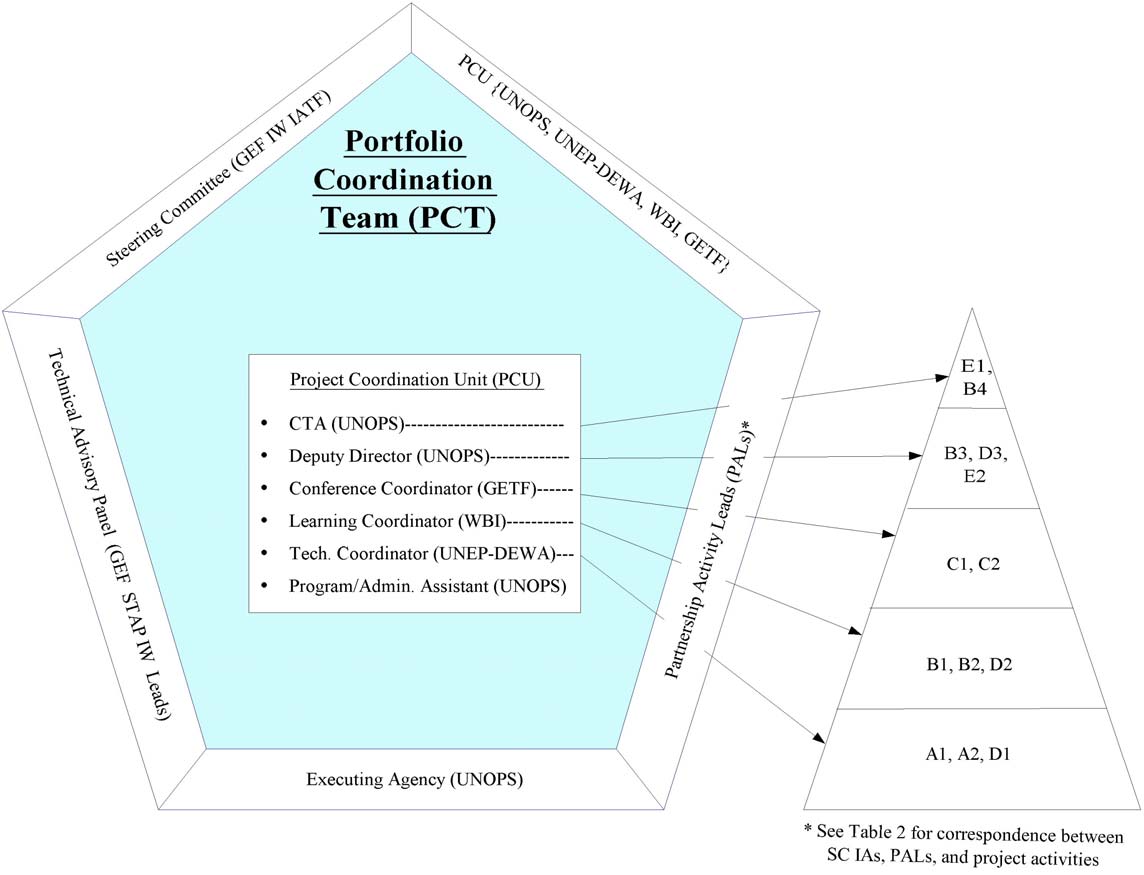
Figure 6. IW Learning Portfolio Coordination Team (PCT) and its underlying organizational structure
Table 3. IW:LEARN Activity Leads and Supporting Partners
Component/Activity
IA /EA
Lead Partners Key Supporting Partners
A. Information Sharing
A1. IW Info. Mgmt. System (IW-IMS)
UNEP
UNEP-DEWA World Bank, UNDP, GEF Secretariat, GWP, Cap-Net,
LakeNet, IWRN, SIDSNet, NEPAD, FAO, UNESCO,
IGRAC, GIWA, Regional Seas and transboundary basin
secretariats
A2. ICT Technical Assistance
UNEP
IW:LEARN
UNESCO-IHE, UNESCO-WWAP, WaterWebConsortium
PCU w/DEWA
B. Structured Learning
B1. Regional Multi-Project Exchanges
WBI
IW:LEARN
Caribbean White Water to Blue Water Initiative43, IWRN,
PCU
UNEP-CEP; ANBO; UNECE
B2. Learning for Portfolio Subsets
IBRD-
IW:LEARN
IUCN; UNESCO-ISARM, IGRAC; INBO; ILEC, LakeNet;
WBI
PCU w/IUCN
WorldFish Center-ReefBase, GEF Coral Reef Targeted
Research project, UNDP-GEF-SHARK
B3. Inter-Project Exchange Missions
UNDP
IW:LEARN
INBO-TWINBASIN, GEF STAP, UNESCO-IHP and IOC
PCU w/IUCN
B4. Public Participation Training
UNDP
ELI
WRI, UNECE, Peipsi CTC, IUCN-WANI, experienced GEF
IW projects (e.g.., San Juan, SPREP, ICPDR), IAP2
43 http://www.ww2bw.org/ww2bw
44
Component/Activity
IA /EA
Lead Partners Key Supporting Partners
C. IW Conferences (2005, 2007)
C1. IWC3 (Rio de Janeiro, Brazil)
UNDP
GETF
Brazilian Government, OAS, DESA-CSD, Cap-Net and
private sector sponsors
C2. IWC4 (Cape Town, South Africa)
UNDP
GETF
South African Government, NEPAD, BCLME and private
sector sponsors
D. Testing Innovative Approaches
D1. S.E. Asia Reg. Learning Ctr.
UNEP
SEA-START RC GEF IW projects: South China Sea, Mekong, Bay of Bengal,
(Chulalongkorn
Yellow Sea, PEMSEA, Hai River and Globallast
Univ.)
D2. S.E. Europe/Central Asia
IBRD
GWP-
Germany (MoE, GTZ, MfE), Greece (MoFA), MAP and
Mediterranean
other GEF IW projects
D3. CSD/GEF Roundtable
UNDP
Cap-Net
CSD, GWP, UNESCO-IHE, GPA, INBO, IUCN, IWRA
E. Partnerships to Sustain Benefits
E1. Internal Partnerships/Strategic Plan
All IAs
IW:LEARN
GEF-STAP, UNEP-GEF, UNEP-DEWA, UNDP-EEG,
PCU; IATF
UNDP-GEF, World Bank-GEF, WBI, UNESCO
World Bank-UNDP IW Partnership
E2. IW Contributions to Global TWM
UNDP
IW:LEARN PCU GEF Secretariat, selected GEF IW projects, EcoAfrica,
UNDP Video Productions, IUCN, NOAA
45
138 Outreach will also establish linkages with non-GEF IA and other TWM institutional partners through
structured learning activities, IWCs, and innovative testing collaborations. All of these will be
discoverable via the IW-IMS in order to contribute to enhanced implementation of the GEF IW portfolio
and sustaining the benefits of IW:LEARN interventions.
Information on Project Proposer
139 The project proponents are the three GEF Implementing Agencies, on behalf of all countries
participating in GEF-sponsored IW projects. A letter of support, signed by GEF leads at all three IAs was
submitted with the Operational Phase Concept Paper.
IA Coordination and Linkages To GEF and IA Programs and Activities
140 In recent years, GEF support has fostered a broad body of experience and information regarding
regional cooperation in TWM. As part of its structured learning activities, IW:LEARN will synthesize
and disseminate information based on the experience and findings of GEF IW projects, IAs broader water
programs, and related initiatives (e.g., French GEF projects, UNEP-GPA, UNESCO IHP & WWAP,
ISARM-IGRAC, FAO, IUCN freshwater and marine programs, the "whitewater to bluewater"
partnership, EU, Waterweb Consortium, USAID, etc) across the GEF IW community and IAs' water
resource management-related programs. Through the IW Information Management System (Component
A), related information will be shared and disseminated reciprocally across GEF-affiliated (and, where
valuable, non-GEF) partners.
141 Enhanced coordination with all three Implementing Agencies (IAs) and the GEF Secretariat is critical
to the project's success. Thus, the GEF IW leads from each of these agencies will serve in pivotal
strategic roles on IW:LEARN's SC. In addition, each IA will oversee one portion of the overall set of
IW:LEARN activities. For such activities, the IA's SC member will appoint a point-of-contact within the
agency for day-to-day operational coordination with the PCU. IW:LEARN has also established liaisons
and, in several cases, cooperative agreements with GEF executing agencies (e.g., UNESCO, OAS, IMO,
UNIDO, CATHALAC) and international partners (e.g., GETF, IUCN) in order to further operationalize
coordination and cooperation across agencies and GEF projects to benefit TWM world-wide.
142 IW:LEARN will also provide valuable opportunities for portfolio-wide reviews and assessments by
the GEF M&E Unit. This includes assistance in identifying individuals and their contact information for
IW Program Studies (via the IWRC Web site); provision of venues (such as the IW Conferences and
structured learning exchanges) for face-to-face communication between GEF M&E representatives, IW
projects and the partners; and supplying various avenues for dissemination of GEF's M&E findings and
recommendations to those in the field, who benefit most from constructive feedback.
143 This project has been developed in close consultation with UNDP, UNEP, and the World Bank, in
order to design a package of GEF interventions to promote and replicate of TWM successes. The
IW:LEARN SC includes all three IAs' and the GEF Secretariat's leads for IW. The GEF M&E Unit may
also utilize IW:LEARN activities as instruments for assessing emerging information needs and advising
IW projects accordingly. The SC plays a pivotal role in coordinating IAs' contributions to and use of
IW:LEARN in their respective projects, so that technical services and comparative advantages44 that each
IA provides can benefit the GEF IW portfolio as a whole.
44 See IW:LEARN Concept Paper Annexes 9 (Operational Phase Concept for the UNEP-IW:LEARN Best Practices
Database) and 10 (Comparative Advantages and Specific Linkages IAs Bring to IW:LEARN).
http://www.iwlearn.org/ftp/iwl2_concept_annexes.pdf
144 The project also benefits from ongoing communications with several EAs, notably UNIDO, OAS,
IMO, and UNESCO, as well as various existing and pipeline GEF IW projects (e.g., PEMSEA, Volta
River, Black Sea/Danube). EAs' assistance is engaged in bringing additional institutional partners and
resources to enhance project activities. (Non-GEF transboundary waters programs and funding agencies
are also invited to participate in IW structured learning.) Through such partnerships, IW:LEARN
integrates information sharing and structured learning with capacity-building activities among GEF IW
stakeholders on-the-ground and across internal partner agencies. Through IW:LEARN, they will
collaborate to replicate successful experiences and improve TWM globally at multiple geographic scales.
IX.
MONITORING, EVALUATION, REPORTING, AND DISSEMINATION
145 IW:LEARN's Logical Framework (Annex B) includes both "output" (performance) and "outcome"
(impact) indicators.45 Performance will be gauged according to specific milestones towards achieving
outputs, as documented in the project document and annual work plans. Data to measure outcomes will be
derived from follow-up surveys and interviews with participating stakeholders and beneficiaries in
conjunction with successive iterations of each activity. On a quarterly basis, project progress, as measured
by these indicators, will be reported to IW:LEARN's SC and interested stakeholders, and key impacts
included in IW:LEARN's Quarterly Operational Report (QOR) to the GEF.
146 Each May, progress will be assessed by a Tripartite Review (TPRs), comprised of representatives of
the Executing and Implementing Agencies which serve on the SC (UNOPS, UNDP/GEF, UNEP and the
World Bank). This annual review will focus on both performance (including effectiveness, efficiency and
timeliness) and impact. As part of this process, the Project Coordinating Unit (PCU) will submit and
present a consolidated APR/PIR (Annual Project Report/Project Implementation Review) in line with
UNDP and GEF reporting requirements.
147 Each November, the SC will meet again to review semi-annual progress, to recommend incremental
changes to the annual work plan, and to address any emerging needs among the GEF IW projects or new
operational challenges faced by the project. GEF STAP's IW leads and other experts may also be invited
to participate and provide their guidance during this meeting.
148 Independent mid-term (year 2) and final (year 4) Project Performance Reviews will help to further
assess progress and impact, as well as refine implementation (mid-term) and sustainability (final) of
IW:LEARN activities. These external reviews will also be presented at the following TPR, permitting the
SC to endorse or adapt independent findings or recommendations to subsequently guide the project.
45 "Outputs are the specific products and services which emerge from processing inputs through [...] activities.
Outputs, therefore, relate to the completion (rather than the conduct) of activities and are the type of result over
which managers have a high degree of influence. Outcomes are actual or intended changes in development
conditions that [...] interventions are seeking to support. They describe a change in development conditions
between the completion of outputs and the achievement of impact." UNDP. 1 December 2000. Results Framework
Draft Technical Note (Revision 5).
Last modified by cathy maize on 2004-04-12
47
X.
LEGAL CONTEXT
Project Cooperative Agreement
149 This Project Document shall be the instrument referred to as such in Article 1 of the Basic Assistance
Agreement between the United Nations Development Program and those participating institutions which
signed such agreement.
150 The following types of revisions may be made to this Project Document with the signature of the
Principal Project Representative (PPR) only, provided he or she is assured that the other signatories of the
Project Document have no objection to the changes (for this global project, the PPR will be the Executive
Coordinator, UNDP-GEF):
1. Revisions in, or addition of, any of the annexes of the Project Document.
2. Revisions that do not involve significant changes in the immediate Subcomponents, objectives,
outputs or activities of the project, but are caused by the rearrangement of the inputs already
agreed to or by cost increases due to inflation.
3. Mandatory annual revisions that re-phase the delivery of agreed project inputs or increased expert
or other costs due to inflation or take into account agency expenditure flexibility.
XI. BUDGET
151 The total GEF grant financing to realize this FSP is US$ 6,000,000 over four years. The annual
breakdown of this budget is provided in Table 4. The GEF's support will be matched by comparable co-
finance commitments to achieve IW:LEARN's outputs and parallel financing for external activities
associated with realizing this project's intended outcomes, as summarized in Table 5. Such contributions
will come primarily from GEF Implementing Agencies (IAs), Executing Agencies (EAs) and NGO
partners in IW:LEARN's project management. A smaller portion of cost-sharing and cost-recovery
through fee-for-services is also expected to continue as demonstrated during the IW:LEARN pilot project.
152 Incremental Cost Analysis is presented in Annex A. This GEF investment represents a modest
increment to utilize structured learning and information sharing to integrate GEF-supported
"transboudary" experiences with global efforts to improve water resource, coastal and marine
management. As recent GEF Council information documents have emphasized, facilitating lateral transfer
of insights and information between projects is an important investment: Its potential yield is large in
terms of increased project efficiency and more affordable replication of successes. Independent evaluation
of the IW:LEARN pilot project also confirmed IW:LEARN cost-effectiveness in leveraging the GEF's
support to nations by developing effective tools and methods for the dissemination of practical
experiences among GEF IW projects. In the longer-term, the multi-stakeholder approach and the
partnerships forged between EAs, IAs, projects and stakeholders through IW:LEARN will reduce the
recurrent costs of "reinventing the wheel" and enhance TWM across basins from community to regional
scales.
Last modified by cathy maize on 2004-04-12
48
Table 4. GEF Inputs by Project Year (July 2004-June 2008)
Description
Cost per
Units TOTAL TOTAL
GEF Financing by Year
by Subline: CMBL Unit Qty. US$
YR 1 - 2004
YR 2 - 2005
YR 3 - 2006
YR 4 - 2007
PROJECT PERSONNEL
10
International Specialists
11
Director/Chief Technical Advisor 11.01
$ 15,928 months
48.00 $ 764,544 $ 191,136 $ 191,136 $ 191,136 $ 191,136
Deputy Director/Coordinator
11.02
$ 11,160 months
48.00 $ 535,680 $ 133,920 $ 133,920 $ 133,920 $ 133,920
Technology Component Coord.
11.03
$ 10,417 months
18.00 $ 187,500 $ 46,875 $ 46,875 $ 46,875 $ 46,875
Technology Task Manager
11.04
$ -
Sub-total
11.99
$ 1,487,724 $ 371,931 $ 371,931 $ 371,931 $ 371,931
Program Assistant
13.01
$ 2,016 months
0.0 $ - $ - $ - $ - $ -
Technical/Admin Assist
13.02
$ 7,000 months
0.0 $ - $ - $ - $ - $ -
Sub-total
13.99
0.0 $ - $ - $ - $ - $ -
Staff travel
15.01
$ 5,000 trip-weeks
38.00 $ 190,000 $ 47,500 $ 47,500 $ 47,500 $ 47,500
Evaluative Missions
16.01
$ 25,000 missions
2.0 $ 50,000
$ 25,000
$ 25,000
Personnel component total
19
$ 1,727,724 $ 419,431 $ 444,431 $ 419,431 $ 444,431
SUB-CONTRACTS
20
A1.1: IW-IMS Sub-Contracts
21.11
$ 8,333
months
21.0 $ 175,000 $ 43,750 $ 43,750 $ 43,750 $ 43,750
A1.2: Modules Sub-Contracts
21.12
$ 8,333
months
12.0 $ 100,000 $ 25,000 $ 25,000 $ 25,000 $ 25,000
A1.3: Helpdesk Sub-Contracts
21.13
$ 10,000
months
3.0 $ 30,000 $ 7,500 $ 7,500 $ 7,500 $ 7,500
B1.1: UNEP
22.11
$ 11,000
months
18.2 $ 200,000 $ 50,000 $ 50,000 $ 50,000 $ 50,000
B1.2: ANBO
22.12
$ 11,000
months
9.1 $ 100,000 $ 25,000 $ 25,000 $ 25,000 $ 25,000
B1.3: UNECE/Peipsi CTC
22.13
$ 11,000
months
5.0 $ 55,000 $ 13,750 $ 13,750 $ 13,750 $ 13,750
B2.1.2/B2.2.1: IUCN
22.22
$ 11,000
months
46.4 $ 510,000 $ 127,500 $ 127,500 $ 127,500 $ 127,500
B2.1.1: UNESCO-ISARM
22.23
$ 11,000
months
9.1 $ 100,000 $ 25,000 $ 25,000 $ 25,000 $ 25,000
B2.1.2: LakeNet
22.24
$ 11,000
months
4.5 $ 50,000 $ 12,500 $ 12,500 $ 12,500 $ 12,500
B2.2.2: Univ. Rhode Island
22.25
$ 11,000
months
18.2 $ 200,000 $ 50,000 $ 50,000 $ 50,000 $ 50,000
B2.3: WorldFish Center
22.26
$ 11,000
months
13.6 $ 150,000 $ 37,500 $ 37,500 $ 37,500 $ 37,500
B3: Exchange Coordinator
22.30
$ 5,000 months
8.0 $ 40,000 $ 10,000 $ 10,000 $ 10,000 $ 10,000
aft: last
Dr
modified by cathy maize on 2004-04-12
49
Description
Cost
per Units TOTAL TOTAL
GEF Financing by Year
by Subline: CMBL Unit Qty. US$
YR 1 - 2004
YR 2 - 2005
YR 3 - 2006
YR 4 - 2007
C1/C2: GETF, UNOPS Travel
23.1-23.2
1
events
$ 763,364 $ 763,364 $ 190,841 $ 190,841 $ 190,841 $ 190,841
D1: SEA START RC
24.10
$ 10,000
months
28.0 $ 280,000 $ 70,000 $ 70,000 $ 70,000 $ 70,000
D2: GWP-Mediterranean
24.20
$ 11,000
months
11.8 $ 130,000 $ 32,500 $ 32,500 $ 32,500 $ 32,500
D3: IWRM Sub-Contracts
24.30
$ 10,000 months
20.0 $ 200,000 $ 50,000 $ 50,000 $ 50,000 $ 50,000
E2.1: Side Events Assistance
25.21
$ 5,000
missions
16.0 $ 80,000 $ 20,000 $ 20,000 $ 20,000 $ 20,000
E2.2: EcoAfrica (LME video)
25.22
$ 30,000 productions
1.0 $ 30,000 $ 7,500 $ 7,500 $ 7,500 $ 7,500
Occupancy (rent)
26.00
$ 833 months
12 $ 10,000 $ 2,500 $ 2,500 $ 2,500 $ 2,500
Sub-contract component total
29
$ 3,203,364 $ 800,841 $ 800,841 $ 800,841 $ 800,841
TRAINING
30
A2.1: Workshops, ICT
31.1
$ 45,000
events
2.0 $ 90,000 $ 22,500 $ 22,500 $ 22,500 $ 22,500
A2.2: ICT Tech Assistance
31.2
$ 1,200
Website
50.0 $ 60,000 $ 15,000 $ 15,000 $ 15,000 $ 15,000
B4: P2 Workshops
32.2
$ 75,000
events
4.0 $ 300,000 $ 75,000 $ 75,000 $ 75,000 $ 75,000
B3: Inter-Project Exchanges
32.1
$ 10,000 missions
16.0 $ 160,000 $ 40,000 $ 40,000 $ 40,000 $ 40,000
Training Total
39
$ 610,000
$ 152,500 $ 152,500 $ 152,500 $ 152,500
MISCELLANEOUS
50
Sundries, repairs, misc.
53.01
$ 997
years
4 $ 3,989 $ 997 $ 997 $ 997 $ 997
Telecommunications
53.02
$ 300 months
48 $ 14,400 $ 3,600 $ 3,600 $ 3,600 $ 3,600
Software
53.03
$ 5,000 programs
4 $ 20,000 $ 5,000 $ 5,000 $ 5,000 $ 5,000
Outreach materials
53.04
$ 1
copy
$ 28,000 $ 28,000 $ 7,000 $ 7,000 $ 7,000 $ 7,000
Misc component total
59
$ 66,389 $ 66,389 $ 16,597 $ 16,597 $ 16,597 $ 16,597
TOTAL
90
$41,524
$5,607,477
$ 1,389,369 $ 1,414,369 $ 1,389,369 $ 1,414,369
Executing agency support
94
percent
7% $ 392,523 $ 98,131 $ 98,131 $ 98,131 $ 98,131
(m) Total Expenditures
$6,000,000 $ 1,487,500 $ 1,512,500 $ 1,487,500 $ 1,512,500
Draft: last modified by cathy maize on 2004-04-12
50
Table 5 Total IW:LEARN Financing, by Source
This table will be completed pending delineation of the roles and responsibilities, as well as matching financial resources, between the three GEF
Implementing Agencies -- to be finalized and agreed upon prior to CEO approval. In the interim, the Executive Summary to this project document
presents partners' contributions by Component.
Description
Total GEF
GEF
UNDP
UNEP
UNESCO
NGOs
National
aft: last
Dr
modified by cathy maize on 2004-04-12
51
ANNEX A: INCREMENTAL COST ANALYSIS
Component
Cost Type
Cost
Global Scenario/Benefits
(US$1,000)
TOTAL PROJECT
Baselin
e 147
0
GEF IW projects operate in isolation. They and their partners fail to
COST:
capitalize on others' wisdom nor replicate their successful activities.
Without access to valuable information generated by others, GEF IW
projects continue to re-invent the wheel and do not contribute to global
learning to strengthen transboundary waters management.
GEF Alternative
13360
GEF IW projects access, adapt and apply one another's' experience and
information to effectively leverage GEF investment and realize long-term
GEF Increment
11890
improvements in managing their shared water and marine resources.
(GEF, Cofinance)
(6000i, 5890)
Partners and stakeholders are more aware of and actively involved in
project development and implementation, thus capable of tapping GEF IW
information resources to sustain project benefits beyond GEF's
intervention. The GEF IW portfolio makes substantive contributions to
TWM learning globally, thereby enhancing replication and benefits of
GEF IW interventions.
A. Facilitation of access to
Baseline 20
0
Project Web sites and ICT tools, where they exist, are assembled in a
information on
piecemeal fashion, difficult to adapt to other projects and disconnected
transboundary water
from the GEF's overall information management systems. Valuable
resources among GEF IW
external information to support priority TWM needs is largely unknown or
projects
inaccessible to those participating in GEF IW projects.
GEF Alternative
3717
Global: All GEF IW project Web sites promote clarity, transparency,
Draft: last modified by cathy maize on 2004-04-12
52
Component
Cost Type
Cost
Global Scenario/Benefits
(US$1,000)
understanding and involvement in TWM in their geographic areas. Sites
GEF Increment
2247
interconnect with GEF information management systems to increase
(GEF, Cofinance)
(475, 1772)
information discovery and access across projects, agencies and
stakeholders. Where one project designs an ICT tool to benefit TWM,
IW:LEARN assists in development, transfer and replication of that solution
to meet that and other projects' TWM needs.
Domestic: Participating countries leverage one another's water data,
documents and expertise as well as ICT tools to improve adaptive
management of their respective transboundary ecosystems, increasing
stakeholders' awareness and participation and promoting mutual
understanding and collaborative environmental problem-solving.
B. Structured learning
Baseline 80
0
Project stakeholders must discover and actively seek out rare opportunities
among GEF IW projects
to share lessons and learn from one another's' experiences regarding
and cooperating partners
TWM management. Few international freshwater and marine events
consider the transboundary governance aspects of ecosystem management.
Outside of Europe, there is very limited capacity to involve stakeholders
across multiple riparian states in joint TWM.
GEF Alternative
5387
Global: Project stakeholders learn extensively from one another how to
improve transboundary IWRM, public involvement, overall project
management and related issues.
Domestic: Targeted learning interactions between nations' water resource,
GEF Increment
4587
coastal and marine environmental managers, stakeholders and subject
(GEF, Cofinance)
(1865,2722)
matter experts increase nation's capacity to address outstanding issues
and priorities for effective TWM. Regional and ecosystem-based exchanges
provide the basis for ongoing ad hoc guidance and technical assistance
among countries developing TWM regimes. National participation in
TWM is enriched through increased civil society participation.
Draft: last modified by cathy maize on 2004-04-12
53
Component
Cost Type
Cost
Global Scenario/Benefits
(US$1,000)
C. Biennial International
Baseline
470
IW-related conferences occasionally invite presentations by GEF IW
Waters Conferences
projects or their partners, with little TWM focus nor strategic outreach on
behalf of GEF nor systematic effort to benefit IW projects and stakeholders
across the GEF portfolio. IWC3 is only partially supported by existing
UNDP-GEF IW funds and disjoint from overall IW structured learning
and information sharing activities. Project do not collectively contribute to
transboundary waters-related CSD policies.
GEF Alternative
1376
Global: Successful biennial GEF IW Conferences continue iteratively
across recipient regions, providing real-time face-to-face opportunity for
GEF Increment
906
inter-project learning and coordination as well as showcasing the success
(GEF+Cofinance)
(763, 143)
of GEF investments to donors, partners and stakeholders, to support
improved TWM around the world.
Domestic: Participating countries, private sector and civil society
members discover successfully-tested approaches, pitfalls and solutions to
vexing TWM challenges (e.g., sustainable financing), and learn to whom to
go for further technical assistance regarding such matters.
D. Testing innovative
Baseline
0
IW:LEARN's structured learning and information sharing approaches are
approaches to strengthen
limited to those which succeeded during its pilot project; projects do not
implementation of the IW
benefit from innovativee services tailored to the needs of their region,
portfolio
ecosystem,etc.
GEF Alternative
1693
Global: Stakeholders in GEF IW projects benefit from increased TWM
capacity and effectiveness through periodic and ongoing structured
GEF Increment
1693
learning activities focussed on specific TWM regions and or themes.
(GEF, Cofinance)
(610,1083)
Domestic: Countries participating in demonstration projects develop and
apply innovative approaches to address common TWM concerns (e.g.,
involvement of private sector, cooperative management of large shared
aquifers)
Draft: last modified by cathy maize on 2004-04-12
54
Component
Cost Type
Cost
Global Scenario/Benefits
(US$1,000)
E. Fostering partnerships
Baseline
0
IW:LEARN's structured learning and information sharing services are
to sustain benefits of
discontinued and information products, experiences and ICT tools are lost
IW:LEARN and
to GEF partners and upon completion of this FSt and other GEF-
associated technical
supported IW projects.
support
GEF Alternative
308
Global: Partners adopt, own, institutionalize, scale-up and replicate
successful IW:LEARN products and services starting no later than year 5
GEF Increment
(138,170)
of the project and continuing indefinitely.
(GEF, Cofinance)
Domestic: National and sub-national environmental managers and
stakeholders are able to access the services and obtain the benefits of
IW:LEARN, as extended and replicated by partners beyond the limited
scope and duration of this GEF project.
Draft: last modified by cathy maize on 2004-04-12
55
ANNEX B: PROJECT LOGICAL FRAMEWORK
PROJECT GOAL: To strengthen Transboundary Waters Management (TWM) by facilitating structured learning and
information sharing among GEF stakeholders.
Internal, Specific Targets:
Project Strategy Indicators Means
of Verification Assumptions
IWL1. Coverage of Benefits
From 2006 onward, all waterbodies
Participation lists and proceedings;
Stakeholders have sufficient
(Components A-D)
developing country-driven, adaptive
After Action Reports, information
capacity-building needs, awareness
TWM programs with GEF assistance
access and post-intervention surveys
of IW:LEARN plans, & resources
benefit from participating in structured
and interviews, as synthesized for
(time, funding, ...) to participate in
learning and information sharing
each activity into Quarterly
IW:LEARN activities and convey
facilitated by GEF via IW:LEARN.
Operational Reports.
their experience to IW:LEARN PCU;
partners can obtain post-intervention
feedback regarding benefits.
IWL2. Continuity of Services
From 2008 onward, successful
Development (through 2007) and
A subset of services (activities) will
(Component E)
IW:LEARN structured learning and
documented implementation of 2008
be independently evaluated as
information sharing services will be
work plan by sustaining partners.
"successful;" partners remain
insitutionalized and sustained
committed and able to procure funds
indefinitely through GEF and its
to support their successful activities.
partners.
Draft: last modified by cathy maize on 2004-04-12
56
COMPONENT A: FACILITATING ACCESS TO INFORMATION ABOUT TRANSBOUNDARY WATER RESOURCES
IA oversight: UNEP; GEF $ 892,280 [Activity $475,000; PCU $363, 805; EA $58,716 ], Total co-finance: $ 1,771,667
Immediate Objective A: To facilitate the integration, exchange and accessibility of data and information among GEF IW projects, partners and stakeholders
Outcome A: TWM improved across GEF IW project areas through projects' and stakeholders' access to TWM data and information from across the GEF IW
portfolio and its partners.
Project Strategy Indicators/Outputs48 Means
of
Verification Assumptions
Result A: Partners/stakeholders
By 2008, >75% of projects use the
Results of surveys at 2007 IW
Projects continue to be willing and
access information and data across
GEF's comprehensive IW Information
Conference [IWC] and on-line,
able to use Web software and ICT
GEF IW portfolio, sharing ICT
Management System ("IW-IMS"
included in M&E reports to GEF
tools to help address TWM issues.
tools to improve TWM.
including helpdesk) and >50% of its
users obtain needed TWM data,
IW-IMS usage statistics (e.g., system
information and/or tools; stakeholders
administrator records documenting
increasingly use IWRC to obtain
source and number of data and
project data and information.
information requests)
Activity A1 Establish a central
A1.1 Demand-Driven System Design
IWRC and IW project Web sites;
GEFSEC & IAs promote or mandate
metadata directory of all available
Protocols and Prototype IW-IMS
agreements with TWM content
IW projects' participation in IW-
IW project data and information as
(linking IAs' project info.) by 2005
providers; Frequently Asked
IMS; interest and commitment of
well as external information
Questions (FAQ) posted to IWRC;
partners to share data and
resources of benefit to GEF IW
A1.2 IW-IMS includes at least 4
archive of email correspondence
information
projects (GEF IW Information
modules focused on regional, thematic
between helpdesk and inquirers;
Management System: IW-IMS)
or process-based subsets of TWM
results of user surveys.
Web continues to be effective for
information resources by 2008
global sharing of data and
$ 575,651 GEF
information; all projects recognize
$ 320,000 Activity
A1.3 By 2006, help desk (or water-net)
benefit of & access sufficient
$ 217,991 PCU
responds to at least 4 IW community
technical capability and resources to
$ 37,659 EA
requests per month, extending IW-IMS
develop inter-linked Web sites.
contents with demand-driven research
48 For this logical framework, the indicators for a specific activity include that activity's output.
Draft: last modified by cathy maize on 2004-04-12
57
COMPONENT A: FACILITATING ACCESS TO INFORMATION ABOUT TRANSBOUNDARY WATER RESOURCES
IA oversight: UNEP; GEF $ 892,280 [Activity $475,000; PCU $363, 805; EA $58,716 ], Total co-finance: $ 1,771,667
Activity A2 Provide technical
A2.1 At least 2 ICT Training
Guidance posted to IWRC and
IW IATF consensus on minimum
assistance to GEF IW projects to
Workshops over 4 years
disseminated to projects; IW project
essential criteria for Web sites
develop or strengthen their Web
dossiers; workshop participant lists,
supported by GEF; continued co-
sites and ICT tools according to
A2.2 By 2008, 95% of IW projects
affiliations, and post-training action
location of workshops with other
defined ICT quality criteria, and
have developed Web sites, with ICT
plans; IWRC Web site. ICT
annual events; continued project
connect all GEF IW project Web
tools and information resources inter-
solutions showcased at IWC3 and
demand to co-develop/adapt Web
sites to the GEF IW-IMS
linked and accessible through IW-IMS
IWC4 (see Component C)
sites & ICT tools with IW:LEARN.
(in years 1 (25%), 2 (50%), 3 (75%)
GEF establishes policy requirement
$ 321,870 GEF
and 4 (95%))
IW project Web sites' addresses,
for IW projects to provide key
$ 155,000 Activity
data, news and information listed,
information. Technical capabilities
$ 145,814 PCU
linked, accessible through
can be efficiently transferred to
$ 21,057 EA
International Waters Resource Centre participating countries.
[IWRC] Web site (central metadata
directory) and other IW-IMS nodes
Draft: last modified by cathy maize on 2004-04-12
58
COMPONENT B. STRUCTURED LEARNING AMONG IW PROJECTS AND COOPERATING PARTNERS
IA oversight: UNEP [B1.1], IBRD [B1.2-1.3, B2], and UNDP [B3, B4]; GEF $ 2,703,899 [Activity $1,865,000; PCU $662,008; EA $176,891]
Total co-finance: $2,722,000
Immediate Objective B: To establish and technically support a series of face-to-face and electronically-mediated structured learning activities or learning
exchanges among related projects within the GEF IW portfolio.
Outcome B: Enhanced TWM capacity at project- and basin-levels through sharing of experiences among subsets of the GEF IW portfolio, including projects,
their partners and counterparts.
Project Strategy Indicators/Outputs Means
of
Verification Assumptions
Result B: Enhanced TWM capacity 30+ projects apply lessons from
Survey results and presentations at
Demand continues for structured
in at least half of GEF IW projects
IW:LEARN structured learning
2007 GEF IW Conference, posted
learning activities. Stakeholders have
through sharing of experiences
activities to improve TWM within their thereafter to IW-IMS (accessible via
(time and financial) resources to
among subsets of the portfolio
respective basins by 2008.
IWRC); missions reports and
participate
recommendation documents; specific
measures implemented by projects
Political stability and security permit
exchanges via international travel or
viable alternative (virtual) means
Activity B1 Organize 3-5
By 2008, 3 multi-project regional
Participants' lists, proceedings,
Sufficient regional interest and
TWM learning exchanges organized to summaries of lessons learned via
capacity to support exchanges; Co-
multi-project learning
assist total of at least 10 projects:
exchanges; primers documenting
localization with larger relevant
B1.1 Caribbean Inter-linkages Dialog
exchanges' insights, lessons as
events wherever possible, to increase
B1.2 Africa IW Network
enduring knowledge products to
participation and reduce travel and
exchanges on a regional scale B1.3 Eastern/Central Europe and
address ongoing needs; lists of
logistical expenses
Central Asia
actions pursued by stakeholders as a
result of these exchanges
$ 493,692 GEF
$ 355,000 Activity
$ 106,395 PCU
$ 32,298 EA
Activity B2 Organize and
By 2008, 5 multi-project thematic
Participants' lists, proceedings,
World Bank Institute Water Program
learning exchanges organized on a
summaries of lessons learned via
leadership, coordination & in-kind
conduct multi-project
transboundary ecosystem basis assist at exchanges; primers documenting
contributions (leadership/
total of at least 15 projects:
exchanges' insights, lessons as
management); partnerships
B2.1 Freshwater
enduring knowledge products to
w/recognized leaders and providers
Draft: last modified by cathy maize on 2004-04-12
59
COMPONENT B. STRUCTURED LEARNING AMONG IW PROJECTS AND COOPERATING PARTNERS
IA oversight: UNEP [B1.1], IBRD [B1.2-1.3, B2], and UNDP [B3, B4]; GEF $ 2,703,899 [Activity $1,865,000; PCU $662,008; EA $176,891]
Total co-finance: $2,722,000
learning exchanges for 3-5
B2.1.1 Groundwater/Aquifers
address ongoing needs; lists of
of thematic expertise; Sufficient
B2.1.2 River Basins
actions pursued by stakeholders as a
stakeholder interest and capacity to
subsets of similar projects in
B2.1.3 Lake Basins
result of these exchanges
participate in exchanges; Co-
B2.2 LMEs (incl. MPAs)
localization with larger relevant
B2.3 Coral Reefs
events wherever possible
the GEF portfolio.
$ 1,332,632 GEF
$ 1,010,000 Activity
$ 235,451 PCU
$ 87,182 EA
Activity B3 Coordinate inter-
5-7 multi-week staff/stakeholder
Mission reports from participants
Projects or their stakeholder
project exchanges between GEF
exchanges between pairs of 10-14 new
documenting experiences and lessons beneficiaries will have the time to
IW projects and their partners or
(or pipeline) projects and experienced
learned for future community
write and assure co-finance for
counterparts
projects, at a rate of 1-4 exchanges per
reference
proposals, participate in exchanges
year for 4 years.
$ 384,101 GEF
$ 200,000 Activity
$ 158,973 PCU
$ 25,128 EA
Activity B4 Provide face-to-face
Training for a least 15 projects (5
Training materials, proceedings,
GEF IW projects' success and
and virtual training to enhance
government-NGO partnerships trained
participants' evaluations,
sustainability are contingent upon
public participation
each year for 3-4 years) to jointly
documented action plans posted to
effective public access and
develop, refine and/or implement
workshops' Web sites.
stakeholder involvement; projects,
$ 493,473 GEF
activities to increase public access and
governments and (NGO)
$ 300,000 Activity
involvement in IW decision-making
Stakeholder Involvement Plans
stakeholders are receptive and
$ 161,189 PCU
(SIPs); public participation protocols; committed to develop SIPs, public
$ 32,283 EA
specific measures implemented to
participation protocols/measures via
increase public access/involvement
training process.
Draft: last modified by cathy maize on 2004-04-12
60
COMPONENT B. STRUCTURED LEARNING AMONG IW PROJECTS AND COOPERATING PARTNERS
IA oversight: UNEP [B1.1], IBRD [B1.2-1.3, B2], and UNDP [B3, B4]; GEF $ 2,703,899 [Activity $1,865,000; PCU $662,008; EA $176,891]
Total co-finance: $2,722,000
(e.g., social marketing campaign);
pre- and post-training basin-wide
Governments & NGOs willing/able
assessments of water governance
to cooperate in development,
assessment & exchange of lessons re:
IW projects' progress towards public
access & involvement.
Draft: last modified by cathy maize on 2004-04-12
61
COMPONENT C. BIENNIAL INTERNATIONAL WATERS CONFERENCES
IA oversight: UNDP; GEF $ 933,010 [Activity $ 763,364; PCU $108,608; $61,038 EA]; Total co-finance :$ 143,000
Immediate Objective C: To hold GEF IW conferences in 2004 and 2006, gathering the IW community for sharing experience among GEF IW projects,
stakeholders, evaluators and other IW programs and institutions.
Outcome C: GEF IW portfolio-wide increase in awareness and application of effective TWM approaches, strategies and best practices; numerous new and
enhanced linkages and exchanges between GEF IW and other TWM projects with shared TWM challenges
Project Strategy Indicators/Outputs Means
of
Verification Assumptions
Result C: The GEF hosts two
Representatives from all GEF IW
Session agendas and proceedings
2005 and 2007 IWCs provide
global conferences (2005, 2007) for projects (including TWM agencies,
reflecting considerations and insights valuable benchmarks to evaluate the
the GEF IW portfolio, including
governments, project principals, IAs,
from participating nations, project
continuing successes of projects
exchange of experience within the
EAs, NGOs and private sector)
principals, GEF Eas, IAs, EAs, and
within the IW portfolio.
portfolio and with related
participate in review of portfolio
other partners
transboundary waters programs.
accomplishments, evaluate replication
Session agendas based on solid
and partnership potentials at two IW
Evaluation surveys of participants
communication and on-going sharing
conferences, as well as key preparatory
of goals and accomplishments.
or follow-up activities
Activity C1 and C2 Organize 3rd & 2 IWCs, with biennial needs
Posting to IW-IMS and dissemination IW project principals and
4th GEF International Waters
assessments and portfolio-wide
of primers, conference participants
stakeholders actively engage in
Conferences (2005, 2007) to bring
interactions, in 2005 (C1 in Brazil) and lists, proceedings, summaries of
efforts to share best practices and
together full spectrum of IW
2007 (C2 in South Africa)
lessons learned at conferences and
develop mechanisms to support
project stakeholders.
results of needs assessment; lists of
partnership strategies. Sufficient
Documented recommendations from
actions pursued by stakeholders as a
coordination w/ and substantive
C1: IWC3 + CSD
GEF IW portfolio to CSD-13 Policy
result of these conferences; archive of contributions from GEF Entities and
Session (Spring 2005)
electronic discourse among
their partners. Continued outreach to,
participants; submission on behalf of
interest of, contributions by and
$ 248,564 GEF
GEF IW portfolio to CSD-13
travel support for nations, NGO
$ 161,764 Activity
partners. Venue accessibility and
$ 70,539 PCU
geopolitical stability permit broad
$ 16,261 EA
participation (GEF and non-GEF
projects and donors)
C2: IWC4
Draft: last modified by cathy maize on 2004-04-12
62
COMPONENT C. BIENNIAL INTERNATIONAL WATERS CONFERENCES
IA oversight: UNDP; GEF $ 933,010 [Activity $ 763,364; PCU $108,608; $61,038 EA]; Total co-finance :$ 143,000
$ 684,446 GEF
$ 601,600 Activity
$ 38,069 PCU
$ 44,777 EA
COMPONENT D. TESTING INNOVATIVE APPROACHES TO STRENGTHEN IMPLEMENTATION OF THE IW PORTFOLIO
IA oversight: UNEP [D1], IBRD [D2, D3]; GEF $948,009 [Activity $610,000; PCU $ 171,282; EA $54,690]; Total co-finance: $ 1,083,333
Immediate Objective D: To test, evaluate and replicate novel approaches and ICT tools to meet IW stakeholder needs.
Outcome D: A widely available suite of tested and replicated ICT and other tools and approaches for strengthening TWM.
Project Strategy Indicators/Outputs Means
of
Verification Assumptions
Result D: GEF agencies develop,
GEF IW projects and partners benefit
Participant lists, evaluations and
Project partners and stakeholders
test and, where successful, replicate from a set of demonstration projects
follow-up assessments of impacts
have the time, interest and resources
demonstrations for improving
integrating information sharing and
from participation.
to participate in structured learning
TWM among GEF IW projects.
structured learning
and information sharing demos.
Activity D1 Develop South East
D1.1 In 2004, SEA-RLC established to Outreach materials disseminated to
RLC partners able to solicit, access
Asia Regional Learning Centre
address regional TWM project needs
all GEF IW projects & partner
and provide sufficient TWM & ICT
(SEA-RLC)
(as identified during PDF-B)
institutions in region
expertise to address identified needs
of GEF projects/partners; GEF IW
$ 336,939 GEF
D1.2 SEA-RLC Web site launched (by IWRC template online and
projects in region committed to
$ 280,000 Activity
2005), addressing project needs
customized to SEA region; updates
contributing to and benefiting from
$ 34,896 PCU
through roster of IW experts (>100 by
to metadata database of information
SEA-RLC services
$ 22,043 EA
2007) and other information resource
resources and linked to GEF IW-
(>1000 by 2008)
IMS.
Host has technical capacity to adapt
develop ICT tools to meet project
D1.3 Regional IW GIS database
Regional GIS database and
needs, adequate human resources to
operational online by 2006, with at
demonstration applications, SEA-
maintain outreach, assess and
least 3 prototype GIS-based decision
RLC Library of Practical Experience
respond to GEF IW projects/partners
support applications featured by 2007
and TWM distance learning materials needs, and research & catalogue
and applied by SEA projects by 2008
online and interlinked w/SEA node
relevant information resources
of GEF IW-IMS
National partners responsive to SEA-
Draft: last modified by cathy maize on 2004-04-12
63
COMPONENT D. TESTING INNOVATIVE APPROACHES TO STRENGTHEN IMPLEMENTATION OF THE IW PORTFOLIO
IA oversight: UNEP [D1], IBRD [D2, D3]; GEF $948,009 [Activity $610,000; PCU $ 171,282; EA $54,690]; Total co-finance: $ 1,083,333
RLC solicitation of needs & offer of
service; potential national data and
information sharing restrictions
Activity D2 Provide face-to-face
D2.1 Five (5) 3-day Southeastern
Participant lists and evaluations;
GWP brings expert facilitator(s) and
and virtual training, knowledge
Europe Transboundary Waters
rapporteurs' reports from
rapporteur(s) to both Roundtables
sharing and capacity building,
Roundtables for senior officials and
Roundtables (posted to IW-IMS)
and network discussions
cooperation between stakeholders
experts by 2006.
in Southeastern Europe and
Archives and evaluations of
GWP able to organize roundtables
Mediterranean sub-region
D2.2 Internet-based targeted
electronic discourse; information
starting June 2004. Beneficiary
information exchange network on
disseminated by GWP-Mediterranean countries willing and able to send
$ 209,868 GEF
Transboundary Waters (for
via IW-IMS (and other media)
senior officials and experts to
$ 130,000 Activity
Southeastern Europe Transboundary
participate. GEF projects in region
$ 66,139 PCU
River Basin and Lakes Management
have sufficient experience and
$ 13,730 EA
Program) launched by 2005, sustained
resources to contribute.
through regional partners by 2006.
Coordination with Component A
D2.3 Network for dissemination of
permits rapid deployment of network
Mediterranean experience in
through IW-IMS; e.g., interlinking
transboundary aquifer management
Web sites of GWP-Med., GEF
[for Mediterranean Shared Aquifers
projects & MAP. Participants are
Management Program] as part of
willing and able to convey inquiries
B2.1
and insights via Internet and
contribute to electronic version
Networks are developed and
sustained in a manner responsive and
useful to stakeholders
Draft: last modified by cathy maize on 2004-04-12
64
COMPONENT D. TESTING INNOVATIVE APPROACHES TO STRENGTHEN IMPLEMENTATION OF THE IW PORTFOLIO
IA oversight: UNEP [D1], IBRD [D2, D3]; GEF $948,009 [Activity $610,000; PCU $ 171,282; EA $54,690]; Total co-finance: $ 1,083,333
Activity D3 CSD/GEF Roundtable
D3 One global roundtable meeting to
Participant lists and evaluations;
Cap-Net brings expert facilitator(s)
clarify the role of IRWM or related IW rapporteurs' reports and guidance
and rapporteur(s) to roundtable
$ 289,164 GEF
issue of common priority to the CSD
from roundtables (posted to IW-IMS
$ 200,000 Activity
and the GEF (in 2004) e.g., bringing
and disseminated at IWC, CSD,
Cap-Net and IW:LEARN able to
$ 70,247 PCU
together select nations to build IWRM
WWF4, etc.)
organize roundtables starting June
$ 18,917 EA
capacity to meet Millennium
2004. Beneficiary countries willing
Development Goal for national IWRM
and able to send senior officials and
strategies in 2005 and to support water-
experts to participate.
focus of CSD-12/CSD-13 biennium
(2004-05)
Draft: last modified by cathy maize on 2004-04-12
65
COMPONENT E. FOSTERING PARTNERSHIPS TO SUSTAIN BENEFITS OF IW:LEARN AND ASSOCIATED TECHNICAL SUPPORT
IA oversight: all IAs; GEF $ 629,599 [Activity $ 138,000; PCU $450,410; EA 41,189]; Total co-finance: $170,000
Immediate Objective E: To sustain and institutionalize information sharing and learning exchanges across GEF IW projects and GEF entities.
Outcome E: TWM learning and information sharing mechanisms mainstreamed and institutionalized into GEF IA and ongoing projects, as well as
institutional frameworks of completed projects (e.g., Regional Seas and freshwater basin secretariats)
Project Strategy Indicators/Outputs Means
of
Verification Assumptions
Result E: GEF agencies have
By 2008, successful IW:LEARN
Development (through 2007) and
A subset of FSP activities evaluated
designed, evaluated and
structured learning and information
documented implementation of 2008
as "successful;" partners leverage
implemented strategic plans to
sharing services insitutionalized and
work plan by sustaining partners.
GEF funds to commit and procure
provide services & make benefits
sustained indefinitely through GEF and
resources to support their successful
of IW:LEARN and its technical
its partners.
Annual work plans, PIRs an TPRs, as activities beyond FSP
support available to GEF IW
well as mid-term Review and Final
community on an on-going basis.
Partners' strategic plans include role in Independent Evaluation
Projects and NGO stakeholders are
sustaining one or more FSP product or
receptive to sustaining partners and
service.
Partners' strategic plans (e.g.,
continue to benefit from services and
business plans, work plans, etc.)
support.
Activity E1: Develop
By 2008, Sustainability Plans
Annual FSP and partner work plans;
IAs & Eas will take on responsibility
implemented, including l transfer of
Sustainability Strategy documented,
to build sustaining capacity for IWL
partnerships to sustain
various services to appropriate
ratified by SC; MOUs established;
OP activities they respectively lead
organizations, SC acceptance of
Activity-level Sustainability Plans;
to serve full GEF IW portfolio in
associated financing and personnel
TORs for financing and dedicated
perpetuity.
IW:LEARN's benefits
TORs, etc.
staff for 1 year beyond end of FSP
External partners will build capacity
through dialog with GEF
By end of project, IW:LEARN
to sustain services and benefits they
products and services are maintained
respectively lead to serve GEF IW
and enriched in perpetuity through a
portfolio; Co-financed partnerships
Implementing Agencies
network of partners
will catalyze process of tapered
transition to full partner financing.
(IAs), Executing Agencies
Sustaining activities is contingent
upon effective outreach and
Draft: last modified by cathy maize on 2004-04-12
66
COMPONENT E. FOSTERING PARTNERSHIPS TO SUSTAIN BENEFITS OF IW:LEARN AND ASSOCIATED TECHNICAL SUPPORT
IA oversight: all IAs; GEF $ 629,599 [Activity $ 138,000; PCU $450,410; EA 41,189]; Total co-finance: $170,000
(EAs), and external
stakeholder involvement, to ensure
utility of services and support
organizations.
provided through partnerships.
$ 356,638 GEF
$ -
$ 333,307 PCU
$ 23,331 EA
Activity E2: Promote GEF IW
E2.1 Side events at TWM meetings
Proceedings and presentations from
Mutual acceptance between GEF and
contributions to sustainable
(e.g., CSD, WWF4, IUCN Assembly):
side-events, archived and accessible
meeting hosts regarding GEF IW
development and participation of
2 GEF IW presentations, information
via IW-IMS; participants lists,
projects' participation side-events
GEF IW projects in broader TWM
kiosks, or side events per year for 4
mission reports;
community
years; 2-3 GEF IW projects/year
receive cost-sharing to participate
IW-related articles and news posted
$ 272,960 GEF
items prepared and/or GEF IW
$ 138,000 Activity
E2.2 Outreach Materials: 1-2 GEF IW
project proponent submission of
$ 117,103 PCU
outreach publications, syntheses,
papers and news to scholarly and IW-
$ 17,857 EA
videos and/or (IW-IMS) CD-ROMs
community Publications and/or
circulated to TWM community
syntheses available on IW-IMS and
including a co-produced LME video
CD.
documentary ea. year for 4 years.
Draft: last modified by cathy maize on 2004-04-12
67
ANNEX C.
STAP ROSTER TECHNICAL REVIEW
STAP REVIEW
Richard Kenchington
RAC Marine Pty Ltd
PO Box 588
Jamison
ACT 2614
Australia
1. Introduction
There is no doubt that this is an important and urgently needed ongoing project that builds on a solid basis
of experience. There is a global problem of duplicatory, inaccessible, overlapping, unevaluated "fuzzy"
an artificially fragmented information relating to marine ecosystems and the management of human
activities that affect or depend upon them. The IW:LEARN pilot has demonstrated the capacity and value
of reducing wasteful activity in planning, management, preparation and delivery of a wide range of
information materials.
Although the budget is not particularly large it appears well targetted to achieve leverage by augmenting
internal resources of the implementing agencies and securing match funding from other sources. This is a
complex project in terms of the number of participating agencies and thus, presumably of coordination.
This is reflected in the log frame. The project is clearly designed to add more collective value than a
"small grant" approach of allocating relatively small amounts to enable the participating agencies to
continue current programs. Such a project requires active coordination and steering to ensure that lessons
of experience are rapidly shared within and beyond the network of participating agencies.
2. Scientific and technical soundness
The broad technical basis of the project is sound. It builds upon the foundation of IW:LEARN and some
related experience. The basis for identification of specific activities as priorities reflects an evolution on
the basis of learning from earlier experience. The proposed activities are logical and respond to that
experience The approach of identifying the broad objectives of areas of activities without detailed project
specification helps to provide a context for adaptive management. But it follows that within the life of this
phase project management should be able to respond to ongoing evolutionary experience.
3. Global environment benefits and costs
If it achieves its objectives the project will deliver clear and ongoing global environmental benefits by
further developing a systematic and needs-based approach to sharing information and delivering
appropriate training relating to management of human use and impacts and provision for conservation and
sustainability of international waters.
The project should strengthen global capacity to learn and apply the lessons of experience from
approaches to management of marine ecosystems rather than duplicate the mistakes.
The context of GEF goals and guidelines
The project is a core component of activities in the International Waters focal Area and it also clearly
addresses marine components of the Biological Diversity focal area.
4. Regional Context
This is a global project but 9 of the 13 component tasks have strong regional focus.
5. Replicability
The project is designed to build on past and current activities and strengthen the basis for ongoing
replication and expansion of capacity to manage information, deliver priority training and support
continuous improvement of global capacity to design and implement sustainable management of
International Waters.
This project addresses an important and dynamic area. It is important that its ongoing management can
focus on maximising the learning process and minimising unproductive duplication. The collective
lessons learned through this project should contribute to the global sum of experience and knowledge and
certainly provide guidance in replication of International Waters management activities regionally and
globally.
6. Sustainability
Effective use and management of information is an inextricably core component of IW and related
ecosystem scale management. The project recognises the need to reach the situation where information
and training activities are internalised in International Waters Management projects. Successfully
implemented, this project should strengthen the case for such internalisation in future International Waters
projects and in related projects however funded. In the long term it can reasonably be expected that there
will be continuing need for projects such as this which provide the research and development of
information materials and training capacities, skills and applications to effective management of marine
environments and resources..
7. Contribution to future strategies and policies
Discussed above
8. Secondary Issues
Component A
Facilitating Access to Information on Transboundary Water Resources among GEF IW Projects
The proposal clearly identifies the importance of sharing, synthesis and dissemination of information
resources developed by cross-sections of the GEF IW portfolio and their non-GEF counterparts. The
detail refers to specific IW:LEARN and GEF materials. There are materials of transboundary marine
resources that do not derive from IW:LEARN or GEF. It would be appropriate for this project to clearly
address meta-data linkages outside the IW:LEARN/GEF core. This could well be addressed in the
context of Biennial International waters Conferences. Absent such outreach beyond GEF there is a risk of
unproductive duplication and competition.
Component B
Structured Learning Among IW Projects and Cooperating Partners
Draft: last modified by cathy maize on 2004-04-12
69
There is a wealth of training materials already prepared or under preparation under many projects. The
vast majority of these are in the English language and many are developed without apparent awareness of
what already exists. . There is often a lack of clarity of the specific needs of management training targets
in the context of the tasks and responsibilities they will be expected to undertake as a result of being
trained. The need for this is reflected in the proposal but I suggest it might be more strongly reflected as a
core component of the structured learning activities.
A related issue in the area of specific needs is the lack of own language/own idiom training materials for
people whose first language is not English and whose end-users are stakeholders with no English
language skills. The constructs, idioms and imagery used in English can cause substantial confusion in
literal translations and difficulty or cultural dissonance of text can discourage its use. I would urge that,
while it may limit the number of training texts or materials that can be prepared, the issue of non-English
language support be given high priority consideration in needs evaluation and project selection.
To the extent that IW:LEARN addresses the needs of end user managers and policy people in
governments and agencies I would note that, particularly in developing countries, many such people have
little time, inclination, confidence or quality of internet connection to burrow deeply into rich and
complex data bases or books. It is important that core products for such end users are as far as practicable
stand-alone with the options for further exploration identified but not assumed.
I am confident that these issues can be addressed within the project as proposed and I raise them in order
to place them clearly on the agenda for the coordinating process of implementation.
9. Involvement of stakeholders
The primary stakeholders in this project are the GEF IAs and international and intergovernmental
organisations with which they work. These stakeholders have experience and generally sound track
records of consultation, public participation and involving "end users" in communities affected by
management.
10. Conclusion
I consider this is a sound proposal for continuation of ongoing and complex GEF work implemented
through the IAs. I commend it for support by GEF. As noted earlier, I consider that the concerns I have
raised in this review are all relatively minor matters of emphasis than can be addressed within the
proposed coordination and steering arrangements.
RESPONSE TO STAP REVIEW
1. Introduction
Relative to IW:LEARN's objectives, the GEF budget for the project is indeed quite conservative in
various places. The budget was formulated bottom-up, based on cost of proposed activities and then
trimmed to accommodate constraints of available resources. Cost-share has been leveraged to extent
possible to meet actual costs. Success will require clear focus on activity targets and notable cost share,
leveraging of in-kind support from partners, and adaptive management with respect to changing
conditions among the project's beneficiaries.
Coordination will involve all IAs at the SC level, IA-specific guidance by activity, and specific PCU
personnel charged with coordinating various subsets of activities (no more than 9 activities or sub-
activities per personnel). The CTA, with support form the deputy director, will play key role in
Draft: last modified by cathy maize on 2004-04-12
70
coordination and communication across activities, including monthly updates of progress across all PCT
partners. IW:LEARN also aims to work with partners realizing associated OP10 MSPs (e.g., World Lakes
Management Initiative, IWRN-DeltAmerica) to ensure that such "small grants" are also integrated into
the whole of IW technical assistance services.
2. Scientific and technical soundness
As noted in section 1 above, project management will be closely linked with individual SC advisors to
expedite decision-making and adaptive management throughout the project implementation period.
3. Global environment benefits and costs
Revised paragraph 24 to clarify this STAP insight as part of the rationale for the project.
The context of GEF goals and guidelines
Amended GEF Theme (focal area) line of coverpage: "with relevance to water-related projects of other
focal areas" (as it was in IW:LEARN's Concept Paper).
4. Regional Context
Indeed, the project has specific clusters of activities focusing on particular regions, as well as activities
(e.g., B4) which will be adapted and delivered region-by-region. IW:LEARN activities are also open to
non-regional projects as well as similar non-GEF TWM initiatives within those regions.
5. Replicability
Revised paragraph 19 to clarify this STAP insight as part of the replicability of this project
6. Sustainability
Revised paragraph 19 to clarify this STAP insight as part of the sustainability of this project.
7. Contribution to future strategies and policies
Discussed above.
8. Secondary Issues
Component A
Revised paragraph 14 to clarify that part of the role of the PCT is to enhance linkages between GEF IW
and external TWM resources and organizations (both Component A and across all project Components).
Activities A1, C2 and E2 also incorporate external contributions to (and benefits from) the IW learning
portfolio. Updated paragraph 38 to reflect the importance of external linkages as well.
Component B
Structured Learning Among IW Projects and Cooperating Partners
Draft: last modified by cathy maize on 2004-04-12
71
A growing list of TWM-related training materials readily accessible via the Internet are already being
catalogued through the GEF's IWRC (managed by IW:LEARN). As additional training resources are
identified, associated metadata will also be added to the Web site. All training materials developed
through IW:LEARN will also be accessible through this and other dissemination pathways (see Annex I).
IW:LEARN's training approach to date has emphasized individualized assessment of beneficiary projects
and enrolled participants weeks to months prior to workshops, in order to ensure training meets project
needs and it suited to projects' business processes. Through Activity B4, for example, there will be
specific emphasis on methods for developing and implementing an effective SIP as well as frameworks
for ongoing P2 in TWM. Such assessment is also a vital part of IW:LEARN's own SIP (see Annex I).
Risks associated with language, idiom and on-the-ground time constraints are raised in the risks section
(of in the Logical Framework) and addressed in the prerequisites section of the Project Document.
Language/idiomatic issues are among the hardest to overcome as a global-scale project aims to assist
multiple regions at once. During the pilot project, prior translation of written materials and instantaneous
translation for roundtables and workshops were an ever improving facet of all IW:LEARN activities in
the LAC region, in particular. In Southeast Asia, where communal language is least assured, it is hoped
that leadership by a prestigious Thai partner which deals with such issues regularly. will help to bridge
such regional gaps. In Africa, Latin America and Eastern Europe, however, the bilingual (or trilingual)
model will likely be perpetuated wherever needed. Time-constraints are a primary reason why this project
leans more towards the (quick response) people-interactive side of blended learning rather than strict
"download the manual" or "attend the workshop" approach.
Paragraph 117 has been inserted to reflect customized delivery mode as a prerequisite which should be
addressed in the context of targeting the right people (TWM managers and decision-makers) through
appropriate delivery mechanisms.
9. Involvement of stakeholders
STAP insights here are addressed in revisions to paragraph 11 of the IW:LEARN pilot phase summary. A
Stakeholder Involvement Plan (Annex I) also elaborates on this issue.
10. Conclusion
The STAP reviewer has noted that issues raised in this review are "relatively minor matters of emphasis"
that can be addressed within the proposed coordination and steering arrangements. Such coordination and
the dynamics of IW:LEARN's adaptive project management are clarified in Sections VI-VIII. The
methodology developed during IW:LEARN's pilot phase for assessing high priority stakeholder needs
will evolve from that characterized in annexes to the project's Concept Paper, "IW:LEARN's Demand-
Driven Approach" (Annex 2) and "Priority Needs Expressed by GEF IW Projects and Participating
Countries at 2002 GEF IW Conference" (Annex 7). With internal feedback mechanisms built into key
aspects of SC oversight, PCU management and PCT delivery, the project designers are confident that the
project will implement an adaptive management approach which is both proactive and responsive to the
TWM needs of the GEF IW portfolio.
Draft: last modified by cathy maize on 2004-04-12
72
b) GEF Secretariat
Bilateral GEF Secretariat Review
Response
c) GEF Council
Council Review
Response
ANNEX D.
LESSONS LEARNED
A. FRAMEWORK FOR CODIFICATION OF IW:LEARN LESSONS LEARNED
1) Kinds of needs expressed that IWL can address in Operational Phase
a. Procedural, Process, Methods
i. Programmatic services
ii. Technical services
b. TWM issues & priorities
2) User community constraints that must be addressed to meet expressed needs
a. Information, Knowledge-sharing
b. ICT
c. Financing
d. Limited time, Human resources
3) Lessons on IWL approach & suggestions
a. Assumptions
b. Design
c. Outreach
d. Scaling-up Activities
B. SOURCES REFERENCED
1) IWL APR/PIR
2) IWL TPR
3) Final Evaluation by independent evaluator, Laurence Mee (FE)
4) GEFSEC Concept Agreement Review (CAR)
5) 2002 IW Conference summary, including `Dalian survey' (IWC)
6) 2002 Electronic Discussion on the GEF International Waters Program Study After Action Review by
Juha Juitto (IW-AAR)
7) IWL Operational Phase Project Concept Paper (PCP)
8) DLIST report (DLIST)
9) IWL Partner/Stakeholder surveys (PSS)
10) WB Task Team Leaders survey (TTLs)
11) IWL Steering Committee/Staff comment: Al Duda, Andy Hooten, Janot Mendler, Dann Sklarew,
Pablo Suarez (SC/S)
12) IWL staff contact with GEF IW projects (IW projects)
13) Stakeholder Exchanges Pilot (SEP)
C. COMPREHENSIVE CODIFICATION OF PILOT PHASE LESSONS LEARNED
1) What kinds of needs have been expressed by IW projects and their constituents?
a. Procedural, Process, Methods needs cited:
i. Programmatic services requested by GEF IW projects (PCP)
Management Tool demand poll
1. IW Management Tools Ranked in High Demand by over 50% of Dalian
respondents surveyed:
a. Public Participation
b. Knowledge Management
c. Knowledge Sharing; Water Management Indicators
d. Data Analysis; Raising awareness; Increasing participation;
Professionals Training
e. Strategic Action Program
2. IW Mgmt tools ranked by >80% respondents at Dalian as in Medium-High
demand:
a. Public Participation; Monitoring and Evaluation
b. Knowledge Management
c. Databases
d. Knowledge Sharing; Improved efficiency of use; Strategic Action
Program; Monitoring; Risk assessment and mgmt
e. Data Analysis; Project Financing; Development of Investment
Packages; Cost recovery and charging policies; Build Partnerships;
Stakeholder Communication; Water Resource Economics
Knowledge Management
3. Brokering knowledge transfer: connecting GEF IW partners with contact
organizations, facilitating linkages, building target groups along different
themes, and linking people to other relevant resources, forums and other
organizations (FE)
4. KM: Incorporation of information management into decision making;
institutionalization for sustainability of knowledge management.(SC/S-LAC)
5. Identify specific project management needs that can be addressed via
ICT.(SC/S-LAC)
6. Facilitation of information exchange in the form of networks for projects that
are performed in several countries (TTLs)
7. Disseminate information about existing IW:LEARN pilot activities for
example DLIST or Black Sea knowledge warehouse creation (TTLs)
8. Facilitation of information dissemination when projects are at their
completion. Helping replicate good practice (TTLs)
9. Establish mechanisms for 'political' validation of info to be made publically
available.(SC/S-LAC)
10. IW:LEARN's electronic forums have helped close the circuit between GEF
M&E results and projects' implementation and feedback, but not yet
succeeded in building a global community of projects engaged in a
continuous dialogue (PIR)
11. TDA/SAP discussion: highly relevant to nearly all projects and with which
most projects have experience (IW-AAR)
12. Strategic approach of project website: beyond info sharing for outsiders;
explore potential for making of website a project tool, to be used by
team.(SC/S-LAC)
13. Successful alternatives for dealing with plurality of languages in IW
projects.(SC/S-LAC)
14. Use of IW Fellows and interns cost-effective for task-specific work (PIR)
Draft: last modified by cathy maize on 2004-04-12
75
GEF IW Conferences
15. Very useful for:
o Better understanding GEF context, objectives and methodology;
o Determining where individual GEF projects stand in the regional
and programmatic context of the GEF;
o Networking with other GEF projects;
o Exchanging experiences with other GEF projects;
o Obtaining information about various GEF projects and activities;
o Communicating directly with GEFSEC and Implementing
Agencies;
o Understanding GEF expectations;
o Obtaining feedback and guidance on the way individual projects
are being conducted;
o Developing partnerships;
o Introducing and increasing awareness and understanding of
individual project goals/objectives/services/activities;
o Meeting and solidifying areas of cooperation with other projects;
o Expanding the views of institutions and promoting partnerships
16. Conference organization (TTLs)
Outreach
17. Outreach to engage users must be considered a critical activity in ICT
programmes and the effort that should go into outreach cannot be
underestimated (DLIST)
18. Interpersonal communication and driving players are critical if an IT tool is
to be introduced and then sustained by the local communities it is intending
to serve (DLIST )
19. Outreach/demonstration/training all needed to develop and introduce use and
utility of ICT features
20. Constant outreach effort making people recognise the value of information
sharing and the potential of (ICT tools) to have a multiplier effect49 in terms
of disseminating information
21. Accurate tracking of needs on the ground (DLIST)
22. In-person meetings with potential participant/stakeholders essential to get
"buy-in" & conceptual contributions through their questions and comments
(DLIST & others)
Capacity Building
23. Formal accreditation of workshops & DL programs (PERSGA, DLIST)
24. Developing consortium-based approach to degree program training (PIR,
SCS, CATHALAC, UPTW)
25. Innovative approaches to sustainable financing for capacity-building
(PERSGA, NBI, SPREP, NBCBN, GCLME)
26. Hydrodiplomacy: develop skills that integrate technical expertise and
international political proficiency.(SC/S-LAC)
49 For instance, having a kiosk provides a CB centre with much more exposure than they ordinarily might
have had and make them contactable by other parties interested in similar issues or in advancing
grassroots level development.
Draft: last modified by cathy maize on 2004-04-12
76
27. Training and exchange of experiences in dynamic management of geographic
info (e.g. internet map server).(SC/S-LAC)
28. Expressed interest and need for Regional Learning Centres, which could
fulfill some of the original decentralizing objectives of `Support Facilities'
(PIR,CATHALAC, SCS, ASEZA, REC, NBI)
29. Need for learning exchanges (IW projects)
Financing
30. Share/subsidize workshop registration fees to cover unbudgeted workshop
participation costs (IW projects)
31. Prevent donor funding from being monopolised by a few (DLIST)
Inter-Project Stakeholder Exchanges (SEP)
32. Provide significant lead-time for proposal submission at the time of the
Announcement (More than two or, perhaps, three months in advance of
deadline). This likely was the biggest flaw of the pilot.
33. Clarify and highlight (underline or boldface) the minimum eligibility
requirements (perhaps providing a list of eligible projects).
34. Establish and publicize mechanisms (iwlearn.net, eco-insight.org) to
encourage projects to find partners (and vice-versa), but also prepare for "no
partner" applications that may need help to match.
35. Provide pre-formatted (fill in the blank) application forms.
36. Provide [links to?] examples/models of successful proposals from previous
round.
37. Clarify the frequency for which the exchange program will be repeated (in
order to prevent onslaught of unripe proposals).
38. Budgets must be included in each proposal and must be fully delineated.
39. State that each participating group is limited to one exchange, in an effort to
achieve fairness and balance.
40. State that each participating group is limited to one or two people per
exchange.
41. State that program exchanges are a priority over conference participation.
42. Require that applications include letters of support from both sides of a
partnership.
43. Announce schedule for decisions and confirmation of status, with sufficient
time to allow participants to make reasonable cost travel arrangements.
Draft: last modified by cathy maize on 2004-04-12
77
44. Clarify size of total purse in initial outreach materials.
45. Clarify approach to travel (e.g., economy vs. first class, per diem before vs.
after trips, expectations for reimbursement, TORs, etc.)
46. Dissemination of the announcment could be more broad and strategic in the
future.
47. Make sure reply-to for email announcements comes from the email address
responsible for intake (so that IW:LEARN CTA doesn't get inundated with
emails not going to coordinator)
48. Allocate (and fund) sufficient time for the coordinator to respond to inquiries,
match the unmatched, and support submission of quality proposals. The
Exchange Coordinator used portions of days that added-up to close to ten days
with clarifying questions and ongoing email exchanges with various interested
parties. Dann stated he should have allocated (and received support for) for
probably five working days linking and clarifying projects proposals.
49. Clarify upon acceptance with participants that UNOPS is responsible for
making travel arrangements and rendezvous with exchange partners (i.e.,
participants' organizations, not IW:LEARN).
50. Send invitations for full exchange to those who either could not meet these
tight deadlines or were otherwise interested.
ii. Technical services requested by GEF IW projects (PCP )
1. Technical assistance with hardware and software (TTLs)
2. Web development, in the form of website creation, e-groups facilitation, web
hosting, information dissemination and sharing (TTLs)
3. Tools for data entry, visualization and maintenance of geographic
information, including institutional mapping, hydrometeorology and other
natural dimensions, and Socioeconomic variables .(SC/S-LAC)
4. Homogeneization of metadata across boundaries for GEF projects.(SC/S-
LAC)
5. Migration towards open source / linux / free software to facilitate continuity
of projects.(SC/S-LAC)
6. Distributed bibliographic database .(SC/S-LAC)
7. Structure for compiling and sharing legal instruments .(SC/S-LAC)
8. Find way for orgs with policy that does not allow for participation in
electronic lists (UNEP projects) to actively join e-fora (IW-AAR)
9. Implement features to allow discussion postings to be routed directly to
personal e-mail accounts
b. Priority TWM issues and related needs cited:
i. Issues ranked by over 33% of Dalian survey respondents as of High Information
Need:
1. Loss of Ecosystems & Ecotones by far most important issue
Draft: last modified by cathy maize on 2004-04-12
78
2. Overexploitation
3. Habitat Destruction; Inappropriate Harvesting
4. Man-induced changes in the physical environment
5. Changes in the hydrological cycles
ii. Issues ranked by >60% at Dalian of Med-High Info Importance:
1. Loss of Ecosystems & Ecotones; Biodiversity Impacts
2. Habitat Destruction
3. Inappropriate Harvesting; Resource Habitat changes; Man-induced changes
in the physical environment
4. Modification of ecosystems or ecotones; Overexploitation; Changes in the
hydrological cycles
5. Fisheries Biomass
iii. Partner/Stakeholder representative sampling of projects and IA task managers
indicated top priority needs for capacity building tools in these areas(PSS):
1. Public Participation; Knowledge Management/Sharing
2. Monitoring & Evaluation; Water Management Indicators
3. Data Analysis/Databases
iv. Partner/Stakeholder representative sampling of projects and IA task managers
indicated top priority IW issues(PSS):
1. Loss of Ecosystems/Ecotones; Habitat Destruction
2. Biodiversity impacts; Overexploitation
3. Inappropriate Harvesting
2) What are GEF IW community constraints the IWL Operational Phase can address to meet
expressed needs?
a. Information/knowledge-sharing constraints cited:
i. Information on most topics is concentrated in "pockets", and does not flow freely
between the different sectors of society, either vertically or horizontally (DLIST)
ii. Much more work is needed in bridging the gap to ground level so that information
does not remain the privilege solely of those who are versed in basic IT (DLIST)
iii. Limited success with Access: Internet viewed by some communities as a social
achievement, and thus had internal, political ramifications (DLIST
iv. Many people are shy to speak out and broadcast their opinions , and/or are reluctant
to use the Internet as a form of communication
b. ICT access/connectivity, hardware, software constraints cited:
i. Need online technical support available to trouble-shoot any problems on a full-time
basis (IWL, IW-AAR.
ii. Online discussion: Anyone starting from scratch would need to carefully consider the
technology needs, as well as setting up the mailing list with the appropriate
participants (DLIST, SC/S, IW-AAR).
iii. `Last-mile' connectivity problems need to be assessed and addressed on case-by-case
basis to identify specific constraints & implement appropriate solutions
iv. CoP website `kiosks' can benefit organisations within region without websites, , but
need & submission forms need to include guiding information on the form & be user-
friendly
v. Open-source software to counter cost & training constraints of licensed software
(DLIST & others
Draft: last modified by cathy maize on 2004-04-12
79
c. Financial constraints cited:
i. Need for innovative co-financing and partnership models to realize project activities
(PIR)
ii. Final evaluation noted limited funding to expand and develop GEF's "Web presence"
in International Waters through training of IW project personnel (including site visits
to other IW projects)
iii. To ensure output delivery do not restrain spending (except due to budget
constraints).(FE)
iv. Lack of financial capacity to expand DLIST: more features need to be developed that
make it beneficial to be a registered DLIST user50
v. Eco-Africa needs to find funding to assist Benguela Current region CBOs to
construct web pages according to their own design (DLIST)
vi. Several NGOs have expressed that limited funding constrains their ability to
participate more broadly and consistently in knowledge sharing initiatives such as
IW:LEARN (PIR)
vii. To conserve costs, budget for physical convening of course participants at optimal
time in which participants would benefit most from face-to-face meetings (DLIST)
viii. Distance MSc: No sound mechanism was established for internalising costs of
participation in IW Project budgets (FE)
ix. Important to approach World Bank TTLs at the right time. General message is that
IW:LEARN is very interesting initiative but it will be hard to commit any funds in
most cases because of the stages that projects are in (beginning, completion, board
etc.). Suggestions from the TTLs to keep in contact with them, and routinely follow
up. (TTLs)
x. Talk with TTLs that have already expressed an interest in collaboration, to sign
Letter of Intent to engage with IWL. In most cases, money is not a problem for TTLs,
problem is that TTLs do not want to make a priori commitments if they do not have
resources available at the time; also wariness by some TTLs interviewed because
IW:LEARN also in preparation phase and therefore level of funding available still
undetermined. Important to return and engage TTLs when they are ready. (TTLs)
xi. Some TTLs wanted to see actual proposals on how IW:LEARN would be able to
help. For example, use of a DLIST model and other good practice as a proposed
activity(ies) viewed as an important prerequisite. (TTLs)
xii. World Bank requirement for every project that 0.5% of total project cost go to the
dissemination of information on project activities, lessons learned and good
practice.(TTLs)
d. Limited time/human resources constraints cited:
Time constraints:
50 For instance, when information arrives that is of interest to particular DLIST registered users they will
be notified without delay. Following the example of SEACAM, DLIST can also assist users through
emailing a brief, regular newsletter that will be circulated to its registered users. This will require more
capacity on the part of the DLIST Secretariat than currently exists, although such additional capacity will
be planned for in subsequent funding proposals. Finally, DLIST should be more active in pursuing
information on funding sources that can be helpful to registered users, and such information should be
posted on DLIST as well as sent to registered users.
Draft: last modified by cathy maize on 2004-04-12
80
i. Running a successful electronic discussion requires time and labor inputs from all
participants. (IW-AAR)
ii. Online discussion groups not working as a mechanism to keep most GEF project
management in touch with wider community due to staff time constraints (FE)
iii. Timing of online discussion: two-week period initially foreseen for GEF IW Program
Study first topic not sufficient (IW-AAR )
iv. DLIST: Future similar pilots should probably be scheduled for two-year duration
(DLIST).
v. Distance learning requires quite a large amount of staff time and a guaranteed
substantial audience if it is to be effective; it has not generally proven to be a low cost
alternative for small groups (FE)
vi. Get consultants to address specific issues that employees don't have time to deal with
(FE)
Human resource/institutional capacity constraints:
vii. Institutions need strengthening / capacity building. (SC/S)
viii. More IW M&E STAP Coordinator inputs into and involvement with projects creates
more ad hoc information sharing and knowledge brokering (PIR)
ix. Discontinuity in collaboration processes, and asymmetric capacities and interests
across boundaries and institutions.(SC/S)
x. Institutional barriers to participation of project team members in long-term endeavors
(training, policy discussions, etc). (SC/S)
xi. Lack of certainty / continuity among project personnel. Excessive flow of people
across institutions (on the other hand provides opportunity to strengthen inter-
institutional dialogue). (SC/S)
xii. Important to combine salesmanship/marketing, of new technology, and have it
available soon after with actual demonstrations to address hierarchy of use by
practitioners (DLIST
xiii. Need for dedicated personnel to administer info-sharing: one of the reasons for the
limited involvement of kiosks in information sharing to date is that kiosk managers
are multitasking & do not have enough time to perform administrative tasks such as
updating kiosk information or posting documents onto the library(DLIST)
xiv. In some cases, project TTLs referred to local implementing agencies and experts that
have to be contacted in order to proceed with any form of collaboration.
Nevertheless, talking with TTLs is beneficial because they can lead IWL to the right
initiative or person in the field.
xv. Several TTLs expressed concern that when they have to chose partners or
subcontractors they have to go through WB procurement procedures. In other words,
why would the project choose IW:LEARN when there might be other organizations
that might have bigger capacity or have more experience, etc.
3) What lessons & suggestions for improvement to the IWL approach have been identified?
a. Assumptions for Operational Phase derived from Pilot Phase activities:
Justification and Rationale
i. IW:LEARN should be a truly Interagency programme (FE).
Draft: last modified by cathy maize on 2004-04-12
81
ii. IW:LEARN facilitates realization of IAs' commitment to integrate into the GEF
portfolio their services of comparative advantage from their core programs (PCP)
iii. Relevance to the development objective has been confirmed and is increasing with
universal intensification of ICT access and applications in developing and transitional
regions (TPR)
iv. Partner/Stakeholder representative sampling of projects and IA task managers
indicated anticipated benefits from and desire to contribute to facilitating access to
TWM info, structured learning exchanges & training, testing innovative approaches
to regional and thematic water mgmt, fostering partnerships to sustain IWL benefits
and services, with overwhelming support for technical assistance in developing &
interlinking information mgmt/sharing systems, and biennial GEF IW
conferences.(PSS)
Facilitating Access to Information on TWM
v. IW:LEARN is a global conduit for lateral transfer of experiences (PCP)
vi. IW:LEARN is relevant for broadcasting and, more importantly, facilitating
dissemination of best practices. The cost-benefit of such best practices knowledge
sharing is clear: time=money; less time spent on wheel reinvention makes for more
cost-effective GEF investment (TPR)
vii. IW:LEARN has achieved recognition among most GEF IW Projects as a valuable
mechanism for transferring information between projects regarding project content,
output and practices; As a knowledge transfer mechanism, IW:LEARN has achieved
enthusiastic recognition from those projects that have directly benefited from training
or other means of support (TPR)
viii. IW:LEARN provides unique integrating facilitation across white water- blue water
continuum (freshwater/marine), and bridges static and dynamic knowledge creation
and management/sharing of specific benefit to the GEF IW community (PCP)
ix. IW:LEARN promotes the establishment of interoperability among diverse partners
and stakeholders to promote synergies and value-adding in TWM to benefit the GEF
IW community(PCP)
x. Potential for success is increasing due to further clarification of outputs, enhanced
emphasis on expanding ICT infrastructure, responsive and flexible view of emerging
GEF priorities, and ICT utilization within GEF IW projects and regions (FE)
xi. GEF project management fairly happy with IW:LEARN as a mechanism for inter-
project knowledge transfer and with dedicating some staff time for that purpose (FE)
xii. IWLearn web site is rapidly establishing itself as a useful tool and may be regarded
as flagship of the GEF IW programme; website has enormous potential as a resource
for governments or civil society. (FE)
xiii. With demand-driven incremental technical assistance from IW:LEARN, projects'
ICT infrastructure is being developed more efficiently and with less isolated
reinvention, thereby facilitating effective mobilization of resources towards more
direct environmental impacts (PIR)
xiv. Replication/iteration of proven tools can jumpstart: the technology platform is not
absolutely critical, but the fact that this particular application already has a head-start
in its development and use elsewhere has been an important key to many of the
successes the DLIST pilot experienced.
Structured Regional & Thematic Learning
Draft: last modified by cathy maize on 2004-04-12
82
xv. In assessing activities from a global point of view, what matters most is the extent to
which it can be replicated outside of the region. (DLIST)
xvi. Online discussion groups are not (yet) part of current management culture but may
have use as a tool for specific themes where there are clear benefits to all of the
parties. (FE
xvii. Training: IW:LEARN training regarded as making a positive contribution to the
limited number of projects involved: important to find ways and means to increase
the distribution of training benefits amongst needy projects (FE) and work to match
projects needs to appropriate training (TPR).
Biennial GEF IW Conferences
xviii. Participants very happy with IWCs. One described Dalian as `the most useful
conference I have attended as a CTA' (FE)
Testing Innovative Approaches to Strengthen Implementation of the IW Portfolio
xix. Experimental aspect of IW:LEARN continues to be valuable in undertaking pilot &
demonstration activities and should be continued (TPR)
xx. Electronic fora are a means of establishing and ongoing strengthening of IW
Communities of Practice (TPR)
Fostering Partnerships to Sustain Benefits
xxi. Institutional or political upheaval causing agreements to be put on hold can result in
unforeseeable delays (FE cites CATHALAC delays; PERSGA)
xxii. Unless higher education is valued and mainstreamed in governmental or private
sector programmes, it is unlikely to become sustainable (FE)
b. Design lessons derived from experimental phase activities:
Overall guidelines (CAR)
· Need to define clear and monitorable outcomes and outputs
· Need to devote resources to the improvement of the ability of LDCs to Participate
and benefit from project activities
· Need to achieve most effective balance between ICT tools and face to face activities
and events (such as IW Conferences, etc.)
· Need to take opportunity to become a vehicle for dissemination and implementation
of M&E findings and recommendations, including implementation of project
indicators
Facilitating Access to TWM Information
i. Need to concentrate on few ICT tools and experience exchange initiatives, selected
among those proven successful during experimental phase (CAR)
Draft: last modified by cathy maize on 2004-04-12
83
ii. Need for a greater proactivity towards the IW Projects as two way dialogue supported
by upper level management in IAs and GEF Secretariat (FE)
iii. Respond to community knowledge-sharing demand through research and synthesis,
match-making, and collaborative innovation(PCP)
iv. Respond, collaborate, assess, and document results of programmatic and technical
services provided to address IW projects' specific knowledge needs (PCP)
v. Technology transfers should be non-proprietary (SC/S, DLIST)
vi. When information is made freely available, the number of registered users of an ICT
tool is not always an accurate indicator of actual use unless there are incentives to
register (DLIST & others)
vii. Need to ascertain GEF IW community demand and priorities through regular and
varied means (PCP)
viii. Necessary to proactively outreach to and engage project stakeholders (PIR, et al)
ix. E-outreach versus the personal touch: A significant proportion of outreach has been
conducted electronically via e-mail requests to various stakeholders and
organisations, and has met with limited success; ICT-mediated outreach is most
effective as a value-adding adjunct to, not as a substitute for visits and personalized
consensus and relationship-building (DLIST & others)
x. Technology transfer should involve a certain level of detachment (from donor team)
so that recipients can problem-solve independently, and thus develop ownership
(DLIST).
xi. In order to promote financial, administrative and operative sustainability of IW
learning and exchange endeavors, it would be beneficial to conceive support as aimed
to institutions working on projects, not just to projects themselves. Projects are short
lived, institutions have more incentives to seek continuity. (SC-S)
xii. Invest more in personalized communication (i.e phone calls) to strengthen
cooperation. (SC-S)
xiii. Consider "hiring" people who will already participate in water events to gather or
distribute information for IWL. This would not only bring down costs and expand the
number of events reached, but also begin to disseminate the IWL spirit throughout
key players. (SC-S)
xiv. Pursue institutionalization of knowledge management and information
systems, seeking to incorporate them into the organic structure of IW management
entities. (SC-S)
xv. IW:LEARN should focus on (IW community) database development and information
flow (TPR)
xvi. Staff exchange program should be more flexible in terms of procedures. Projects are
very dynamic; needs evolve rapidly, project time constraints are difficult to match
with staff exchange proposal deadlines.(SC-S)
xvii. Though website operates as a portal to many other programmes and projects, this is
often not reciprocated on their sites (FE)
xviii. UNEP Best Practices Db: there are conceptual problems defining exactly what is
`best practice' (FE)
xix. In giving value to the voices from the ground, balancing of information is achieved
through discussion forums where registered users across the target area can voice
their opinions as well as kiosks where registered users can advertise and explain their
organisations and initiatives and attach supporting information (DLIST)
xx. creating a "common pool of knowledge" becomes a major tool in a collective
approach to sustainable development in its target area (DLIST)
xxi. Communication between IWL task management team and local partner project
proponents has proven very important. The introduction of a chat program helps a
Draft: last modified by cathy maize on 2004-04-12
84
great deal in solving more problems in less time, especially across different time
zones. Sharing screen dumps (picture of the page on the screen) can be another useful
tool. (DLIST & others)
Regional and Thematic Structured Learning
xxii. Regionalization of IW:LEARN activities is important, leading the `process' not the
purpose in scaling-up. E.g., Replication of the IW:LEARN `model' in regions and
thematic areas (FE)
xxiii. Keep focus on means to enhance capacity-building in integrated water resources
management of IW projects/personnel and their (local, national, regional) partners
not broader "environmental education" issues (TPR)
xxiv. When inviting projects for workshops and other events, be very specific about what
kind of role the invitee should be playing, and try (even harder) to get the right
people to participate. (SC-S)
xxv. Online discussions need better orientation on novel or successful interventions in
clearly defined fields identified by IW mangers (FE)
xxvi. To dedicate time to web based learning and information services, that service must be
directly relevant not too generalistic (FE)
xxvii. Online discussions do not take off naturally, they need to be proactively facilitated
(FE)
xxviii. Installation of "portable classrooms" remains largely unimplemented and may be
regarded as having lost its relevance (FE)
xxix. Tailoring programs to regional projects' specific capacity-building needs (FE)
xxx. DL: Six Months appears to be realistic timeframe and level of commitment needed
for course participants to consider it to be successful (DLIST)
xxxi. DL: importance of plan for accreditation as a prerequisite (DLIST, PERSGA ICM)
xxxii. Importance of clear assessments of existing conditions prior to considering whether
DL program elsewhere should be attempted: participant motivation in DL can be
affected by extreme distances and Internet access remains a significant challenge in
making this ICT operate within local communities, however interpersonal
relationships strengthened that would not have otherwise developed (DLIST)
xxxiii. Very important to introduce electronic discussion topics and background materials
(IW-AAR)
xxxiv. Useful to have persons outside of the organizing group who can be privately asked to
post messages that will generate discussions (IW-AAR)
xxxv. Two basic solutions that could be tested to avoid prolonged discussion becoming a
burden taking more time than originally planned: to limit the number of topics and to
allow more time for each, or run the discussions in parallel in which case participants
would be able to contribute to any of the topics at any time (IW-AAR)
xxxvi. Reporting to wrap up each topic soon after the e-discussion, making reference to at
least one contribution from each of the participants important in order to make sure
that all participants would feel that their experiences and opinions were reflected
(IW-AAR)
GEF IW Conferences
xxxvii. Process of evaluating IWCs could be improved: request participants to complete very
simple evaluation sheets of each workshop to determine the usefulness of content
(FE).
Draft: last modified by cathy maize on 2004-04-12
85
xxxviii. IWCs: useful to consider addition of smaller focus groups to meet on specific issues
between conferences which could meet face to face and by E-for a, produce some of
the discussion documents for the main IWC event and contribute to resolving some
of the barriers to better management identified during the IWCs (FE)
xxxix. Greater participant satisfaction w/Dalian than Budapest IWC: high overall
satisfaction with organization by GETF (FE)
Testing Innovative Approaches to Strengthen Implementation of the IW Portfolio
xl. Only limited experimentation of new technological advances and ways to enhance
exchanges and replications should be included (CAR)
xli. Models for the sustainable financing of distance study: one of the most difficult
challenges is to achieve operational sustainability; similarly for the student, getting
finance is a major constraint (FE)
xlii. The more global pilot phase schemes have been the least effective despite their
perceived need (FE )
Fostering Partnerships to Sustain Benefits
xliii. Strategy for all activities & partnerships should frame a sustainability plan at the
outset
xliv. Diffusion to the wider community has not been adequately addressed: goal should be
to increase governmental buy-in to the IW Projects through greater information and
knowledge transfer (FE)
xlv. Lesson from DLIST experience: importance of identifying appropriate interlocutors
with various communities, developing depth in their personnel (to anticipate
attrition), and mobilizing sufficient resources to sustain operations until both the
concept and the technology are accepted as routine. (SC/S)
xlvi. Important to partner in capacity-building activities with local CB networks &
institutions (SC/S
xlvii. Need to integrate IW:LEARN into IW project activities from outset and throughout
life of project (FE)
xlviii. Need to align GEF IW with global sustainable development goals and objectives of
GEF IW constituent projects and their partners, including fostering and strengthening
global and regional conventions and agreements (PCP
xlix. NGO involvement constraint: no globally accessible locus for identifying appropriate
regional and local NGO partners to engage in IW:LEARN and IW project activities,
apart from growing contacts in IWRC (PIR)
l. To be sustainable over lifetime of the GEF, a mechanism must be established to
compensate the project for the benefits it provides to other IW projects (FE)
li. IWL Pilot Phase Executing Agency (Tides) added little value to the management
process (FE)
lii. need for IW:LEARN to be housed with an NGO that is expert in this type of stuff and
has connections to opportunities for IW:LEARN and GEF (SC/S
liii. significant cost-savings achieved by pairing face-to-face activities with larger
meetings and events strategic partnerships (UNESCO's Water Portals).(PIR)
c. Outreach lessons derived from Pilot Phase activities:
i. Awareness of IW:LEARN is almost ubiquitous among GEF projects (FE)
Draft: last modified by cathy maize on 2004-04-12
86
ii. Need to increase awareness of IW:LEARN website; hit rate is still relatively small
reflecting limited knowledge of its existence in the field: production strongly
recommended simple attractive glossy 'flyers' old methods still work (FE)
iii. Need to raise profile of GEF-IW & expand to other key groups such as donors and
institutions to come see what we do and how (SC/S)
iv. Need to align GEF-IW with WSSD/CSD, raise profile & mainstream GEF-IW as hub
for transboundary waters coordination, and proactively coordinate & collaborate with
other major players addressing TWM (SC/S)
v. "learning is a new buzz word...but y'all have been doing it for 4 years...so we should
crank it up a notch!" Al Duda
vi. Need to program special, additional component likely related to outreach/awareness
raising in which IW:LEARN facilitates itself and 2-3 GEF projects to participate at
the discretion of the Steering Committee at global events (SC/S.
vii. Electronic discussion on GEF IW Program Study success factor: relatively cohesive
network amongst GEF international waters project participants that was already in
place, largely this thanks to the IW:LEARN project (IW-AAR )
viii. Level of participation and active engagement in knowledge transfer via on-line
dialogues among GEF project managers should be made more attractive and `simple'
for interested participants to contribute (FE).
ix. Some of the travel budget should be employed to enable a more proactive
engagement with selected IW Projects (FE)
x. Without encouraging individuals and organisations to engage the goals cannot be
achieved (DLIST)
xi. interest taken in (using ICT tool) by entities from the target area proportional to effort
invested in outreach(DLIST)
xii. Outreach does not mean to simply let people know that [an ICT tool] exists but by
showing people that they will actually benefit from participating in using it (DLIST)
xiii. Outreach methods for bridging the final gap to the ground, namely between
community members who have access to the computers and the broader community
that does not, must be developed ( DLIST)
xiv. On-the-ground outreach (i.e. routine use by local citizens) not yet successful for
several reasons: tremendous distances highlight importance of how ICT can
improve communication, but (with the exception of mobile telecommunications
technology) lags encountered adopting ICT for routine use (DLIST)
d. Recommendations for Scaling-up Activities based on Pilot Phase:
Facilitating access to Information
i. Decision to deviate sharply from specified project activities by the creation of the
IWLearn Resource Center was bold and pragmatic new direction that should now be
exploited further, increasing its outreach and connectivity (FE)
ii. UNEP's regular programme activities could be scaled up to serve GEF needs by
applying existing tools and methodologies as services targeted towards GEF priority
areas and objectives; project related activities (including UNEP/GEF) can be directly
linked to the useful successes and potential activities of the IW:LEARN Pilot Phase
(PCP )
iii. Scaling up of the environment-directory (a UNEP/GEF strategic partnership output)
to coordinate and capture project reporting and data (GIS, reports, etc) that are
components of ongoing and past project activities: IW:LEARN Pilot Phase worked
Draft: last modified by cathy maize on 2004-04-12
87
with UNEP-DEWA to develop an on-line Library of Practical Experiences pertinent
to effective transboundary water management (PCP )
iv. In addition to associations with GEF Implementing Agencies, IW:LEARN can scale
up links with specific activities of the GEF Secretariat. (PCP)
Regional and Thematic Structured Learning
v. Increasing CoP website usership: partaking in discussion forums is one incentive to
become a registered user; users will grow when skillfully moderated discussions
become a regular feature - for which a critical mass of registered users is necessary
and likely to require sustained funding (DLIST).
vi. Combine geographic & thematic means to increase participation in discussion fora:
skilfully moderated discussions on topics of high relevance to - and as requested by -
registered users; there may be additional advantages to geographic expansion if
regions are organised around common themes (DLIST)
vii. WBI is working with the Blue Team to develop a series of training modules
IW:LEARN could disseminate and help locally adapt throughout the GEF IW
community. Furthermore, communication of GEF IW field experience and training
needs via IW:LEARN may help drive further WBI course development. (PCP
viii. Through synthesis of specific knowledge products from the GEF IW community
inputs, IW:LEARN could help the Bank to communicate how GEF IW projects
address the land-freshwater-marine continuum and contribute to poverty alleviation
(e.g., Bermejo topsoil preservation, Meso-American Barrier Reef ecotourism, etc.)
and regional security among participating countries (e.g., cooperation in Nile River
and Senegal River basins).(PCP)
ix. Selection of electronic discussion topics: organize discussions
around subsets of similar projects in the portfolio (e.g., lake or freshwater basin
projects, LME projects) exchanging experiences in more targeted manner (IW-AAR)
x. Stakeholder Exchange Pilot:
1. The role of coordinator should be fulfilled by administrative staff who can
deal with flurries of activities generated at key junctures in the process. At
each phase of the process, important correspondence that includes proposals
and reports should be acknowledged as soon as possible.
2. This pilot program effectively dealt with seven exchanges. If the broader
exchange program in the future involves more exchanges, the administrative
challenges will, of course, be greater.
3. Updating examples of the exchange notification, a sample acceptance letter
and Terms of Reference template for an exchange will make the next round
of exchanges go much more smoothly.
4. Key phases of the exchange coordination include:
· Developing the Announcement
· Disseminating the Announcement
· Dealing with questions relating to the Announcement
· Receiving the Proposals
· Modifying the Proposals (dealing with budget issues, numbers of
people in the exchange, etc.)
· Making the Selections (aiming for geographical and ecosystem
balance and diversity)
· Developing the Terms of Reference for each Exchange
· Coordinating with UNOPS on logistics
Draft: last modified by cathy maize on 2004-04-12
88
· Receiving the Exchange Reports
Biennial IW Conferences
xi. GEF IW conference rated as highly successful, provided well structured feedback, of
immense value in projecting IW:LEARNs role in future (FE)
Testing Innovative Approaches
xii. Concern in the Black Sea region that the approach taken by the World Bank for
distance learning (under its Strategic Partnership) may be too high-tech; closer
communication should be maintained on this matter with the Programme
Coordination Unit in Istanbul (FE)
xiii. The ICRIForum & DLIST models of electronic forums need to be replicated and
scaled up so that IW stakeholders can continue to enhance collaboration. Bridging
support to complete technical transfer is needed.(PCP)
xiv. World Bank DLIST pilot demonstrates scope for effectively applying ICT and
distance learning within a sub-regional and local community context but to replicate
this outside of the region should first involve a needs assessment of existing
conditions and capacity, both human and technology infrastructure (DLIST, FE)
Fostering Partnerships to Sustain Benefits
xv. IW:LEARN could bring to the UNDP-World Bank water partnership an incremental
component to support distance learning applications about transboundary waters, in
particular, where GEF projects have significant expertise to convey to the emerging
international waters managers and stakeholders (PCP)
xvi. IW:LEARN has formed pertinent linkages to non-GEF components of GEF
Executing Agencies and IW-related components of other UN agencies and partner
organizations that should be scaled up for more efficient integration and enhanced
results through coordination and collaboration. (PCP
xvii. IW:LEARN has specific linkages to a number of important UNDP fostered global
networks and support programmes for the water sector (PCP)
xviii. Many NGOs with missions in confluence with IW:LEARN's own are readily
interested in partnership with IW:LEARN towards common goals (PIR)
Draft: last modified by cathy maize on 2004-04-12
89
ANNEX E.
SUSTAINABILITY PLAN
The success and financial vitality of the IW: LEARN project relies on its ability to leverage incremental
and catalytic GEF funding into long-term sustainability through partnerships. To achieve this Component
E activities will explore opportunities for establishing foundations and commitment to build sustaining
capacity within the respective GEF Implementing and Executing agencies, and with external partners to
sustain the benefits of IW:LEARN information sharing and technical assistance, structured learning,
comprehensive review, and innovative testing activities and services.
Component E activities involve a methodology for engaging three types of partners in a sequence of
planning, SC review and implemention steps to effect by the end of the project a transition to sustaining
commitments to maintain the benefits of IW:LEARN beyond the life of the project. The first category of
partners are internal GEF IAs and EAs, the second external partners involved in structured learning and
innovative testing activities, and the third involves building linkages to align and embed the contributions
and enhance the outcomes of GEF IW interventions with CSD-related partners and processes.
Based on the comparative advantages of its IAs - UNDP, UNEP and the World Bank, and its EAs -
UNOPS, [GETF, and IUCN], IW:LEARN will facilitate internal dialogue and partnerships with the aim
of first identifying appropriate sustaining partnership roles, then to design and implement strategic plans
to strengthen and ensure sustaining commitment and capacity with IA and EA partners to institutionalize
on-going provision of specific IW:LEARN project benefits to the GEF IW community beyond the end of
the IW:LEARN Operational Phase project.
This may include the development of a business plan involving internal or external partners to ensure
specific on-going technical and/or other support to the GEF IW community on an on-going basis. For
example, IW:LEARN could be spun off as a self-sustaining NGO entity, and/or other NGOs such as
GETF (IW Conferences) or IUCN (structured learning) could be cultivated.
Specific steps to be explored and implemented to achieve sustainability are outlined:
· Creation of sustainability plan to identify and secure near-term funding: A key first step in the
sustainability process requires preparation and initiation of a sustainability plan. The overall
design of the plan will target near-term IA and EA partnership opportunities, including both
financial and in-kind contributions which can be leveraged during the IW:LEARN Operational
Phase to build sustaining capacity to meet GEF IW project needs on an on-going basis. This plan
will survey project needs and match needs with the comparative advantages of each IA and EA
based on their capacity and commitment to strengthen existing `service lines' as GEF IW project
resource providers.
· Focus on service and support for IW projects and partners: to establish mechanisms for linking
GEF IW project needs with IA and EA resources, IW:LEARN will coordinate and work with the
GEF IW partners to enhance provision of need-driven (customer) service to encompass GEF IW
projects as beneficiaries. Inculcating a service ethic will ensure quick response to project needs
and ensure long-term, successful relationships and optimize synergies between GEF IW projects
and the wider IA and EA TWM-related activities, programs, services. Working with selected
GEF IW projects and partner organizations to develop testimonials emphasizing cooperation for
mutual benefits will build the case for IA partnerships and commitments for on-going funding.
· Engage Parallel IA Communities: Partner with IAs' respective capacity building, information
society, and water and sanitation communities to link them with relevant GEF IW project needs
Draft: last modified by cathy maize on 2004-04-12
90
and leverage their networks to bring synergies and resources to bear in sustaining services to
address specific needs.
· Utilize partnering with sister programs as a mechanism to leverage synergies for IAs and EAs to
sustain services and benefits: explore and establish partnerships to exploit synergies between IAs
and EAs, and with other donor agencies and organizations, to support provision of specific
IW:LEARN services and benefits. This includes strengthening the UNDP-WB Water
Partnership, promoting IA participation in UNEP.net, and IA outreach to sister IW programs such
as the Global Water Partnership and UNESCO's IHP & World Water Assessment Program, as
well as working with the GEF Secretariat to align and mainstream GEF IW project activities with
CSD initiatives to proactively coordinate with other UN family and IW partners who can
contribute complementary resources needed to enhance and sustain mutual benefits across
respective constituencies.
· Raise GEF IW visibility through effective outreach: with input from SC and/or IAs and EAs,
identify venues for showcasing and exchanging GEF IW project/portfolio activities, experiences
and results; prepare and facilitate presentation by IW:LEARN and/or GEF IW projects at
conferences, including publication of documentation in proceedings; prepare articles and news
items and/or facilitate GEF IW project proponent submission of papers and news to scholarly and
IW-community publications and other venues for online/offline dissemination; disseminate these
occasional outreach materials to GEF IW community and provide assistance as needed for
adaping to project use.
IW:LEARN will also pursue partnerships with external organizations, with the aim of generating a steady
flow of resources independent from GEF funding cycles. IW:LEARN will work with partners to identify
and procure resources, whether financial, in-kind, technical or physical, to ensure the future sustainability
of IW:LEARN benefits. GETF has a successful history of raising resources for large initiatives, bringing
in new public and private sector partners who contribute significant resources, and creating innovative
vehicles and initiatives to attract financial support. It is essential to focus on self-sustainability from the
beginning of all joint activities to build an entrepreneurial spirit into the program from the start. Specific
steps to be explored and implemented to achieve sustainability are outlined:
· Creation of sustainability plan to identify and secure near-term funding: A key first step in the
sustainability process requires preparation and initiation of a sustainability plan. The overall
design of the plan will target near-term funding opportunities, both financial and in-kind. This
plan will survey project needs and match needs with resource providers.
1. Focus on service and support for IW projects and partners: Coordinate and work with the GEF
IW partners to focus on participant (customer) service. This service ethic will ensure quick
response to customer needs and ensure long-term, successful relationships for IW:LEARN. Work
with select IW project participants and partner organizations to develop testimonials that build the
case for partnerships and funding. Serve as the mechanism for linking needs with resources
2. Develop and implement a corporate sponsorship program: Identify and conduct outreach to a
select group of companies with recognizable leaders in the corporate community on
environmental, science, and water issues to provide financial, in-kind, and other key resources for
IW:LEARN.
3. Develop other public sector external partnerships: Identify and conduct outreach to
organizations and foundations to help fill crucial program voids. These activities will also
provide third-party testimonials, funding leads, funding and/or in-kind resources. Examples of
Draft: last modified by cathy maize on 2004-04-12
91
partner organizations include American Water Resources Association, Association of
Metropolitan Sewerage Agencies, International Center for Environmental Finance, American
Water Works Association, U.S. Environmental Protection Agency, U.S. Department of
Agriculture, Water and Wastewater Equipment Manufacturers Association, Tennessee Valley
Authority, U.S. Department of the Interior, U.S. Agency for International Development, National
Oceanic & Atmospheric Administration, Organization of American States, the Peace Corps,
Clean Beaches Council, Global Environmental Management Initiative (GEMI), The Irrigation
Association, the Kenan Institute, Water Environment Federation, World Wildlife Fund and
others.
· Utilize IW:LEARN as a mechanism to attract resources for GEF IW projects: Partner with GEF
IW projects to link these projects with financial and other resources essential to their success and
sustainability. GETF will conduct outreach to external stakeholders (e.g, foundation, private
organizations, public institutions) to link GEF IW projects with the partners and resources needed
to achieve their goals.
· Engage Academic and Research Community: Partner with the academic and research community
to link them with appropriate IW projects and utilize their networks to bring resources to the table
to match GEF IW project needs.
· Raise IW: Learn visibility through effective outreach: Conduct and attend events to showcase
IW:LEARN and GEF IW projects. Attend key conferences in the earth science and international
waters fields. Attend appropriate industry events. Create outreach materials for the promotion of
IW:LEARN.
4. Promote IW:LEARN sponsorship opportunities to GETF online communities: GETF has an
extensive network of web sites, list serves, and e-newsletter readers from the environmental,
scientific, and academic communities. GETF's online communities receive over 30 million visits
per year. An outreach campaign would be organized to raise awareness of IW:LEARN and to
solicit potential partners for leveraging the project.
ANNEX F.
ORGANIZATIONAL CHART
This section will be finalized prior to CEO approval.
A schematic of the Portfolio Coordination Team (PCT) for the IW Learning Portfolio is presented in
Figure 6 above. The PCT consists of IW:LEARN personnel at its Project Coordinating Unit (PCU) and
representatives of IW:LEARN's organizational partners, who altogether coordinate overall portfolio
activities.
Project management will consist of an equivalent of 6 personnel: Chief Technical Advisor (CTA), Deputy
Director, and part-time Program Assistant all supported by the GEF; a UNEP-IW:LEARN Technical
Component Coordinator, supported by a 50-50 cost-share between GEF and UNEP; part-time technical
and administrative assistants, and a half-time technology developer all supported by UNEP. Other IAs
may appoint liaisons to serve as their day-to-day representatives in interfacing with and between the
project and their respective partners and constituents.
According to their comparative advantages, IAs will provide strategic oversight to IW:LEARN at a
component- or activity-level, as presented in Table 3.
Draft: last modified by cathy maize on 2004-04-12
92
ORGANIZATIONAL CHART:
1. Steering Committee (SC; GEF IW Inter-Agency Task Force): IW Leads from GEF Secretariat,
UNDP, UNEP and World Bank)
2. Technical Advisory Panel (TAP): IW Leads from GEF STAP (with others as needed), consulted
periodically regarding work plan and implementation.
3. Executing Agency (UNOPS): Through its IW Program Manager, the EA provides contractual,
human resources, travel and administrative support, and reports to UNDP-GEF IW Lead, in
liaison with the CTA..
4. PCU Chief Technical Advisor/Director (UNOPS): Reports to SC on programmatic issues and EA
on administrative issues. Coordinates administration with EA and oversees all project sub-
contacts and activities, ensuring their success and complementarity. Manages sustainability
planning and directly oversees activity management by ELI, GETF, IUCN and WorldFish Center.
5. PCU Technical Coordinator (UNOPS or UNEP): Reports to CTA and oversees a subset of sub-
contracts and all ICT-related activities. Directly oversees activity management by SEA-START
RC and UNEP personnel supporting Component A and other project activities.
6. PCU Deputy Director/Project Coordinator (UNOPS): Reports to CTA and oversees a subset of
sub-contracts and activities, ensuring their success and complementarity. Directly oversees
activity management by Cap-Net, EcoAfrica and GWP-Mediterranean.
7. Program Assistant (UNOPS): Reports to CTA and provides programmatic assistance to other
PCU personnel.
8. Partnership Leads (Multilaterals and NGOs): Report to CTA, Deputy Director Project or
Technical Coordinators, as indicated above, in order to realize specific project activities. Directly
manage those project activities and partnerships, and work with PCU to develop and implement
sustainability plans.
Draft: last modified by cathy maize on 2004-04-12
93
ANNEX G.
INSTITUTIONAL ARRANGEMENTS
Additional details regarding institutional arrangements will be finalized prior to CEO approval.
In order to best leverage the core competencies of each Implementing Agency, the project will be
implemented by UNDP in close programmatic cooperation with UNEP and the World Bank. IW leads
from all three agencies and from GEF Secretariat will comprise the project's Steering Committee (SC). A
representative from the executing agency and additional donors to the project will also be invited to
participate in the SC. The SC will approve project work plans and major project outputs.
UNOPS, which coordinated the project preparatory (PDF-B) activities, will continue as IW:LEARN's
Executing Agency (EA). Through the PCU and in collaboration with IAs and partners in participating
countries, UNOPS is well situated to implement the project due to its experience managing GEF IW and
related projects, as well as its network across the UN system, beneficiary countries and partner institutions.
Project management will consist of an equivalent of 6 personnel: Chief Technical Advisor (CTA), Deputy
Director, and part-time Program Assistant all supported by the GEF; a UNEP-IW:LEARN Technical
Component Coordinator, supported by a 50-50 cost-share between GEF and UNEP; part-time technical
and administrative assistants, and a half-time technology developer all supported by UNEP. Other IAs
may appoint liaisons to serve as their day-to-day representatives in interfacing with and between the
project and their respective partners and constituents.
153 According to their comparative advantages, IAs will provide strategic oversight to IW:LEARN at a
component or activity-level, as presented in Table 3. The PCU will realize most project activities in
collaboration with a lead partner and a set of supporting partners. Lead partners will also be responsible
for contributing to and helping to implemement sustainability plans for their respective activities.
Lead partners identified in Table 3 include Cap-Net, Eco-Africa, GETF, GWP-Mediterranean, IUCN,
SEA-START RC, and UNEP-DEWA. Including these, up to 20 sub-contracts may be required to fully
realize this project.
ANNEX H.
TERMS OF REFERENCE
This section will be finalized prior to CEO approval.
ANNEX I.
STAKEHOLDER INVOLVEMENT PLAN
I. Goals and Objectives
1. Enhance ownership* and buy-in with IW:LEARN through participatory project development and
implementation. * Among IW:LEARN project stakeholders, partners and beneficiaries.
Objective 1.1 Stimulate and exploit potential for synergies in IW:LEARN programs and activities
among GEF IW projects
Strategy: in conjunction with Component A information-sharing activities, IW:LEARN will
develop and implement with each GEF IW project a knowledge-sharing plan to identify and build
reciprocal linkages between the GEF IW-IMS and GEF IW project information systems,
addressing technical support to projects as needed.
Draft: last modified by cathy maize on 2004-04-12
94
Objective 1.2 Stimulate and exploit potential for synergies in IW:LEARN programs and activities
with partner institutions, organizations and networks which benefit GEF IW projects
Strategy: develop and implement with priority content partners at least 4 knowledge-sharing plans
per year to identify and build reciprocal linkages contributing to GEF IW-IMS regional or
thematic modules with non-GEF programs, agencies or institutions addressing GEF IW priority
issues and themes.
2. Raise awareness* about the role of IW:LEARN, GEF IW Portfolio and IW management in sustainable
development (e.g., achieving Millennium Development Goals, Johannesburg and World Water Forum
objectives, etc.)
Objective 2.1 Develop information materials targeted to CSD and TWM communities
Strategy: produce at least 2 new print media and/or electronically-mediated information/outreach
mechanisms per year e.g. brochures, newsletters, fact sheets, CD version of IWRC, multilingual
versions of materials, etc.)
Objective 2.2 Present GEF IW contribution to CSD processes at key conferences/events.
Strategy: Facilitate participation of GEF IW projects in at least 2 global and/or regional
conferences/events per year including dissemination of outreach media developed under 2.1, and
IW:LEARN assistance in preparing and conducting speaking or workshop sessions, supported
under Component E activities to sustain the benefits of IW:LEARN.
Objective 2.3 Inform & engage academic awareness & engagement w/IW:LEARN
Strategy: prepare and submit scholarly papers addressing GEF contributions through TWM for
presentation at mtgs/events and/or publication in proceedings and journals
3. Provide customized service* through personal relations with key personnel at projects, partners and
service providers.
Objective 3.1 Ensure two-way communication of GEF IW project needs and activities and
IW:LEARN services and programs to support them.
Strategy: Establish personal relationship with each GEF IW project (including pipeline through
year 4), supported by collaborative transparency tool, in conjunction with and supported by
linkages to GEF IW-IMS under 1. above.
Objective 3.2 Engage partner competencies and resources to strengthen core activities: access to
TWM information, structured learning, IW conferences, testing of innovative approaches
activities, sustaining the benefits of IW:LEARN.
Strategy: Pursue outreach to at least 4 new partners / year who benefit GEF IW projects to
develop a strategic MOU, and/or collaborative agreements; also in conjunction with and
supported by linkages to GEF IW-IMS under 1. above.
4. Develop effective delivery mechanisms* which leverage the use of appropriate tools for ICT-
mediated dissemination to, for and through GEF IW projects and their partners.
Objective 4.1: Jointly develop or customize with other GEF IW project(s) at least 1 ICT-mediated
dissemination system each year (2004-2007) for use across GEF IW portfolio.
Strategy: As part of Activity A2, developing or strengthening websites and ICT tools, use results
and recommendations from UNEP-conducted needs and capacities survey to develop "model"
Draft: last modified by cathy maize on 2004-04-12
95
GEF IW Web site template with "mandatory" components in place. Contact annually and develop
adaptation strategy for utilization of Web site template with projects in pipeline or under
implementation, and assist in adaptation or development of additional "optional" tools to meet
projects' expected needs.
5. Assist in replication* of useful GEF IW experiences, innovations, lessons, opportunities and tools
across the GEF IW portfolio.
Objective 5.1 Foster iterative adaptation of practical experience within GEF IW community
Strategy: wherever feasible facilitate inter-project or other regionally or thematically relevant
project partner partnerships, structured learning activities, and/or staff exchanges to implement
elements of A.3 ICT-strengthening activities, and in all Structured Learning (Component B.)
activities.
II. Stakeholder Involvement outreach and dissemination Tasks by Component/Activity
For each Operational Phase Component and its sub-activities, 1-3 strategic tasks ("O/D") are to be
identified to realize stakeholder involvement objectives through Outreach and Dissemination. To be
further elaborated with targetted sub-activities corresponding to the Operational Phase workplan (some
examples provisionally included as bullet points)
A. Facilitating Access to Information on TWM resources
Activity A1: Establish a central metadata directory of all available IW project data & information (GEF
IW Information Management System)
Strategic O/D Tasks (UNEP-led): engage IAs & GEFSec, and IW projects & partners to
systematize input & updating of data & information
Activity A2: Provide technical assistance to GEF IW projects to develop or strengthen their websites and
ICT tools according to defined ICT quality criteria, and connect all GEF IW project websites to the GEF
IW Information Management System
Strategic O/D Tasks (UNEP & IW:LEARN PCU): work with each individual GEF IW project to
periodically assess website development status and needs; design and disseminate template for
minimum standardized level of ICT functionality to interlink with GEF IW IMS as means to
contribute to and access information across GEF IW portfolio; develop and disseminate ICT
toolkit according to defined quality criteria; work with each GEF IW project to plan and
implement appropriate ICT tools...
· Introduce collaborative transparency tool to initiate outreach to each GEF IW project; use
tool to co-develop and jointly update project information dossier and track project activities
· Poll projects during 2nd Quarter each year for high priority ICT-mediated dissemination
needs (Obj 4.1; Goals 1 and 3).
· Work in conjunction with projects to develop, test, and then transfer solution to at least one
high-priority dissemination need before the end of the same year (Obj 4.1, Goals 3 and 5).
B. Structured Learning among IW Projects & Partners
Activity B1: Organize 3-5 inter-project learning exchanges on a regional scale; e.g. Africa IW Network.
Strategic O/D Tasks: systematically query GEF IW projects by region targeted to assess specific
needs to launch or strengthen on-the-ground learning communities at multiple scales within
Draft: last modified by cathy maize on 2004-04-12
96
multi-country project regions or multi-project sub-region; engage region-specific partner
organizations and institutions to support formulation and sustaining of regional learning
communities at multiple scales; work with projects and partners to plan and implement at least 3-
5 targeted inter- or intra-project dialogue and/or training activities.
Activity B2: Organize 3-4 thematic inter-project learning exchanges on a transboundary ecosystem basis;
e.g. among subsets of the GEF IW portfolio addressing Freshwater, LME, Coral Reef integrated
management.
Strategic O/D Tasks: systematically query GEF IW projects to assess specific needs and demand
for thematic learning exchanges; engage theme-specific partner organizations and institutions to
support formulation and sustaining of thematic learning communities at multiple scales; work
with projects and partners by theme to plan and implement at least 3-5 targeted inter-project
dialogue and/or training activities.
Activity B3: Coordinate inter-project exchanges between GEF IW projects and their partners or
counterparts
Strategic O/D Tasks: systematically query GEF IW projects to assess specific learning exchange
and training needs; identify and engage need-specific partner projects, organizations/institutions
to plan and implement at least 10 (budget 2/yr) GEF IW stakeholder learning exchanges between
pairs of new and experienced projects.
Activity B4: Provide face-to-face and virtual training to enhance Public Participation in Transboundary
Waters Management
Strategic O/D Tasks: Identify and engage appropriate partners with experience and expertise to
develop and deliver targeted training for at least 5 government-NGO partnerships per year to
jointly develop, refine or implement activities to increase public access and involvement in
TWM.
C. Coordinating Biennial IW Conferences
Activity C1/2: Convene two global IW conferences in 2005 (Rio, Brazil) & 2007 (Cape Town, South
Africa), gathering the IW community for comprehensive reviews of the GEF IW portfolio including
exchange of experience among GEF IW projects, stakeholders, evaluators, and with related transboundary
waters programs.
Strategic O/D Tasks: Work with GEF IW projects to identify and facilitate preparation of
presentations to showcase, share and assess GEF IW learning experience, results and outputs;
identify and work with other IW programs and institutions to contribute to and participate in
comprehensive review, in identification of current needs and priorities, and to facilitate further
coordination and cooperation to address identified priority issues going forward, and capture
recommendations from GEF IW portfolio to CSD-13 Policy Session (spring 2005).
D. Testing Innovative Approaches to Strengthen IW Portfolio Implementation
Activity D1: (UNEP/South China Sea-led): Develop South East Asia Regional Learning Centre (SEA-
RLC)
Strategic O/D Tasks: Work with UNEP and South China Sea PCU to facilitate outreach to,
engagement and participation of all GEF IW projects in the SEA region in the design and
development of the SEA-RLC; to assist as needed in engaging relevant partner networks,
organizations and institutions as SEA-RLC resources; to facilitate dissemination and exchange of
experience and where relevant to assist in dissemination, including through the establishment of
website linkages as a regional module within the GEF IW-IMS, of successful SEA-RLC
Draft: last modified by cathy maize on 2004-04-12
97
approaches, and in particular in the application of GIS database to decision-making, for
adaptation and replication in other GEF IW regions.
Activity D2 (WB-led): Create a Black Sea / Danube Regional Distance Learning Program for agricultural
pollution control (APC)
Strategic O/D Tasks: Work with WB and Black Sea and Danube GEF IW projects to facilitate
engagement and participation of at least 5 GEF regional projects in blended learning program(s)
to learn new APC methods and techniques; to assist as needed in engaging relevant partner
networks, organizations and institutions and related transboundary initiatives (for example
Dnipro, Tisza rivers) in dissemination and delivery at multiple scales within the basin and coastal
catchment region; to facilitate dissemination and exchange of experience and where relevant to
assist in adaptation and replication of the curricula and/or approach in other GEF IW regions.
Activity D3 (WB-led): Provide face-to-face and virtual training, knowledge-sharing and capacity
building, through cooperation between stakeholders in the Southeastern Europe and Mediterranean sub-
region
Strategic O/D Tasks: Work with WB and partners in the SE Mediterranean region to facilitate
engagement and participation of senior officials and experts in 5 3-day Roundtables; to engage
partners and stakeholders in the region in the development of an Internet-based targeted
information exchange network to test innovative approaches to TWM information management;
to facilitate implementation of complementary activities among participating GEF IW projects at
multiple scales;e.g. aquifer/groundwater learning community supported under Component B,
integration with partner websites and GEF IW-IMS; application of relevant ICT tools to support
initiation/participation in learning community activities.
Activity D4 (UNDP, CapNet-led): Hold an IWRM Roundtable in late 2004 in conjunction with CSD
processes
Strategic O/D Tasks: Work with lead partners (CapNet, GWP) to facilitate engagement and
participation of relevant partners, organizations and institutions addressing IWRM (and/or as part
of TWM, ICM, white water/blue water, capacity building) to plan and conduct IWRM
roundtable. Bring together select national representatives to address issues to be decided in
conjunction with CSD-12 in building capacity to meet MDG for national IWRM strategies to be
in place by 2005, and in alignment with CSD-12/13 water-focused biennium. Facilitate follow-
through as appropriate; e.g. fostering linkages to and participation in complementary IW:LEARN
activities (e.g. establishing linkages with GEF IW IMS; application of relevant ICT tools to
support community through basin-wide watershed management institutional capacity, as well as
initiation of & participation in learning community activities; regional, thematic or stakeholder
learning exchanges; linkages with public participation training activity, integration with
aquafer/groundwater activity).
E. Fostering Partnerships to Sustain Benefits & Tech. Support
Activity E1: Facilitate internal dialogue and partnerships with GEF Secretariat, IAs and EAs to sustain
successful Operational Phase activities
Strategic O/D Tasks: Based on comparative advantages of IAs and EAs, identify appropriate
sustaining partnership roles; design and implement strategic plans to build sustaining capacity
within respective agencies to continue to provide specific IW:LEARN project benefits and
technical support to the GEF IW community beyond the end of the IW:LEARN project. This may
include development of a business plan to spin off IW:LEARN as a self-sustaining entity to
provide on-going technical and/or other support to the GEF IW community beyond the end of the
project cycle.
Draft: last modified by cathy maize on 2004-04-12
98
Activity E2: Pursue outreach, dialogue and partnerships with external organizations to establish
institutional infrastructure, capacity and commitments to sustain successfully evaluated core Operational
Phase activities
Strategic O/D Tasks: Based on comparative advantages of external partners, identify appropriate
sustaining partnership roles; design and implement strategic plans to strengthen and ensure
sustaining commitment and capacity with respective partners to institutionalize on-going
provision of specific IW:LEARN project benefits to the GEF IW community beyond the end of
the IW:LEARN project, and to ensure that GEF IW activities are mainstreamed in CSD processes
to leverage on-going synergies and complementarities with partner IW organizations.
Identify venues for showcasing and exchanging GEF IW project/portfolio activities, experiences
and results; prepare and facilitate presentation by IW:LEARN and/or GEF IW projects at
conferences, including publication of documentation in proceedings; prepare articles and news
items and/or facilitate GEF IW project proponent submission of papers and news to scholarly and
IW-community publications and other venues for online/offline dissemination; disseminate these
occasional outreach materials to GEF IW community and provide assistance as needed for
adaping to project use.
Activity E3: Promote GEF IW contributions to sustainable development and participation of GEF IW
projects in broader TWM community
Strategic O/D Tasks: Identify and pursue opportunities for GEF IW portfolio participation in
CSD events (and foster reciprocal partner participation in GEF IW Conferences, Component C).
Assist in coordination and implementation of presentations, sessions, side events, etc. and ensure
that proceedings and presentations, participants lists, mission reports, etc. are archived and
accessible via IW-IMS; facilitate IW-related articles and news postings, and preparation and/or
GEF IW project proponent submission of papers and news to scholarly and IW-community
Publications and/or syntheses; ensure all available on IW-IMS and for dissemination on CD.
Draft: last modified by cathy maize on 2004-04-12
99
ANNEX J
LETTERS OF COMMITMENT - COFINANCING
This section will be finalized prior to CEO approval.
Received To Date:
5. NOAA - $200,000
ANNEX K
ACTIVITY SUMMARIES/WORK PLAN (YEAR 1 IN DETAIL)
Table 1 above presents a 4 year timeline for the IW:LEARN project. A more detailed quarterly work
plan for year 1 (July 2004 June 2005) will be finalized at IW:LEARN's May 2004 Steering Committee
meeting and inserted here prior to GEF CEO approval.
i Beyond each component's cost in Annex A, GEF support also covers a portion of PCU costs and EA fee (7% of
GEF support). GEF-supported PCU costs include personnel working directly on IW:LEARN programmatic
activities, personnel travel, and project M&E.
Document Outline